6 Steps To Get Website Design Done Right in 2026
Discover how to get website design done right in 2026 with 6 expert steps covering strategy, SEO, and launch tips.

Key Takeaways
-
Define your website's main goal first—whether it's capturing leads, driving sales, or building credibility—because this single decision shapes every design and content choice that follows.
-
Choose a full-service agency over DIY builders or freelancers if you want SEO and lead generation built into your site from day one, not added as an afterthought later.
-
Plan for a 10-14 week timeline for professional website design: 2-3 weeks strategy, 3-5 weeks design, 4-6 weeks development, and 1-2 weeks testing before launch.
-
Integrate conversion elements during design—clear calls-to-action, lead magnets, email capture forms, and trust signals like testimonials—rather than treating marketing as separate from design.
-
Build SEO into the design itself with proper heading structure (one H1, organized H2/H3 tags), fast-loading compressed images, and mobile responsiveness, since search engines evaluate these technical elements.
-
Test your website thoroughly across all browsers and devices before launch, paying special attention to mobile functionality since most visitors now browse on phones.
So you need a new website, but you’re not sure where to even start. Maybe you’ve typed “how to get website design done” into Google late at night, feeling a little overwhelmed. Take a breath. You’re in good company, and this is way more manageable than it feels right now.
Getting a website designed isn’t just about picking pretty colors and fonts. It’s about building a digital tool that actually works for your business. A great website brings in leads, builds trust, and turns curious visitors into paying customers. The good news? Once you understand the process, it stops feeling scary and starts feeling exciting.
In this guide, we’ll walk through six clear steps to get your website design done the right way in 2026. Whether you’re a small business owner, a startup founder, or a marketing manager juggling ten projects at once, this roadmap will help you move forward with confidence.
Step 1: Define Your Website’s Main Job
Before anyone touches a design tool, you need to answer one simple question. What is this website actually supposed to do for you?
Some businesses want more leads. Others want online sales. Some just want to look credible when people search their name. Your answer shapes every single decision that comes after this, from layout to content to the buttons you place on the homepage.
Here are common goals businesses set for a new website:
- Capturing leads through contact forms and email sign-ups
- Driving online sales for products or services
- Building brand authority and trust in your industry
- Showcasing a portfolio to win new clients
- Supporting local customers with location-based information
Once you know your main goal, everything else gets easier. If you’re not sure where to start, our team at Brain Buzz Marketing can help you figure out exactly what your site needs to do through a custom website design plan built around your goals.
Step 2: Choose the Right Path for Getting It Designed
There’s more than one way to get a website built. The right choice depends on your budget, your timeline, and how much control you want over the process.
Comparing Your Options
| Option | Best For | Drawbacks |
|---|---|---|
| DIY Website Builders | Very tight budgets, simple hobby sites | Limited SEO tools, generic templates |
| Freelance Designer | Small projects, one-off needs | Less accountability, no ongoing support |
| Design Contest Platforms | Logo work, small creative tasks | Inconsistent quality, no strategy input |
| Full-Service Agency | Businesses wanting SEO, strategy, and support | Higher upfront investment |
Many small business owners start with a website builder because it feels cheap and fast. But these tools often fall short when it comes to search engine visibility, mobile speed, and custom features. A full-service agency, on the other hand, blends design with strategy so your website actually attracts customers instead of just sitting online looking nice.
If you want a site built with SEO and lead generation baked in from day one, check out our website agency services designed specifically for growing businesses.
Step 3: Understand the Website Design Timeline
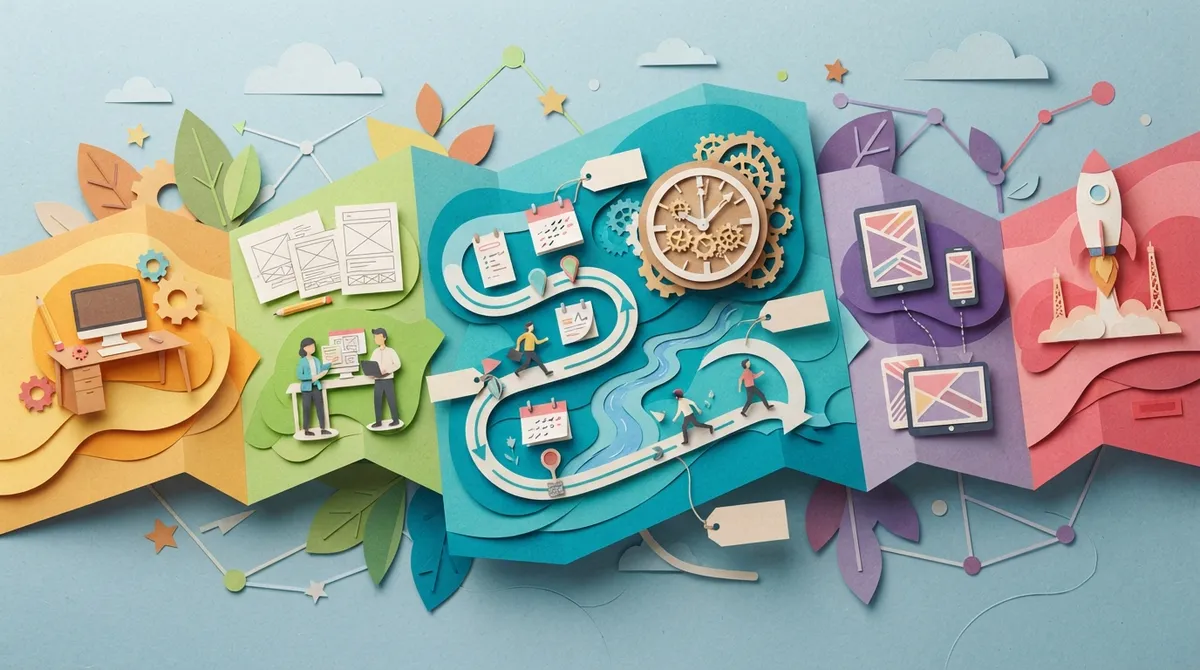
One of the biggest questions people ask is, “How long will this actually take?” Great question. A professional digital marketing website design project typically takes 10 to 14 weeks from start to finish.
Here’s how that time usually breaks down:
- Strategy and Discovery (2-3 weeks): This is where your goals, audience, and competitors get mapped out.
- UX and UI Design (3-5 weeks): Wireframes and visual designs get created and refined.
- Development and Content (4-6 weeks): The site gets built and filled with keyword-focused copy.
- Testing and Launch (1-2 weeks): Everything gets checked across devices before going live.
Some smaller projects move faster, especially simple 3-page informational sites. Larger sites with e-commerce or custom features naturally take more time. Either way, rushing this process almost always leads to costly fixes later.
Step 4: Build In the Marketing Elements That Actually Convert
Here’s something a lot of people miss. A pretty website that doesn’t convert visitors into customers isn’t doing its job. Design and marketing need to work together from the very beginning.
Must-Have Conversion Elements
Make sure your designer includes these features:
- Clear calls-to-action on every page
- Lead magnets like free guides or discount codes
- Email capture forms placed strategically
- Click-to-call buttons for mobile visitors
- Trust signals like reviews and certifications
Speaking of trust signals, don’t underestimate the power of showing off happy clients. Featuring testimonials on your site can make a huge difference in whether a visitor decides to reach out or bounce away.
Step 5: Make SEO Part of the Design, Not an Afterthought
This is where a lot of businesses lose out on traffic without even realizing it. Search engines need to understand your site to rank it well, and that starts with the design itself, not just the words on the page.
SEO-Friendly Design Essentials
Your website needs a logical heading structure. That means one unique H1 tag as your main title, followed by organized H2 and H3 tags underneath. Search engines use this structure to figure out what your page is really about.
Beyond headings, technical performance matters a lot too. Fast-loading pages keep visitors happy and keep search engines happy. Designers should compress images using formats like WebP, enable browser caching, and minify code to speed things up.
Here’s a quick checklist for SEO-friendly design:
- One clear H1 tag per page
- Organized H2 and H3 subheadings
- Compressed images for fast loading
- Clean URL structures
- Mobile-friendly responsive layout
Pairing smart design with strong content strategy makes a real difference. Our SEO team works hand-in-hand with our designers so your site is built to rank from day one, not fixed after the fact. If you want to go deeper on this topic, our guide on how to align web design and SEO for maximum online success is a great next read.
Step 6: Test Everything Before You Launch
You wouldn’t hand someone the keys to a new car without checking the brakes first. Same idea applies here. Testing is not optional.
What to Test Before Going Live
Your website needs to work flawlessly across different browsers and devices. That means checking:
- Chrome, Safari, and Firefox compatibility
- Desktop, tablet, and smartphone views
- All contact forms and buttons
- Page load speed on mobile connections
- Broken links or missing images
Mobile responsiveness deserves special attention here. More people browse on their phones than ever before, so your site needs to look and function great on a small screen, not just a big monitor.
Once everything passes the test, you’re ready to launch with confidence instead of crossed fingers.
What About Ongoing Support After Launch
Launching your website isn’t the finish line. It’s really just the starting point. Websites need updates, security patches, and regular content refreshes to keep performing well.
Reliable hosting matters too. A slow or unreliable host can undo all the hard work put into your design. That’s why we offer WordPress hosting built for speed and security, so your site stays fast long after launch day.
For businesses in the Tampa area, working with a local team also means faster communication and someone who understands your market. You can see what real clients say by visiting our Visit us on Google — Brain Buzz Marketing profile.
Choosing Between Small Agencies and Big Firms
Bigger isn’t always better when it comes to website design. Brain Buzz Marketing has been serving businesses since 1998, which makes us one of the most experienced digital marketing teams in Tampa. Because we’re a small, husband-and-wife-led team, we’re able to give every client hands-on attention without the bloated price tag of a massive agency.
We stay 100% virtual, which means faster collaboration and lower overhead costs get passed on to you. You can learn more about our approach on our Our Story page or read about about Brain Buzz Marketing to see how we work.
Common Mistakes to Avoid During Website Design
Even well-meaning businesses trip up during this process. Here are the mistakes we see most often:
- Skipping the strategy phase and jumping straight to design
- Ignoring mobile users when building layouts
- Forgetting to include clear calls-to-action
- Choosing a cheap builder that limits SEO performance
- Launching without testing forms and links first
Avoiding these pitfalls saves you time, money, and a whole lot of frustration down the road. According to Google E-E-A-T guidelines, trustworthiness and expertise matter more than ever for ranking well, and that starts with a solid, well-built website.
Bringing It All Together
Getting your website design done doesn’t have to feel like climbing a mountain. Break it into these six steps, work with people who know what they’re doing, and you’ll end up with a site that actually helps your business grow.
Whether you’re a local service provider needing a site that ranks in your area, an e-commerce retailer needing product pages that convert, or a startup trying to make a strong first impression, the process stays the same. Define your goal, choose the right team, respect the timeline, build in conversion tools, bake in SEO, and test before launch.
Need a hand with logo design too? Check out our logo designs portfolio to see how strong branding pairs with great web design. And if you want proof our team knows their stuff, take a peek at our certifications.
For businesses hiring outside contractors for other projects, it’s always worth working with trusted professionals. Just like we’d recommend a reliable name like Bucheli Trim Carpentry for quality carpentry work, we believe in partnering with people who genuinely care about doing the job right.
You can also follow along with more tips and behind-the-scenes content on our Instagram, our Facebook page, or connect with our founder on LinkedIn. And if you’re curious about tools that speed up content creation, platforms like SEO Rocket offer fully automated blog posts that rank, which can complement a well-designed site nicely.
Ready to Get Started?
You’ve got the roadmap now. The next move is simple. Reach out and let’s talk about what your website needs to succeed. Get in touch with our team today and let’s build something that actually works for your business, not against it.
FAQs
Q: What is the average cost to hire a professional designer for a digital marketing website?
A: Costs vary a lot depending on your needs, but simple informational sites often start around a few hundred dollars for the basics. More pages, e-commerce features, or custom SEO content will add to that. The best move is to get a personalized quote based on your specific goals.
Q: How do I ensure my website design is SEO-friendly from the start?
A: Make sure your designer plans for a clean heading structure, fast-loading images, and mobile responsiveness before building anything. SEO should be part of the strategy phase, not something bolted on after launch. Working with a team that handles both design and SEO together makes this so much easier.
Q: What are the essential pages a digital marketing agency website needs?
A: At minimum, you’ll want a homepage, an about page, a services page, a contact page, and a blog for ongoing content. Depending on your business, you might also need a portfolio or testimonials page. Each page should have a clear purpose tied to your overall goals.
Q: Should I use a website builder like Wix or hire a developer for my marketing site?
A: Website builders can work for very simple, low-budget projects, but they often limit your SEO potential and custom features. If you want a site that truly competes and converts, working with a professional team usually pays off in the long run. It really depends on how serious your growth goals are.
Q: How important is mobile responsiveness for digital marketing website design?
A: It’s honestly non-negotiable at this point. Most visitors browse on their phones, and search engines factor mobile performance into rankings. A site that looks great on desktop but breaks on mobile will lose visitors and hurt your search visibility.
Our Service Area