How to Choose Between SEO and GEO for Your Digital Marketing Strategy
Maximize your digital visibility by strategically combining SEO vs GEO for traditional search and AI platforms in 2025.
Key Takeaways
-
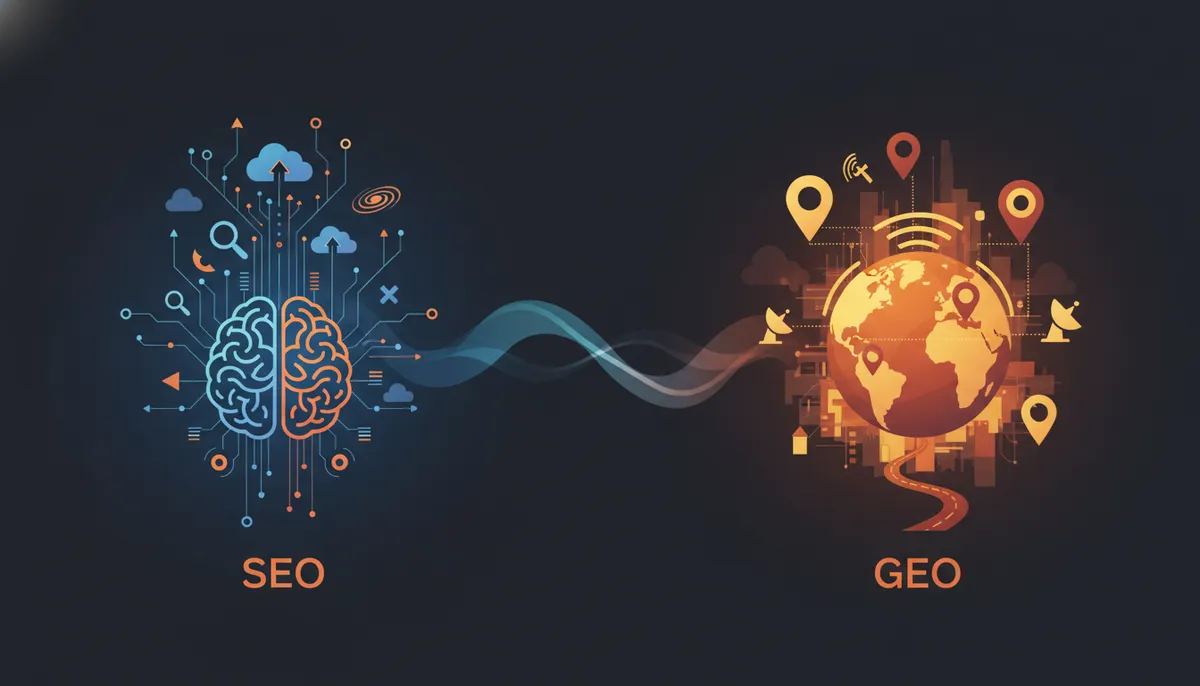
SEO and GEO are complementary strategies for maximizing online visibility across traditional search engines and AI platforms.
-
Content must now be comprehensive and authoritative to be cited by AI search tools and rank well in traditional search results.
-
Optimize for both keyword-based searches and conversational AI queries to capture audiences using different search methods.
-
Building E-E-A-T signals through expert credentials, case studies, and original research is crucial for ranking in both SEO and GEO.
-
Track performance using metrics that span traditional search rankings, organic traffic, and AI platform citations to understand your complete search visibility.
The digital marketing landscape has transformed dramatically in 2025, introducing a new challenge for businesses: understanding the difference between SEO and GEO, and determining which strategy—or combination of both—will maximize your online visibility. While SEO (Search Engine Optimization) has been the cornerstone of digital marketing for decades, GEO (Generative Engine Optimization) has emerged as a critical component for reaching audiences through AI-powered search platforms. This shift reflects how consumers now search for information: some still rely on traditional Google searches, while others turn to ChatGPT, Google AI Mode, and other generative AI tools for answers. The question isn’t whether SEO is dead—it absolutely isn’t—but rather how to strategically integrate both approaches to dominate search visibility across all platforms and capture every potential customer interaction.
For small business owners, marketing managers, and entrepreneurs, this evolution presents both opportunity and complexity. Google still processes over 8.5 billion searches daily, maintaining approximately 86% of the U.S. search market share as of July 2025. However, ChatGPT has rapidly grown to over 100 million weekly active users, signaling a significant shift in how people seek information. The brands that thrive in this new environment are those that understand how to optimize for both traditional search engines and AI-generated responses. Modern SEO strategies must now work in tandem with GEO tactics to ensure your business appears whether someone types a query into Google or asks an AI assistant for recommendations.

Understanding SEO: The Foundation of Traditional Search Visibility
Search Engine Optimization remains the proven method for increasing your website’s visibility in traditional search engine results pages (SERPs). When someone searches for “digital marketing agency near me” or “best custom website design services,” SEO determines whether your business appears on the first page or gets buried beneath competitors. The mechanics of SEO involve over 200 ranking signals that search engines like Google and Bing evaluate to determine which websites deserve top positions.
The core components of effective SEO include technical optimization (site speed, mobile responsiveness, secure connections), on-page elements (keyword usage, meta descriptions, header tags, content quality), and off-page factors (backlinks from authoritative sites, social signals, brand mentions). For a local service provider or e-commerce retailer, mastering these elements means the difference between obscurity and consistent customer acquisition. SEO targets keyword-based user intent, focusing on what people type into search bars and matching that intent with optimized content that answers their questions or solves their problems.
What makes SEO particularly valuable is its measurability and long-term compound effect. Unlike paid advertising that stops generating traffic when you stop paying, well-executed SEO creates a sustainable stream of organic visitors. You can track rankings for specific keywords, monitor traffic increases, measure conversion rates, and calculate precise ROI. For startups and small businesses with limited budgets, this makes SEO an attractive investment. Companies like Brain Buzz Marketing specialize in building these foundational SEO strategies that deliver consistent results over time, helping businesses establish authority in their niche and convert website visitors into paying customers.
Key SEO Ranking Factors in 2025
Understanding what search engines prioritize helps you allocate resources effectively. Here are the critical ranking factors dominating SEO in 2025:
- Content Quality and Relevance: Search engines have become remarkably sophisticated at evaluating whether content genuinely answers user questions with depth and accuracy. Thin, keyword-stuffed articles no longer work—comprehensive, well-researched content wins.
- E-E-A-T Signals: Google E-E-A-T (Experience, Expertise, Authoritativeness, Trustworthiness) has become central to rankings, especially for YMYL (Your Money, Your Life) topics. Demonstrating genuine expertise through author credentials, case studies, and verifiable information improves rankings significantly.
- Technical Performance: Core Web Vitals—loading speed, interactivity, and visual stability—directly impact rankings. Mobile-first indexing means your mobile site performance matters more than desktop.
- Backlink Profile: Quality backlinks from authoritative, relevant websites remain one of the strongest ranking signals. A single link from a respected industry publication can outweigh dozens of low-quality directory links.
- User Experience Signals: Metrics like time on page, bounce rate, and click-through rate from search results indicate whether users find your content valuable, influencing future rankings.

Introducing GEO: Optimizing for AI-Powered Search Engines
Generative Engine Optimization represents a fundamental shift in how content must be created and structured. Unlike traditional search engines that return a list of blue links, AI-powered search platforms like ChatGPT, Google AI Mode, and Microsoft Copilot generate comprehensive answers by synthesizing information from multiple sources. When users ask these tools questions, the AI doesn’t just point to websites—it creates original responses while citing authoritative sources it drew from.
This changes the optimization game completely. With GEO, your goal isn’t necessarily to drive click-throughs to your website but to ensure your content is cited as a trusted source when AI generates answers related to your expertise. Think of it as becoming the reference material that AI relies upon. When someone asks ChatGPT “What are the best digital marketing strategies for small businesses?” or “How should I choose between SEO and paid advertising?”, GEO-optimized content positions your brand as the authority the AI references in its response.
The impact on user behavior is significant. Research shows that when AI-generated summaries appear in search results, organic click-through rates drop from 15% to 8%. This means fewer people clicking through to websites, making brand visibility within AI-generated content increasingly valuable. For marketing managers and business owners, this isn’t a threat—it’s an opportunity to establish thought leadership in a new medium. The brands that master GEO early will dominate mindshare as AI-powered search continues growing exponentially.
How GEO Differs From Traditional SEO
While SEO and GEO share some common ground, their fundamental approaches diverge in important ways:
- Content Depth: GEO requires more comprehensive, authoritative content. AI models favor sources that provide thorough explanations, multiple perspectives, and factual accuracy over keyword-optimized but shallow content.
- Conversational Structure: GEO content should address natural language questions and complex queries. Instead of targeting “best coffee maker,” GEO targets “What coffee maker should I buy if I want convenience and quality without spending over $200?”
- Source Credibility: AI models prioritize citing established, trustworthy sources. Building authority through credentials, case studies, original research, and expert contributions becomes critical for GEO success.
- Structured Data: While structured data helps SEO, it’s even more crucial for GEO. Schema markup helps AI understand context, relationships, and factual information, making your content easier to cite accurately.
- Citation-Focused Metrics: Instead of tracking rankings and click-through rates, GEO success is measured by citation frequency—how often AI tools reference your content when generating answers.
Strategic Integration: Combining SEO and GEO for Maximum Impact
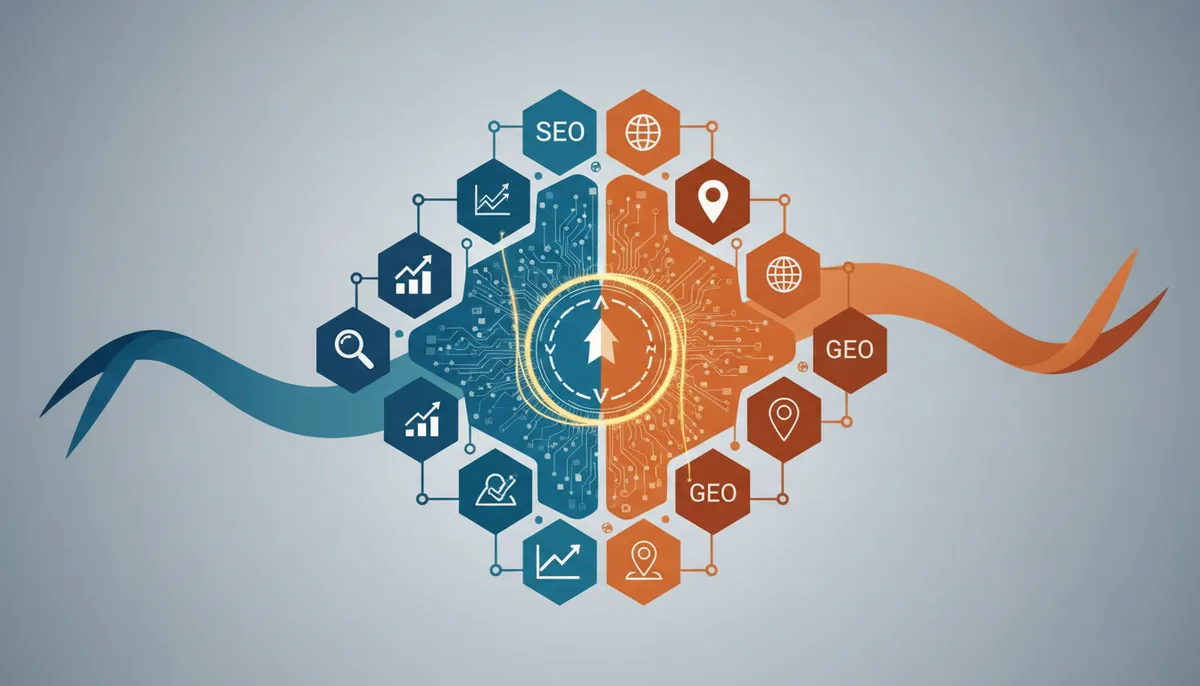
The most effective digital marketing approach in 2025 doesn’t force a choice between SEO and GEO—it strategically integrates both to capture visibility across all search platforms. Consider your potential customers’ journey: some will start with a Google search, others will ask ChatGPT for recommendations, and many will use both at different stages of their decision-making process. Your content strategy must address all these touchpoints.
Start by auditing your current content through both lenses. Does your website have comprehensive guides that demonstrate expertise and provide genuine value? That’s essential for both SEO and GEO. Are you targeting specific keywords with transactional intent? That’s critical for SEO but less relevant for GEO. Do you have authoritative, factual content that AI could confidently cite? That’s your GEO foundation. Most businesses will find gaps in one area or the other—often, they have decent SEO basics but haven’t considered GEO at all.
The integration process involves creating content layers. Your foundational content should be comprehensive, authoritative resources optimized for both traditional search and AI citation—think ultimate guides, original research, detailed case studies, and expert analyses. This content targets informational queries and establishes your expertise. Your supporting content can be more SEO-focused, targeting specific keywords with transactional or navigational intent—product pages, service descriptions, location-specific content. Together, these layers ensure visibility regardless of how or where people search.
Practical Steps to Implement Combined SEO and GEO
Here’s a numbered roadmap for integrating both strategies effectively:
- Conduct Dual-Purpose Keyword Research: Identify both traditional keywords (for SEO) and question-based queries (for GEO). Tools like AnswerThePublic reveal what questions people ask about your topic, perfect for GEO content planning.
- Create Authoritative Pillar Content: Develop comprehensive guides (2,000+ words) that thoroughly cover core topics in your industry. Include original insights, data, examples, and expert perspectives. This content serves both SEO (ranking for competitive keywords) and GEO (becoming citeable sources).
- Optimize Technical Foundations: Ensure your website has excellent technical SEO—fast loading, mobile optimization, secure connections, clean code. Add comprehensive schema markup to help both search engines and AI understand your content structure and context.
- Build E-E-A-T Signals: Showcase credentials, publish case studies, gather expert testimonials, and create author bios that establish expertise. These signals boost both traditional search rankings and AI citation probability.
- Develop a Strategic Linking Structure: Create robust internal linking between related content to help search engines understand topic relationships and authority distribution. Earn high-quality backlinks from authoritative sites in your industry.
- Monitor Performance Across Platforms: Track traditional SEO metrics (rankings, organic traffic, conversions) while also monitoring brand mentions in AI-generated responses, citation frequency, and visibility in AI search tools.
The Role of AEO in Your Complete Search Strategy
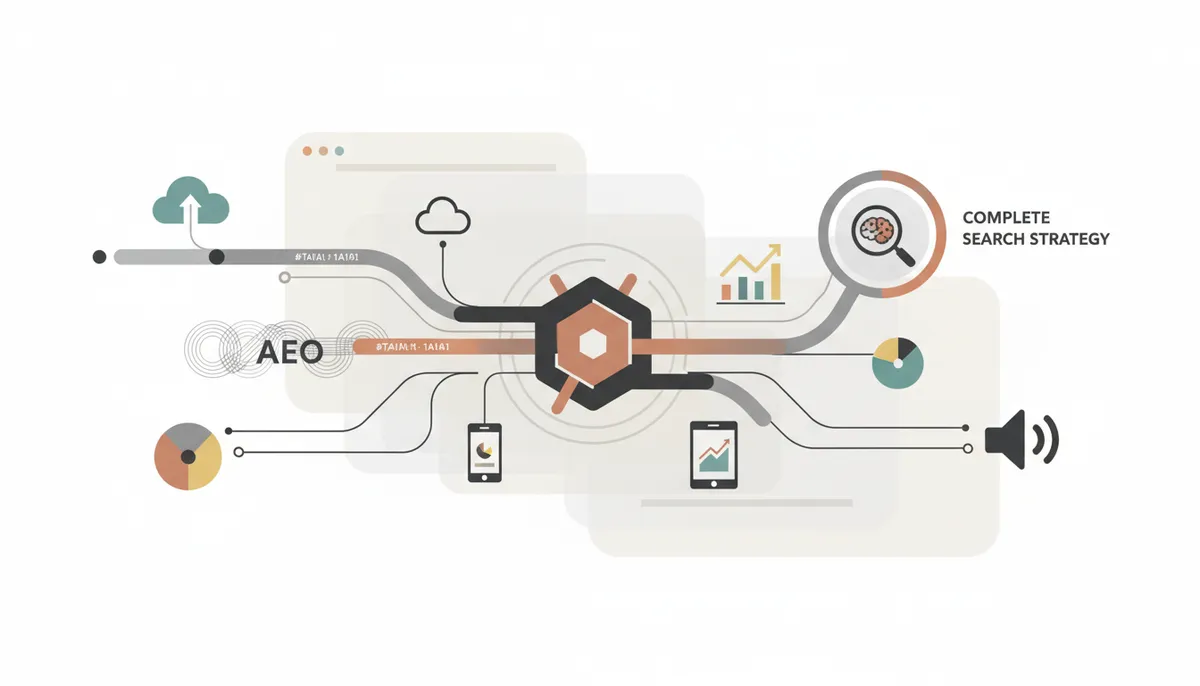
To fully understand the 2025 search landscape, you must also consider AEO (Answer Engine Optimization), which complements both SEO and GEO. AEO focuses specifically on optimizing for direct answers, featured snippets, voice search results, and zero-click search results—those instances where search engines provide the answer directly on the results page without requiring a click-through.
Think of your search strategy as three overlapping circles: SEO captures traditional keyword-based searches and drives website traffic; GEO ensures your brand is cited by AI when generating comprehensive answers; AEO positions your content to appear in featured snippets, knowledge panels, and voice search results. Together, these three approaches create comprehensive visibility across every type of search interaction your potential customers might initiate.
For local service providers and small businesses, this integrated approach is particularly powerful. Your custom website should be optimized with local SEO (location keywords, Google Business Profile optimization, local backlinks), GEO-friendly content (authoritative local expertise, comprehensive service descriptions, customer success stories), and AEO elements (structured data for business hours, services, prices, FAQ sections targeting common questions). This ensures you appear whether someone searches “plumber near me” in Google, asks Siri “Who’s the best plumber in [city]?”, or asks ChatGPT for plumber recommendations.
Measuring Success: Metrics That Matter for SEO and GEO
Tracking performance requires different metrics for SEO versus GEO, though both ultimately aim to increase brand visibility and customer acquisition. For SEO, your primary metrics include organic search rankings for target keywords, organic traffic volume, organic traffic quality (measured by engagement metrics and conversion rates), domain authority, backlink quantity and quality, and cost per acquisition from organic search.
GEO metrics are newer and still evolving, but key indicators include citation frequency in AI-generated responses, brand mention volume when AI tools discuss your industry topics, share of voice in AI platforms compared to competitors, referral traffic from AI search tools (when users do click through), and authority scores from sources AI models prioritize. BrightEdge’s June 2025 survey shows that forward-thinking marketers are already implementing tracking systems for these GEO-specific metrics.
The most sophisticated approach involves attribution modeling that tracks the customer journey across both traditional and AI-powered touchpoints. A customer might first encounter your brand through a ChatGPT response (GEO visibility), then search for your company specifically in Google (branded SEO), read several blog posts (content marketing), and finally convert. Understanding this full journey helps you allocate resources effectively between SEO, GEO, and other marketing channels. Companies specializing in strategic content creation can help develop tracking frameworks that capture performance across all these dimensions.
Tools for Tracking Combined SEO and GEO Performance
- Google Search Console: Essential for monitoring traditional SEO performance, keyword rankings, click-through rates, and technical issues affecting search visibility.
- SEMrush or Ahrefs: Comprehensive SEO platforms that track rankings, backlinks, competitor analysis, and content performance across search engines.
- Brand Monitoring Tools: Platforms like Brand24 or Mention track when and where your brand is mentioned online, including citations in AI-generated content and social media discussions.
- AI Search Testing: Manually query AI platforms (ChatGPT, Perplexity, Google AI Mode) with industry-relevant questions to see if your content is cited and how frequently you appear compared to competitors.
- Analytics Platforms: Google Analytics 4 helps track traffic sources, user behavior, and conversions, allowing you to compare performance from traditional search versus AI referrals.
Common Mistakes to Avoid When Balancing SEO and GEO
As businesses rush to adapt to the changing search landscape, several pitfalls have emerged. The most common mistake is abandoning SEO entirely in favor of GEO, assuming traditional search is obsolete. This is categorically false—Google still dominates search with billions of daily queries, and SEO remains the most cost-effective method for driving qualified traffic to your website. The correct approach is addition, not replacement.
Another frequent error is creating separate content silos for SEO and GEO. Some businesses develop “SEO content” optimized for keywords but lacking depth, alongside “GEO content” that’s comprehensive but poorly optimized for traditional search. This duplication wastes resources and confuses search engines. Instead, create unified content that serves both purposes—comprehensive, authoritative pieces that target relevant keywords while providing the depth and credibility that AI models prefer to cite.
Many businesses also underestimate the importance of technical infrastructure for both SEO and GEO. A slow-loading website with poor mobile experience damages traditional search rankings while also reducing the likelihood that AI tools will recommend your site as a credible source. Similarly, neglecting schema markup and structured data makes it harder for both search engines and AI models to understand and properly categorize your content. Technical excellence is the foundation that makes all other optimization efforts effective.
Industry-Specific Considerations for SEO and GEO Balance
Different business types benefit from different SEO-GEO balances based on how their customers search. E-commerce retailers should prioritize SEO for product-specific searches (“buy wireless headphones under $100”) while using GEO to establish authority in product categories and buying guides that AI might reference. Local service providers need strong local SEO for immediate service requests while building GEO visibility for expertise-based queries that influence consideration before someone searches for providers.
For B2B companies and professional services firms, GEO becomes particularly valuable because decision-makers increasingly ask AI tools for vendor recommendations, service comparisons, and industry best practices. A marketing manager researching digital marketing solutions might ask ChatGPT “What should I look for in a digital marketing agency?” before ever conducting a Google search. Having your expertise cited in that AI-generated response creates powerful top-of-funnel awareness that traditional SEO can’t capture alone.
Startups and new businesses face a unique challenge: building visibility from zero. For these companies, GEO offers a faster path to establishing authority than traditional SEO, which can take months to generate meaningful traffic. By creating exceptionally authoritative content that AI tools cite, startups can achieve brand visibility even before ranking well in traditional search. This approach should complement, not replace, foundational SEO work—you need both the immediate visibility boost from GEO and the sustainable traffic generation from SEO.
Future-Proofing Your Search Strategy
The search landscape will continue evolving rapidly, with new AI-powered search platforms emerging and existing ones improving their capabilities. Future-proofing your strategy means building flexibility and adaptability into your approach rather than over-optimizing for any single platform or algorithm. Focus on the constants: creating genuinely valuable content, building real expertise and authority, providing excellent user experiences, and maintaining technical excellence.
Stay informed about platform changes through industry resources, testing, and performance monitoring. The businesses that thrive are those that experiment continuously—testing new content formats, monitoring performance across platforms, and adjusting strategies based on data rather than assumptions. Consider working with agencies that specialize in both traditional and emerging search optimization strategies, as they can provide the expertise and resources to adapt quickly as the landscape shifts.
Remember that search optimization, whether SEO or GEO, is ultimately about connecting your expertise with people seeking solutions. The technologies and platforms change, but the fundamental value proposition remains constant: be the most helpful, authoritative, trustworthy source in your domain. Whether someone finds you through Google’s tenth page or ChatGPT’s first citation matters less than whether they find you at all and whether your content delivers genuine value when they do.
The brands winning in 2025 are those that recognize search optimization as an ongoing commitment rather than a one-time project. They invest in comprehensive content strategies, maintain technical excellence, build genuine expertise and authority, and adapt continuously to changing user behaviors and platform capabilities. This integrated, flexible approach ensures visibility regardless of how the search landscape evolves in the coming years. Connect with search optimization experts who understand both traditional and emerging strategies to develop a customized approach that positions your business for long-term success across all search platforms and captures customers at every stage of their decision-making journey.
FAQs
Q: What is the main difference between SEO and GEO?
A: SEO (Search Engine Optimization) focuses on ranking your website higher in traditional search engine results like Google and Bing, driving traffic to your site through keyword optimization and backlinks. GEO (Generative Engine Optimization) optimizes your content to be cited and referenced by AI-powered search tools like ChatGPT and Google AI Mode when they generate comprehensive answers to user questions. While SEO aims for click-throughs and website visits, GEO prioritizes brand visibility and authority within AI-generated responses, even if users don’t immediately visit your site.
Q: Is SEO still relevant in 2025 with the rise of AI search?
A: Absolutely! SEO remains critically important as Google processes over 8.5 billion searches daily and holds approximately 86% of the U.S. search market share in 2025. The rise of AI-powered search doesn’t replace traditional SEO—it complements it. Smart businesses now integrate both SEO and GEO strategies to capture visibility across all search platforms, ensuring they appear whether customers use Google, ChatGPT, or other search tools. Think of it as expanding your reach rather than shifting from one approach to another.
Q: How can small businesses implement both SEO and GEO effectively?
A: Start by creating comprehensive, authoritative content that serves dual purposes: target specific keywords for traditional SEO while providing the depth and expertise that AI tools prefer to cite for GEO. Focus on establishing E-E-A-T (Experience, Expertise, Authoritativeness, Trustworthiness) through case studies, credentials, and detailed guides. Optimize your website’s technical foundation with fast loading speeds, mobile responsiveness, and schema markup. Monitor performance across both traditional search rankings and AI citation frequency, adjusting your strategy based on what drives the most qualified leads and customers to your business.
Q: What metrics should I track to measure GEO success?
A: Key GEO metrics include citation frequency (how often AI tools reference your content), brand mention volume in AI-generated responses, share of voice compared to competitors when AI discusses your industry topics, and referral traffic from AI search platforms. You can also manually test by asking AI tools industry-relevant questions to see if your content appears in their responses. While these metrics are newer than traditional SEO measurements, forward-thinking marketers are already implementing tracking systems to quantify GEO performance and demonstrate its business impact alongside conventional search optimization results.
Q: Should I create separate content for SEO versus GEO?
A: No, creating separate content silos wastes resources and confuses search engines. Instead, develop unified content that serves both purposes simultaneously—comprehensive, well-researched pieces that target relevant keywords while providing the authority and depth that AI models prefer when generating citations. Think of it as creating content layers: foundational pillar content optimized for both SEO and GEO, supported by more targeted pieces addressing specific keywords or transactional queries. This integrated approach maximizes efficiency while ensuring visibility across all search platforms without duplication or conflicting optimization strategies.
Our Service Area