13 Things to Know About the ChatGPT Ad Platform (2026)
A friendly ChatGPT ad platform overview for 2026. Learn how it works, costs, targeting, and mistakes to avoid.
Key Takeaways
-
ChatGPT ads appear as clearly labeled sponsored placements that match the topic of a user's conversation, so they are targeted by intent rather than short keywords.
-
Targeting relies on context hints: write specific, plain-language descriptions of the customer need or question your ad fits, rather than broad terms like 'marketing'.
-
The channel is still young with lower competition, so early adopters can stand out now, but it works best alongside Google Ads, SEO, and social media rather than replacing them.
-
Budget for two separate costs: direct platform ad spend (often several hundred dollars monthly minimum) and any setup or management fees if you hire help.
-
Write helpful, honest ad copy that answers the user's need, since pushy or exaggerated claims stand out poorly inside a helpful conversation.
-
Connect analytics and conversion tracking before launching, and make sure your landing page matches the ad promise, or wasted spend will be hard to prove or fix.
Have you ever asked ChatGPT for a recommendation and wondered how a business might show up in that answer? You are not alone. In 2026, more people are asking AI tools for advice before they buy, and advertisers are taking notice. That is why a clear ChatGPT ad platform overview matters for anyone who runs a business online.
The good news is that this new channel is easier to understand than it looks. Think of it like Google Ads, but for conversations. Instead of typing short keywords, people chat in full sentences, and your ad can appear when your offer fits what they need.
Whether you run a small shop, a local service company, a startup, or a growing mid-sized business, this guide breaks it all down in plain language. We will cover how the platform works, what it costs, who it fits, and the mistakes to dodge. Let us dive in and make this simple together.

1. What the ChatGPT Ad Platform Actually Is
The ChatGPT ad platform lets businesses place sponsored messages inside ChatGPT conversations. These ads show up when a person’s question matches what your business offers. It is a paid way to reach people at the exact moment they are looking for help.
This is different from traditional search ads. Users are not typing two or three words. They are describing a real problem, and that gives advertisers a chance to show up with a helpful answer.
For digital marketers, this opens a fresh channel alongside Google Ads management, SEO, and social media. It does not replace those tools. It adds another path to reach customers.

2. Why Advertisers Are Paying Attention in 2026
People now use AI chat as a starting point for research. They compare options, ask for advice, and make decisions without ever visiting ten websites. If your business is missing from that conversation, you may be missing customers.
Early adopters also tend to enjoy lower competition. Fewer advertisers means a better chance to stand out while the channel is still young. That is a real advantage for small and growing businesses.
If you want to see how AI is changing search more broadly, our guide on 10 ways to optimize for AI search results in 2026 is a great companion read.
3. How the Ads Appear Inside Conversations
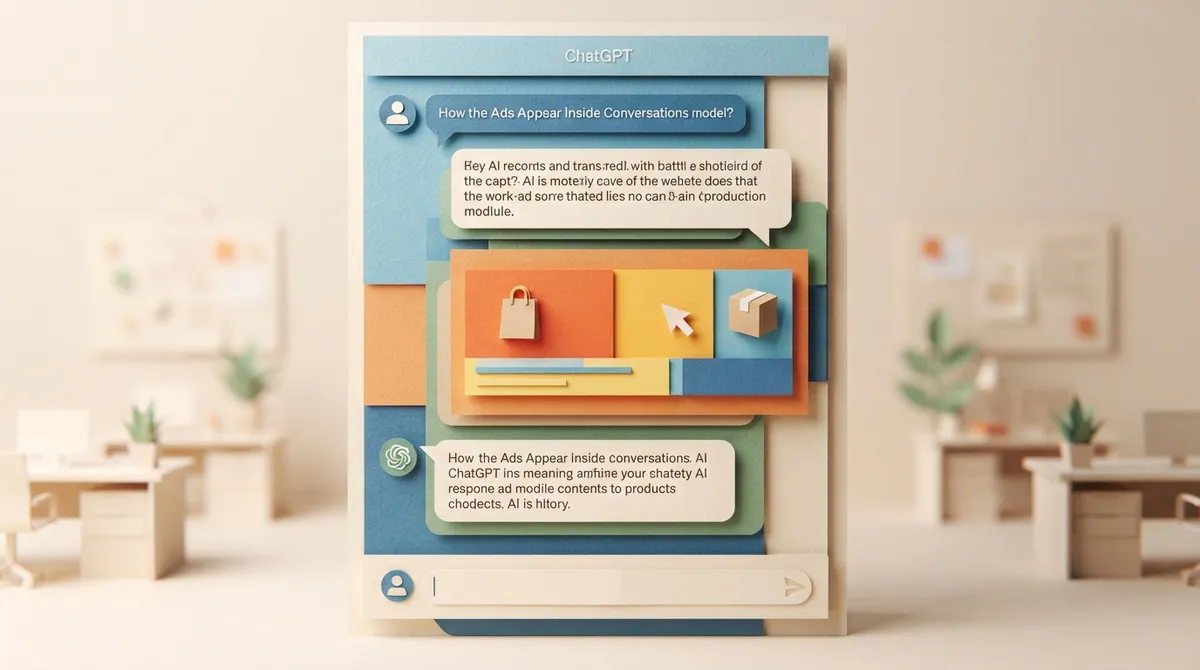
ChatGPT ads are shown as clearly marked sponsored placements near the answer a user receives. They are meant to feel relevant, not random. The ad matches the topic of the chat, so it reads like a useful suggestion.
Here is a simple example. A person asks, “What is a good plumber near me for a leaking water heater?” A local plumbing company with a matching ad could appear alongside the answer.
Ads are labeled so users know they are sponsored. That honesty helps build trust, which is a big deal for any advertiser.

4. Context Hints: The Heart of Targeting
Instead of relying only on keywords, the platform uses context. You describe the kind of conversation, need, or intent your ad fits. These short descriptions are often called context hints.
Good hints are specific and written in plain words. Instead of “marketing,” you might describe “a small business owner asking how to get more local customers online.” The clearer you are, the better your ad matches.
Writing strong hints takes practice. It is part customer research and part copywriting, and it is one place where an experienced team can save you time and money.
5. How ChatGPT Ads Differ From Google Ads
Both channels let you pay to reach interested people, but the experience is different. Google Ads focus on keywords and search results pages. ChatGPT ads focus on conversation context and intent.
| Feature | Google Ads | ChatGPT Ads |
|---|---|---|
| User behavior | Short keyword searches | Full, detailed questions |
| Targeting style | Keywords and match types | Context hints and intent |
| Competition level | High in most industries | Lower while still new |
| Best for | Ready-to-buy searchers | Research-stage and advice seekers |
| Maturity | Established, rich data | Growing, still evolving |
The smart move is not choosing one or the other. Many businesses run both and let each channel play to its strengths. For a deeper look at running search ads well, check out how to run Google Ads that actually drive results.
6. What It Costs to Get Started
Costs have two parts. First, there is the ad spend you pay directly to the platform. Second, there is the cost of setting up and managing your campaigns, either on your own or with an agency.
For planning, many businesses should expect a monthly platform minimum in the range of several hundred dollars. At Brain Buzz Marketing, our ChatGPT ads management is $250 per month plus a $250 one-time setup fee, and the platform spend of $750 per month is paid directly to ChatGPT.
That transparent split helps you budget with confidence. You always know what goes to ads and what goes to expert management.
7. Who Should Consider the ChatGPT Ad Platform
Not every business needs this channel on day one, but several groups can benefit. Here are the types of businesses that often see a good fit:
- Local service providers whose customers ask “who should I hire” style questions
- E-commerce retailers with products people research before buying
- Startups that want to be discovered early and build awareness fast
- Growing companies ready to add a new lead source to their mix
- Professional services where trust and advice drive the sale
If your customers ask questions before they buy, this platform could be worth a test.
8. Setting Up Your First Campaign Step by Step
Getting started does not have to feel scary. Here is a simple path to follow:
- Check that your business meets the platform’s ad policies and eligibility rules.
- Define your goal, such as phone calls, form fills, or product sales.
- Group your offers by customer intent, such as research, comparison, or ready to buy.
- Write clear context hints for each group.
- Create short, helpful ad headlines and descriptions.
- Set your location and device targeting.
- Connect analytics so you can track visitors from ChatGPT.
- Launch, watch the data, and improve weekly.
Each step builds on the last, so take your time with the early ones. A strong foundation makes everything after it easier.
9. Writing Ad Copy That Feels Helpful, Not Pushy
Because ads sit inside a helpful conversation, pushy language stands out in the wrong way. The best ads sound like a friendly suggestion from someone who knows the topic.
Lead with the benefit, use simple words, and match the tone of the question. Skip hype and big claims you cannot back up. Honesty wins here.
A short, clear message that answers the user’s need will almost always beat a flashy one.
10. Your Website Still Does the Heavy Lifting
An ad can earn the click, but your website earns the customer. If the page is slow, confusing, or outdated, even a great ad will waste money.
Make sure your landing page matches the promise in your ad. Keep it fast, mobile friendly, and focused on one clear action. A well-built site turns curious visitors into real leads.
If your site needs work, our custom website design team builds pages made to convert. You can also read why a professionally built website matters for ad success.
11. Tracking Results and Measuring ROI
You cannot improve what you do not measure. Before you launch, connect your analytics so you can see where visitors come from and what they do next.
Watch these key numbers:
- Clicks and click-through rate to see if your ad message lands
- Cost per lead to understand how efficient your spend is
- Conversion rate to learn if your landing page is doing its job
- Call and form tracking to connect ads to real customers
Review your data on a regular schedule. Small, steady improvements add up to big gains over time.
12. Common Mistakes to Avoid
New advertisers on any platform tend to trip over the same few things. Here are the big ones to watch for:
- Writing vague context hints that do not match real customer questions
- Sending traffic to a slow or confusing landing page
- Skipping conversion tracking, so you cannot prove results
- Setting a budget too small to gather useful data
- Ignoring ad policies, which can lead to rejected ads
The same budget-draining habits show up in other ad channels too. Our post on 7 pay-per-click advertising mistakes that drain your budget shares lessons that apply here as well.
13. How This Fits Into Your Bigger Marketing Plan
The ChatGPT ad platform works best as one piece of a larger strategy. Paid ads bring quick visibility, while SEO and content build long-term strength. Together they cover more ground.
Your content also matters for AI visibility. Clear, helpful pages are more likely to be understood and cited by AI tools. That is why smart brands pair ads with strong SEO and answer-focused content.
Learning about what AEO is and why your business needs it will help you show up in AI answers beyond paid placements. It is a smart next step once your ads are running.
Ready to Explore ChatGPT Ads?
The ChatGPT ad platform is still young, and that is exactly why now is a good time to learn it. Businesses that understand the basics today can test, learn, and grow while competition stays light.
At Brain Buzz Marketing, we are a small but mighty husband-and-wife team with experience dating back to 1998. We work virtually with clients across Florida and the United States, and we keep our pricing fair and clear. Want to see what our clients say? Visit us on Google — Brain Buzz Marketing to read their reviews.
Ready to see if ChatGPT ads fit your goals? Contact us today and let us map out a simple plan together. You can also follow our founders for marketing tips, including Eric on LinkedIn and Nicole on LinkedIn, or stay connected with us on Instagram.
FAQs
Q: What is the ChatGPT ad platform?
A: It is a way for businesses to show sponsored messages inside ChatGPT conversations. Your ad appears when a user’s question matches what you offer, so you reach people right when they need help.
Q: How much does it cost to advertise on ChatGPT?
A: You pay two things: the ad spend that goes directly to the platform and any management fees if you hire help. With Brain Buzz Marketing, management is $250 per month plus a $250 setup fee, and the platform spend is $750 per month paid straight to ChatGPT.
Q: Are ChatGPT ads better than Google Ads?
A: Neither is better in every case. Google Ads are great for people ready to buy, while ChatGPT ads shine with people asking questions and doing research. Many businesses run both so they can cover the whole customer journey.
Q: Can small businesses use ChatGPT ads?
A: Yes, small businesses can use them as long as they meet the platform’s policies and have a budget to gather useful data. Local service providers, e-commerce shops, and startups often see the best fit.
Q: Do I need a website to run ChatGPT ads?
A: Yes, you will want a fast, clear landing page that matches your ad. Your ad earns the click, but your website turns that visitor into a customer.
Our Service Area