5 Myths About AI SEO Replacing Traditional SEO in 2026
Does AI SEO replace traditional SEO? Learn 5 myths, what changes in 2026, and a simple plan to win in both search and AI answers.

Key Takeaways
-
AI SEO does not replace traditional SEO but builds on top of it like a second lane on a road—strong technical basics (speed, mobile-friendliness, clean structure) are foundational for success in both traditional and AI search results.
-
Successful businesses must combine both strategies: traditional SEO gets your site found in search results, while AI SEO (AEO/GEO) ensures your content gets cited in AI tool answers and summaries.
-
AI tools rely heavily on pages already ranking well in traditional search, so weak technical foundations, slow speeds, and thin content will struggle in both worlds regardless of AI optimization efforts.
-
Keywords still matter but have evolved—avoid keyword stuffing and instead write naturally around topics with related terms and questions, as AI tools and search engines now reward question-answering content over repetitive phrases.
-
Local businesses can win in AI search by maintaining complete Google Business Profiles, collecting genuine customer reviews, ensuring consistent business information across the web, and creating content mentioning service areas.
-
AI writing tools are helpful for speeding up tasks, but humans must guide strategy, verify facts, check for accuracy, and add authentic voice—search engines reward real experience and expertise (E-E-A-T) that machines cannot fully replicate.
If you have been reading marketing news lately, you have probably seen the scary headlines. “SEO is dead.” “AI will replace everything.” It is enough to make any business owner wonder if the website they just paid for is already out of date. Take a deep breath. We have got you.
So, does AI SEO replace traditional SEO? The short answer is no. AI search adds a new layer on top of the old one. It does not wipe the old one away. Think of it like adding a second lane to a busy road. The first lane still carries most of the cars.
Since 1998, our team at Brain Buzz Marketing has watched search change many times. Each time, people said the old way was finished. Each time, the businesses that kept strong basics and added smart new steps came out ahead.
In this article, we will bust five common myths, show you what actually changes, and give you a simple plan you can follow in 2026. Grab a coffee and let’s dig in together.
What Do We Mean by “AI SEO” and “Traditional SEO”?
Before we bust any myths, let’s make sure we are speaking the same language. These terms get thrown around a lot, and they can mean different things to different people.
Traditional SEO in Plain English
Traditional SEO is the work of helping your website show up in search engine results. It covers things like:
- Keyword research and smart keyword targeting
- Page titles, headings, and content that match what people search for
- Technical health, like site speed and mobile friendliness
- Backlinks from trusted websites
- Local listings and your Google Business Profile
AI SEO in Plain English
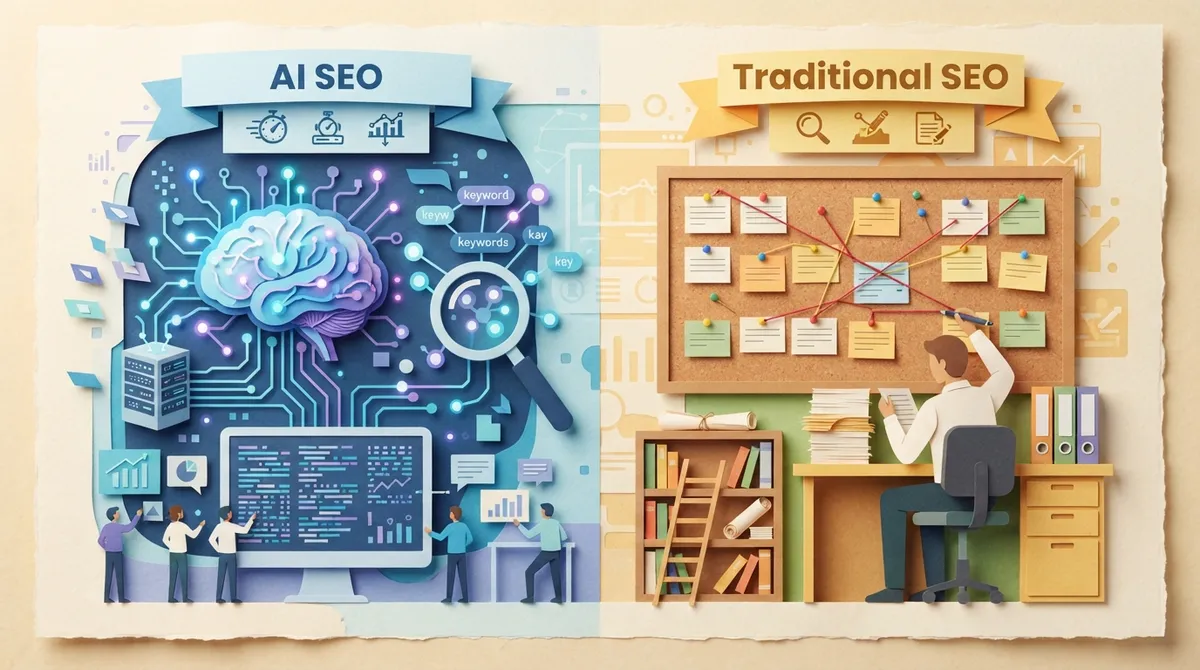
AI SEO is a catch-all name for optimizing your content so AI tools can find it, understand it, and mention it. These tools include Google’s AI Overviews, ChatGPT, and Perplexity. You will also hear the names AEO (Answer Engine Optimization) and GEO (Generative Engine Optimization). They all point to the same goal: becoming the source an AI quotes. If you want a deeper look, our guide on answer engine optimization breaks it down step by step.
| Feature | Traditional SEO | AI SEO (AEO/GEO) |
|---|---|---|
| Main goal | Rank in search results | Get cited in AI answers |
| Key focus | Keywords and links | Clear answers and trust signals |
| Where it shows | Search result pages | AI summaries and chat replies |
| Content style | Keyword-optimized pages | Direct, well-structured answers |
| Success measure | Rankings and clicks | Mentions and citations |

Myth #1: AI Search Has Made Traditional SEO Useless
This is the biggest myth, and it is the one that scares people the most. Here is the truth. AI tools do not make up answers out of thin air. They pull information from the web. And where do they look first? They tend to favor pages that already rank well, load fast, and show real expertise.
In other words, the same basics that power traditional SEO also feed AI search. A site with messy structure, slow speed, and thin content will struggle in both worlds.
When people ask us whether does AI SEO replace traditional SEO is a real concern, we tell them to look at the foundation. If your foundation is shaky, no new trick will save you. If it is strong, you are already halfway there. Our breakdown of the key differences between AEO and SEO shows how closely the two are connected.
What Still Matters Most
- A fast, mobile-friendly website
- Helpful content that answers real questions
- Clean site structure and clear page titles
- Trust signals like reviews, author names, and consistent business details
Myth #2: You Must Choose Between AI SEO and Traditional SEO
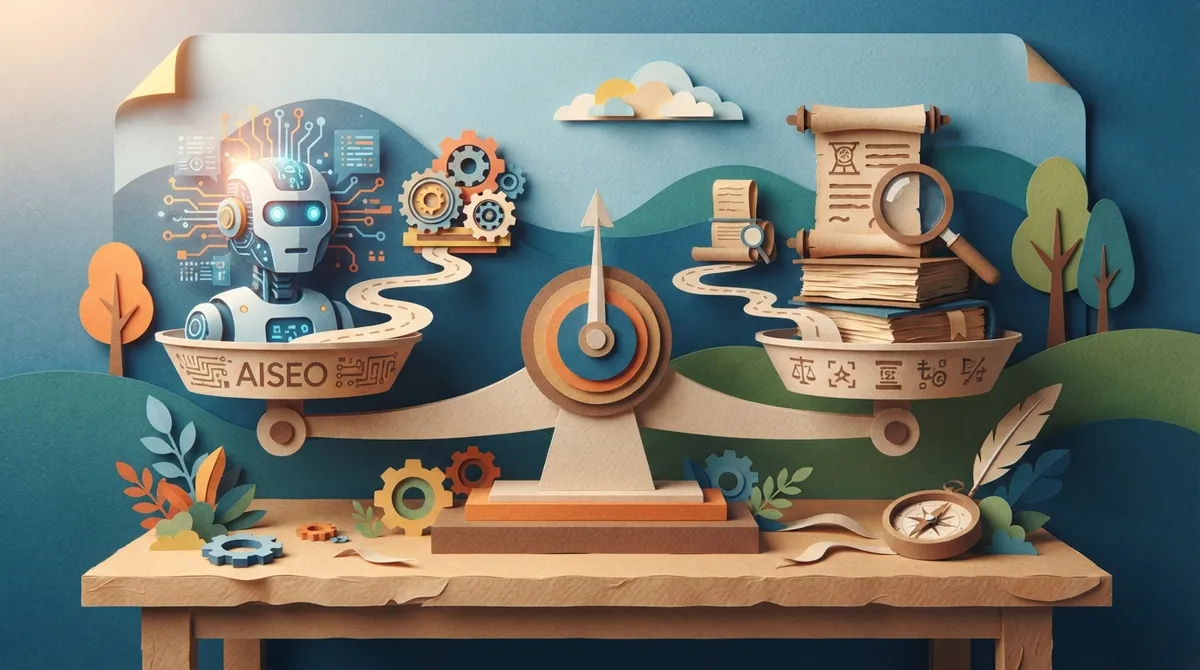
Nope. This is not an either-or choice. The smartest businesses treat them as a team. Traditional SEO gets you found. AI SEO helps you get quoted.
Picture a local plumber. A homeowner searches for “emergency plumber near me.” Google shows a map pack, regular results, and maybe an AI summary. The plumber who shows up in all three wins the most calls. That plumber needs strong local SEO, solid content, and clear answers that AI can pull from.
We often explain this with a simple recipe. Traditional SEO is the flour and eggs. AI SEO is the frosting. You need both for a cake people actually want to eat. For a closer comparison, read our article on SEO vs. AEO and which strategy wins.
A Simple Way to Split Your Effort
- Fix your technical basics first, like speed and mobile layout.
- Build helpful pages around the questions your customers ask.
- Add clear, short answers near the top of each page.
- Keep your local listings and reviews fresh.
- Track both rankings and AI mentions over time.

Myth #3: AI Tools Can Do All Your SEO Work for You
AI writing and analysis tools are helpful. We use smart tools too. But they are not a magic button. Here is why handing everything to a machine can backfire.
- Generic content blends in. If everyone uses the same tool, everyone sounds the same.
- AI can get facts wrong. Without a human check, mistakes slip through and hurt trust.
- Strategy needs a human. A tool cannot know your local market, your best customers, or your goals.
- Trust is earned. Search engines reward real experience and real people behind a brand.
Google talks about experience, expertise, authority, and trust (often called E-E-A-T) in its guidelines. You can read more in Google’s guidance on creating helpful content. Notice that it asks for content made to help people, not just to rank.
The best approach is to let tools speed up the boring parts while a real person guides the plan, checks the facts, and adds the human touch. That is how our small team works every day. If you want help building that kind of strategy, take a look at our SEO services.
Myth #4: Keywords Do Not Matter Anymore
We hear this one a lot. People think AI understands meaning, so keywords no longer count. It is half true, which makes it tricky.
Yes, search engines are better at understanding meaning than they used to be. But keywords still tell both people and machines what your page is about. The difference is how you use them. Stuffing the same phrase over and over does not work. Writing naturally around a topic, with related terms and clear questions, does.
Think of keywords as road signs. You do not need a hundred of them. You just need the right ones, placed where travelers can see them. Questions have also become more important. People type full questions into AI tools, so pages that answer questions in plain words tend to perform well. Our piece on old vs. new keyword research walks through how to adjust.
Smart Ways to Use Keywords in 2026
- Use your main phrase in the title, a heading, and the first paragraph
- Add related questions as sub-headings
- Answer each question in two or three clear sentences
- Write for people first, then check that machines can follow along
Myth #5: Local Businesses Do Not Need to Worry About AI Search
Some owners think AI search is just for big brands. That is a risky guess. People now ask AI tools things like “who is a trusted web designer near me?” or “what is the best marketing agency in Tampa?” The tool then names a few businesses.
If you are not set up well, you might not get named at all. The good news is that local businesses can win here. Local trust signals are powerful, and they are things you can control.
- A complete and active Google Business Profile
- Fresh reviews from real customers
- Consistent name, address, and phone details across the web
- Content that mentions the areas you serve
Want to see what real customers say about working with us? You can visit us on Google and read Brain Buzz Marketing reviews. Reviews like these are exactly the kind of trust signal that helps both search engines and AI tools feel confident about a business.
If you serve a local area, our walkthrough on how to do local SEO step by step is a great place to start.
So, Does AI SEO Replace Traditional SEO? The Honest Answer
Let’s wrap the myths into one clear answer. No, AI SEO does not replace traditional SEO. It builds on it. Here is the simple truth in a quick list:
- Traditional SEO is still the base that gets your site found and trusted.
- AI SEO is an add-on that helps your content get quoted in AI answers.
- Both reward clear, helpful, honest content written for real people.
- Businesses that do both will have the widest reach.
We know the world of search feels like it is moving fast. It is. But fast change does not mean the basics disappeared. It means the winners are the ones who keep the basics strong and stay curious about what comes next.
A Simple Action Plan You Can Start This Month
You do not need to rebuild everything overnight. Here is a friendly step-by-step plan you can follow.
- Audit your basics. Check your site speed, mobile layout, and page titles. Fix the easy wins first.
- List your customers’ top questions. Write down the 10 questions you hear most often.
- Create answer-focused content. Give each question its own section or page with a short, clear answer up top.
- Strengthen your local signals. Update your Google Business Profile and ask happy customers for reviews.
- Add structured data. Schema markup helps machines read your pages. Learn more from Schema.org.
- Review and refresh. Check your results every month and update older pages.
If you want to go deeper on the AI side, we also put together tips on how to optimize for AI search results that you can use right away.
How Brain Buzz Marketing Can Help
We are a small but mighty, husband-and-wife-run agency based in Tampa, and we work with businesses across Florida and the United States. Everything is done virtually, so working with us is simple and flexible. Our team offers custom website design, SEO, local SEO, Google Ads, and content built for SEO, GEO, and AEO. Because we stay small and choose our projects carefully, you get real attention and fair pricing.
You can also try our free tools or browse our full list of digital marketing services to see what fits your goals.
Conclusion: Keep the Basics, Add the Future
AI is changing how people find answers, and that is exciting. But it is not replacing the work that makes a website visible and trusted. The businesses that win in 2026 will keep their traditional SEO strong and layer in AI-friendly content on top.
You do not have to figure it all out alone. If you would like a friendly, no-pressure chat about where your website stands and what to do next, Contact Us and let’s build a plan that works for both today’s search and tomorrow’s.
FAQs
Q: Does AI SEO replace traditional SEO?
A: No, it does not. AI SEO builds on top of traditional SEO instead of replacing it. Strong basics like fast pages, helpful content, and trust signals help you in both regular search and AI answers.
Q: What is the difference between AI SEO and traditional SEO?
A: Traditional SEO focuses on ranking in search results using keywords, links, and site health. AI SEO focuses on getting your content quoted in AI tools like Google’s AI Overviews and ChatGPT by giving clear, trustworthy answers. The two work best together.
Q: Should small businesses invest in AI SEO right now?
A: Yes, but start with the basics first. Make sure your website, local listings, and reviews are in good shape, then add clear question-and-answer content. This gives small businesses a nice head start without a huge budget.
Q: Can AI tools write all my SEO content for me?
A: They can help speed things up, but they should not do everything alone. Human review keeps your facts correct and your voice real, which builds the trust that search engines and AI tools look for.
Q: How do I get my business mentioned by AI search tools?
A: Create clear, helpful content that answers real customer questions, keep your Google Business Profile active, and collect genuine reviews. Adding structured data also helps machines understand your pages better.
Our Service Area