8 Google Business Profile Optimization Wins for 2026
Boost local rankings and win more customers with 8 Google Business Profile optimization tactics built for 2026 success.

Key Takeaways
-
Choose specific primary and secondary categories (up to 9 total) and use natural keywords in your business description to help Google understand what you do and match relevant customer searches.
-
98% of people read online reviews for local businesses; focus on consistent review velocity (steady monthly reviews) rather than one-time batches, and always respond to reviews professionally to show engagement.
-
Google's three ranking factors are relevance, distance, and prominence; prioritize accurate information, correct address consistency across all platforms, and genuine customer engagement over shortcuts.
-
Regularly post updates, offers, and events to your profile and monitor Q&A sections to signal activity to Google; include call-to-action buttons and add 200+ high-quality photos showing your actual storefront, interior, products, and team.
-
Review your Google Business Profile Insights monthly to track search terms, direction requests, and website clicks; use this data to identify how customers think about your business and spot recurring issues mentioned in reviews.
-
Avoid keyword stuffing, duplicate listings, buying reviews, inconsistent business information across platforms, and stale details like outdated hours or phone numbers, as these can harm your rankings and customer trust.
Here’s a fun fact: most people won’t even click on your website before deciding if they trust your business. They’ll look at your Google Business Profile first. In fact, research shows that 66% of people trust Google itself, 45% trust Google Maps, and only 36% actually click through to a business’s own website. That’s a lot of decision-making happening before anyone ever lands on your homepage!
If you’re a small business owner, local service provider, or marketing manager juggling a dozen priorities, this might feel like one more thing on your plate. But don’t worry, we’ve got you. This friendly guide breaks down exactly how Google Business Profile optimization works, why it matters so much for local visibility, and how you can start making real improvements today. Whether you run a boutique in Brandon or manage marketing for a growing company in Tampa, these tips will help you show up, stand out, and turn browsers into customers.

1. Understand Why Your Google Business Profile Matters So Much
Let’s start with the basics. Your Google Business Profile (GBP) is a free listing that shows up on Google Search and Google Maps. It displays your hours, address, photos, reviews, and more, all in one tidy spot. Think of it as your digital storefront window.
Without a Google Business Profile, you simply cannot show up in the Local Pack (those three business listings that appear with a map at the top of local search results). You also won’t appear on Google Maps at all. That’s a huge chunk of visibility to miss out on.
Here are the top reasons your profile deserves your attention:
- It’s often the first (and sometimes only) source of information potential customers use
- Customers can take action, like calling, booking, or ordering, right from the search results
- It brings together reviews, photos, and Q&A in one convenient place
- It helps Google understand what your business does and who you serve
- It’s how people find directions to your door
- It gives you real insight into how customers are finding you
If you want a deeper dive into why local visibility matters so much, check out our guide on what local SEO is and why it’s important.

2. Get Your Categories and Keywords Right
Google uses your business category as one of the strongest signals for figuring out what searches you should show up for. This is not the place to be vague.
Pick the most specific primary category available. A bakery should choose “Bakery,” not the broader “Restaurant” category. You can also add up to nine secondary categories, like “Wedding Bakery,” to catch more specific searches.
Once your categories are locked in, turn to your business description. This is where relevant keywords come into play. Think about what your customers would actually type into Google. A pet store might use phrases like “organic pet food near me.” A marketing agency might focus on terms like “local SEO services” or “Google Ads management.”
Just remember: natural language wins. Stuffing your description full of keywords can hurt more than help. Write a clear, honest description that explains what you do, then let your keywords fit in naturally. If you want extra guidance here, our SEO team can help you find the right terms for your business and location.
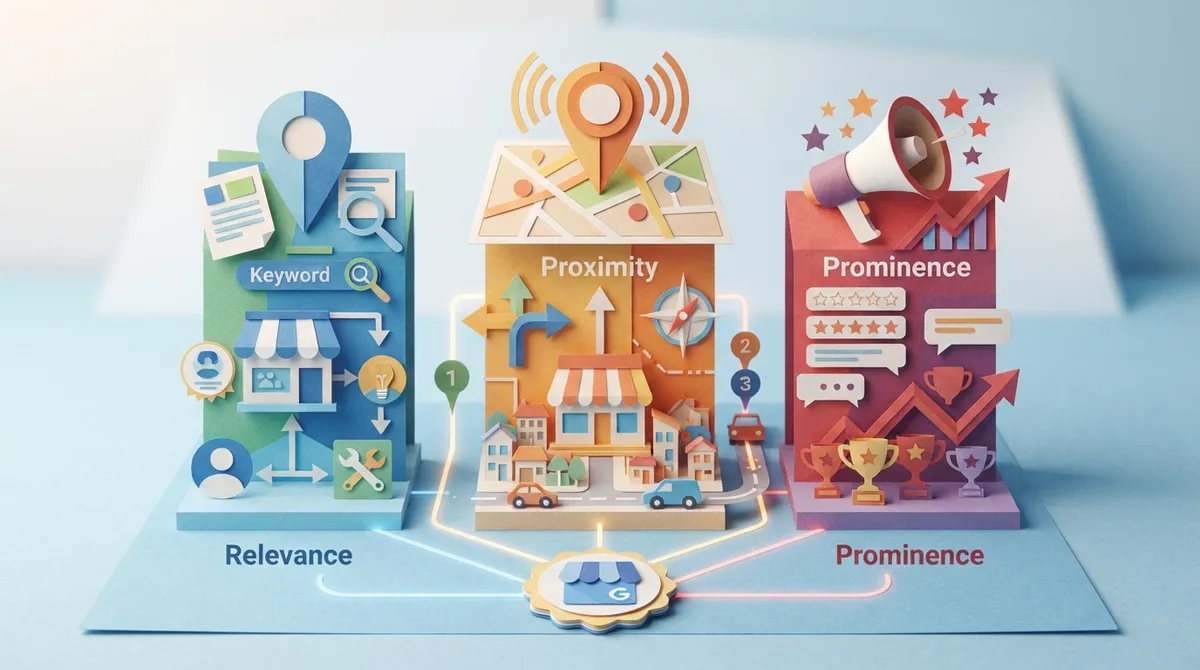
3. Master the Big Three Ranking Factors
Google decides who shows up in local search results based on three main factors. Understanding these will help you prioritize your optimization efforts.
| Ranking Factor | What It Means | How to Improve It |
|---|---|---|
| Relevance | How well your business matches what someone is searching for | Choose accurate categories and use natural keywords in your description |
| Distance | How close your business is to the searcher | Keep your address accurate and consistent everywhere online |
| Prominence | How well-known and trusted your business appears to be | Collect reviews consistently and keep your profile active |
Notice that none of these factors are things you can fake. They all come down to being accurate, relevant, and genuinely engaged with your customers. That’s good news, because it means honest effort pays off.
4. Make Reviews Work For You, Not Against You
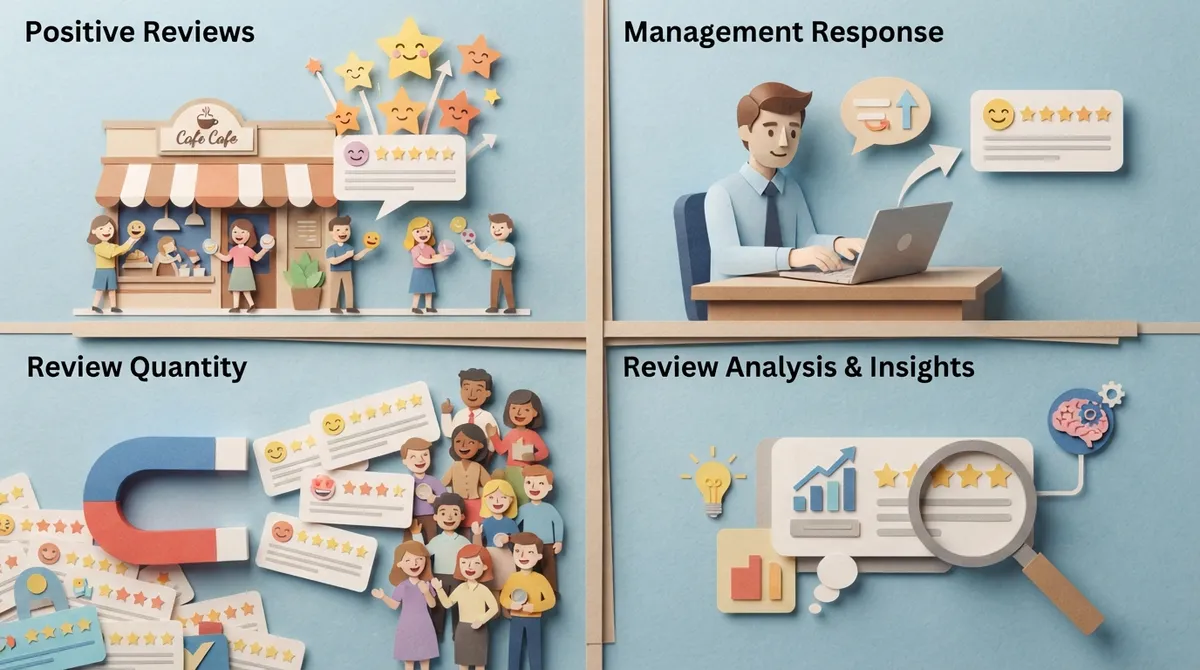
Here’s a number that should grab your attention: 98% of people read online reviews for local businesses. That’s nearly everyone. Your reviews are doing a lot of heavy lifting whether you’re paying attention to them or not.
But it’s not just about having a pile of five-star reviews sitting there. Review velocity matters too. That means the rate at which new reviews come in. A business that consistently gets a handful of reviews each month can actually outrank a competitor who got fifty reviews two years ago but almost none since then.
Here’s how to build a steady stream of genuine reviews:
- Ask customers at the right moment, right after a purchase or positive interaction
- Make it easy with a direct link they can tap or click
- Send a simple follow-up email or text with a review request
- Add a small note on receipts or a sign near checkout
- Never offer incentives or pay for reviews, this violates Google’s policies
Responding to reviews matters just as much as collecting them. Thank people for positive feedback, and when you get a negative review, respond with empathy and offer to make things right. This shows everyone reading that you actually care.
5. Turn Your Profile Into a Content Hub
Your Google Business Profile isn’t just a static listing. It brings together content from you and your customers in one place. This includes:
- Reviews from happy (and sometimes not-so-happy) customers
- Questions and answers from the public
- Photos and videos, both yours and customer-submitted
- Updates and posts you share regularly
This blend of business content and user-generated content means you can’t fully control the message. But you can shape it. Regularly monitor your Q&A section for questions you should be answering more clearly on your website. Keep an eye on photo uploads. And most importantly, post regularly.
Google Business Profile posts come in three flavors: Updates, Offers, and Events. Use them to share news, promote a sale, or announce something happening at your business. Always include a call-to-action button so people know what to do next. Consistent posting signals to both Google and your customers that you’re active and engaged.
One analysis found that top-ranking profiles average around 70 words in their descriptions, while lower-ranking listings tend to be shorter. The same research noted that highly visible businesses often have over 200 reviews, compared to far fewer for businesses ranking lower. Small, consistent effort really does add up over time.
6. Add Photos, Products, and Services That Sell
People want to see what they’re getting before they walk in the door or click “buy.” High-quality photos and videos aren’t optional extras anymore, they’re expected.
Here’s what to include:
- Clear shots of your storefront so people recognize it from the street
- Interior photos that show off your space or atmosphere
- Team photos and behind-the-scenes moments
- Your actual products or services in action
- A short video tour if you can manage it
Avoid blurry images or generic stock photos. Real, authentic pictures build trust faster than anything polished and impersonal.
Don’t stop at photos, though. Use the Products and Services features to list what you offer, complete with names, prices, and descriptions. This helps your profile show up in more specific searches and helps customers quickly decide if you’re the right fit. If you sell online, add a direct link so people can buy or book straight from your listing. Google also lets you enable booking or appointment features, which is perfect for local service providers who want to reduce back-and-forth scheduling.
7. Turn Insights Into Action
Every Google Business Profile comes with a built-in Insights dashboard. This is genuinely useful information, and too many business owners never look at it.
Here’s what you can typically track:
- Views: how many people saw your profile in Search or Maps
- Website clicks: how many people clicked through to your site
- Direction requests: how many people wanted directions to your location
- Search terms: the actual phrases people used to find you
This data does more than tell you how you’re doing. It tells you how people think about your business. If you’re a multi-location business, you can compare performance across cities or neighborhoods. If you serve the greater Tampa Bay area, for example, this can help you see whether Brandon, Riverview, or Clearwater searches are driving more traffic your way.
Analyzing your reviews for common themes is another underused tactic. Are people constantly mentioning your friendly staff? Great, highlight that in your marketing. Are multiple reviews mentioning a recurring issue? That’s a signal to fix something before it costs you more customers. For a deeper look at using data to guide your strategy, see our piece on analytics and reporting for data-driven marketing success.
8. Avoid the Mistakes That Quietly Hurt Your Rankings
Even well-meaning business owners can accidentally sabotage their own visibility. Here are the most common mistakes to watch for:
- Keyword stuffing in your business name or description, which violates Google’s guidelines
- Creating duplicate listings for the same location
- Buying or incentivizing reviews, which can lead to penalties
- Misrepresenting your service area, especially for businesses without a public storefront
- Letting your information go stale, wrong hours or an old phone number cost you customers fast
Google actually cross-references your business information across the web to check for legitimacy. That means your address, phone number, and business name need to match everywhere they appear, from your website to local directories. Consistency builds trust with both Google and your customers.
It’s also worth remembering that your Google Business Profile plays into something bigger: how Google understands your business as an “entity.” By keeping every detail accurate and connected to your website and social channels, you help Google build a clear picture of who you are and who you serve. This ties directly into broader digital marketing services, since a well-optimized profile supports your overall SEO strategy rather than working in isolation.
Bringing It All Together
Google Business Profile optimization isn’t a one-and-done task. It’s an ongoing relationship with your listing, one that rewards consistency far more than perfection. Ask for reviews regularly. Post updates often. Check your Insights monthly. Keep your information accurate. Small, steady habits beat occasional big pushes every time.
If you’re a small business owner or startup trying to juggle all of this alongside everything else on your plate, you’re not alone. This is exactly the kind of work our team at Brain Buzz Marketing loves to dig into. As a locally rooted agency serving Tampa, Brandon, Riverview, and the surrounding Florida communities, we understand what it takes to help local businesses show up where it counts. You can even visit us on Google to see what our own customers say about working with Brain Buzz Marketing.
We also believe strongly in first-hand expertise and transparency, principles that align with Google’s E-E-A-T guidelines for building trust online. Combining a strong Google Business Profile with solid local SEO services and a professionally built custom website gives your business the best shot at showing up when it matters most.
Ready to stop guessing and start growing your local visibility the right way? Reach out to our team today and let’s talk about what optimization could look like for your business.
FAQs
Q: What is Google Business Profile optimization?
A: It’s the process of making sure your free Google listing has accurate info, great photos, the right categories, and steady reviews. The goal is to help your business show up more often in local search results and Google Maps, so more people find you and take action.
Q: How long does it take to see results from GBP optimization?
A: Great question! Some changes, like fixing your hours or adding photos, can show up within days. Bigger ranking improvements usually take a few weeks to a few months, especially as you build up reviews and posting consistency. Patience really does pay off here.
Q: Do I need a physical storefront to have a Google Business Profile?
A: Not necessarily! Service-area businesses without a public storefront can still create a profile. Just be sure to accurately define your service area rather than listing a fake or misleading address, since that can actually hurt your visibility.
Q: How many reviews do I need to rank well locally?
A: There’s no magic number, but research shows highly visible businesses often have over 200 reviews. What matters even more is consistency. Getting a few new reviews every month tends to help more than a big batch of old reviews that stopped coming in.
Q: Can I optimize my Google Business Profile myself, or do I need help?
A: You can absolutely start on your own! Many business owners handle the basics, like photos and categories, themselves. But if you want a strategic approach tied into your broader SEO efforts, working with a team like ours at Brain Buzz Marketing can save you time and help you avoid common mistakes.
Our Service Area