9 Ways to Optimize for AI Search in 2026
How do I optimize for AI search? Follow these 9 practical steps to get your business cited by AI tools in 2026.

Key Takeaways
-
Put answers to customer questions directly at the top of content sections, then add supporting details below—this format helps AI tools select your content for citations.
-
Build topical authority by writing multiple connected pieces around your main service to demonstrate expertise, as AI tools favor sites covering topics deeply rather than single posts.
-
Implement schema markup (FAQ, local business, product, review schemas) to clearly label your content for AI crawlers, making it easier for them to understand and cite your information.
-
Strengthen E-E-A-T signals by adding author bios, case studies, certifications, and credentials to establish trustworthiness—AI tools prioritize citing reliable, verifiable sources.
-
Optimize your Google Business Profile with complete information, consistent name/address/phone, customer reviews, and local citations, as AI tools frequently pull from these for local queries.
-
Monitor your AI visibility monthly by testing 10-15 customer questions in ChatGPT, Perplexity, and Gemini to track mentions and adjust underperforming pages accordingly.
If you have ever typed a question into ChatGPT or seen Google’s AI Overview pop up above the regular results, you have felt the shift. Search is changing fast. People now get answers without clicking a single link. So a lot of business owners are asking, how do I optimize for AI search before their competitors do?
Here is the good news. You do not need to throw out everything you know about SEO. You just need to add a few smart habits on top of it. AI tools pull from websites that are clear, trustworthy, and easy to read. That means small and medium-sized businesses can win, even against bigger brands.
In this guide, we will walk through nine practical steps you can start using today. Whether you run a local shop, an online store, or a growing company, these tips will help AI tools find you, trust you, and mention you. Let’s dive in!

What Does It Mean to Optimize for AI Search?
AI search includes tools like Google AI Overviews, ChatGPT, Perplexity, and Gemini. These tools do not just list links. They read many sources, then write one clear answer. Your goal is to be one of the sources they pick.
Think of it like being the friendly expert at a party. When someone asks a question, the AI turns to the person who explains things best. If your content is clear and trustworthy, you get named.
This approach goes by a few names, including answer engine optimization and generative engine optimization. If you want a deeper look, check out our guide on what answer engine optimization is and how to do it.
Why This Matters for Your Business
Visitors who arrive from AI tools tend to be further along in their buying journey. They have already asked questions and gotten answers. When they click, they are ready to act. That is why LLM-referred traffic can convert at high rates for businesses that show up.
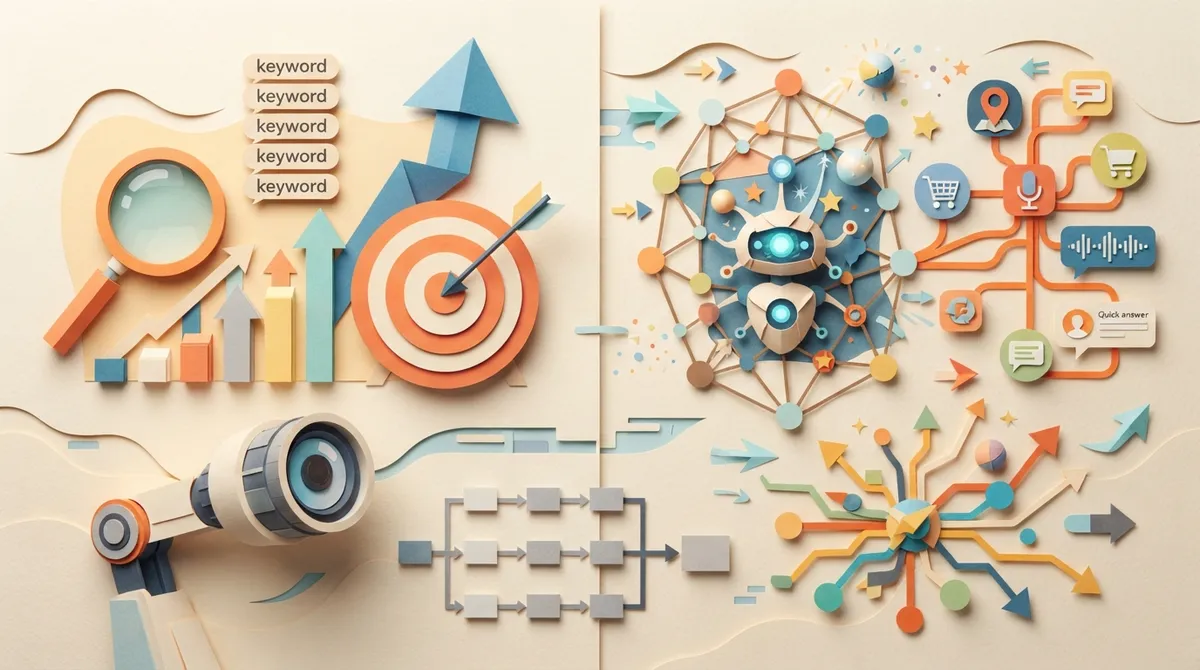
Quick Overview: Traditional SEO vs. AI Search Optimization
| Factor | Traditional SEO | AI Search Optimization |
|---|---|---|
| Main Goal | Rank in a list of links | Get cited inside an AI answer |
| Content Style | Keyword-focused pages | Direct answers and clear facts |
| Key Signals | Backlinks, keywords, speed | Trust, structure, entity clarity |
| Success Metric | Rankings and clicks | Mentions, citations, and referrals |
| Format | Long-form pages | Scannable, question-based sections |
The two work together. Strong SEO still feeds AI search. Learn more about how they connect in our post on the key differences between AEO and SEO.

1. Answer Questions Directly and Early
AI tools love clear answers. So put the answer right at the top of each section. Then add detail below it.
Here is a simple way to do it:
- Pick a real question your customers ask.
- Answer it in one or two short sentences.
- Add examples, steps, or proof after that.
- Use the question as your heading.
This format is easy for both people and machines to read. It also helps you land in featured snippets, which often feed AI answers.

2. Build Clear Topic Authority
One blog post will not make you the expert. AI tools favor sites that cover a topic deeply. That means writing several connected pieces around your main service.
For example, a local plumber might cover water heaters, drain cleaning, leak repair, and emergency calls. Each page links to the others. Together, they show you know your stuff.
This idea is called topical authority. Our team explains it well in this guide to topical authority. Strong content writing is the backbone of this step.
3. Use Structured Data and Schema Markup
Schema markup is a bit of code that tells search tools what your page is about. Think of it as a label on a jar. Without the label, the AI has to guess what is inside.
Helpful schema types include:
- FAQ schema for question-and-answer sections
- Local business schema for name, address, and hours
- Product schema for online stores
- Review schema for star ratings
- Article schema for blog posts
You do not have to be a coder to do this. Many website tools have plugins for it. Or a team that handles SEO can set it up for you.
4. Strengthen Your E-E-A-T Signals
E-E-A-T stands for Experience, Expertise, Authoritativeness, and Trustworthiness. AI tools want to quote sources that seem real and reliable.
Here is how to show it on your site:
- Add author names and short bios to your articles
- Share real case studies and customer stories
- Show awards, certifications, and years in business
- Include a clear About page and contact details
At Brain Buzz Marketing, we have been helping businesses grow online since 1998. You can see our credentials on our certifications page. Showing your own proof works the same way. For more on this idea, read about Google E-E-A-T.
5. Make Your Website Fast, Clean, and Easy to Read
AI crawlers need to read your pages. If your site is slow, cluttered, or broken, they may skip it. A strong site structure makes a big difference.
Focus on these basics:
- Use short paragraphs and clear headings.
- Keep page speed fast on mobile.
- Fix broken links and errors.
- Use plain text for key facts instead of hiding them in images.
- Make sure your pages load without heavy scripts blocking content.
If your site feels outdated, it may be time for a refresh. A custom, conversion-focused website design helps both visitors and AI tools. Not sure if you need one? See these signs it is time for a website redesign.
6. Optimize Your Google Business Profile and Local Signals
If you serve a local area, AI tools often pull from your Google Business Profile, reviews, and local listings. When someone asks for the best service near them, these signals matter a lot.
Here is what to update:
- Fill out every section of your profile
- Keep your name, address, and phone number the same everywhere
- Ask happy customers for reviews often
- Post updates, photos, and offers
- Add service areas and business categories
Local businesses in Brandon, Tampa, and across Florida can benefit a lot from this step. See what our own customers say on Google for Brain Buzz Marketing. Want a step-by-step plan? Try our guide on how to do local SEO in 2026.
7. Earn Mentions and Citations Across the Web
AI tools do not only look at your website. They also check what other sites say about you. The more trusted places that mention your brand, the more confident the AI feels.
Ways to earn mentions:
- Get listed in trusted local and industry directories.
- Share guest articles on respected sites.
- Join local business groups and events.
- Post helpful updates on social media like Instagram and LinkedIn.
- Encourage customers to mention you in reviews and posts.
Think of it as building your reputation, both online and off. The stronger your name is across the web, the more often AI will bring it up.
8. Write in Plain, Conversational Language
People talk to AI tools the way they talk to a friend. So your content should sound natural. Skip the fancy words and long sentences.
Try these writing habits:
- Use short sentences that get to the point
- Write the way your customers actually speak
- Cover follow-up questions people might ask next
- Use lists and tables for easy scanning
Here is a quick look at what works best:
| Do This | Not This |
|---|---|
| Give a clear answer in the first sentence | Bury the answer at the bottom |
| Use simple words | Use heavy jargon |
| Add facts, steps, and examples | Write vague, fluffy claims |
| Update old posts often | Leave content stale |
Clear writing wins with readers and AI alike. If writing is not your thing, our team offers keyword-targeted content writing to do the heavy lifting.
9. Track Your AI Visibility and Keep Improving
You cannot fix what you do not measure. Start checking whether AI tools mention your business. Ask ChatGPT, Perplexity, and Gemini questions your customers might ask. Then see who shows up.
Here is a simple tracking routine:
- List 10 to 15 questions your customers ask.
- Test them in several AI tools each month.
- Note whether your brand is mentioned or cited.
- Check your analytics for traffic from AI sources.
- Update pages that are not getting picked up.
AI search moves fast, so keep learning. Our post on ways to optimize for AI search results in 2026 is a great next read. You can also explore how to get your business recommended by AI search.
Common Mistakes to Avoid
Even smart business owners slip up here. Watch out for these traps:
- Ignoring traditional SEO. AI tools still lean on strong search rankings.
- Stuffing keywords. It makes your writing hard to read and hurts trust.
- Skipping updates. Old facts and dates make AI tools less likely to cite you.
- Blocking AI crawlers by accident. Check your robots.txt file.
- Thin content. Short, empty pages will not earn mentions.
If you are unsure where your site stands, an audit can help. Learn what SEO audit services reveal about your website.
Who Benefits Most From AI Search Optimization?
Nearly every business can gain from this. But a few groups have a real edge:
- Local service providers who want to appear when people ask for help nearby
- E-commerce retailers who want products recommended by AI shopping tools
- Startups who need to build trust fast with limited budgets
- Growing companies who want steady lead generation
The smaller and more focused you are, the easier it can be to become the go-to answer in your niche.
Ready to Get Found by AI?
Optimizing for AI search is not magic. It comes down to clear answers, strong trust signals, solid structure, and steady effort. Start with one or two steps from this list. Then build from there.
You do not have to do it alone. Brain Buzz Marketing has helped businesses grow online since 1998, and we stay ahead of changes like AI search so you do not have to. We are a small, dedicated team that works with clients across Florida and the entire United States, all online.
Ready to make your business the answer AI tools give? Contact us today and let’s build a plan that gets you found.
FAQs
Q: How do I optimize for AI search if I already do SEO?
A: Great news, you are already ahead! Keep doing your SEO, then add clear question-based headings, direct answers, schema markup, and strong trust signals. These small changes help AI tools pick your content.
Q: How long does it take to show up in AI search results?
A: It varies, but many businesses start to see changes within a few weeks to a few months. Strong, fresh content and steady mentions across the web speed things up. Patience and consistency pay off here.
Q: Do I need a new website to optimize for AI search?
A: Not always! Many sites just need cleaner structure, better content, and schema markup. If your site is slow, outdated, or hard to use, though, a redesign can give you a big boost.
Q: Is AI search optimization the same as SEO?
A: They are close cousins, but not twins. SEO helps you rank in a list of links, while AI search optimization helps you get quoted inside an answer. The best results come from doing both together.
Our Service Area