What Are the 4 Types of SEO Every Business Needs?
Discover the 4 types of SEO your business needs to boost rankings, from on-page tweaks to local search visibility.

Key Takeaways
-
Skip any of the four SEO types and your rankings suffer—on-page, off-page, technical, and local SEO must work together as an integrated strategy to maximize search visibility.
-
Local SEO delivers the fastest results for service providers and small businesses with physical locations, making it the priority foundation before building national authority.
-
Technical SEO is critical groundwork often overlooked by business owners; slow sites and broken links prevent search engines from ever finding your content, regardless of quality.
-
Off-page SEO through quality backlinks from trusted industry sources builds long-term authority, but one high-quality link outweighs dozens of low-quality ones.
Ever wonder why your competitor shows up on Google before you do, even though your website looks better? The answer usually comes down to one thing: SEO strategy. But here’s what most business owners don’t know. SEO is not just one thing you do once and forget. It’s actually four different types of work, all happening together to get you found online.
If you’ve been told “we do SEO” by an agency but never got a clear answer on what that actually means, you’re not alone. Understanding the 4 types of SEO helps you ask better questions, spot gaps in your current strategy, and make smarter decisions for your business. Whether you run a local shop in Brandon or manage an online store shipping across the country, this guide breaks it all down in plain English.
Why Understanding the 4 Types of SEO Matters for Your Business
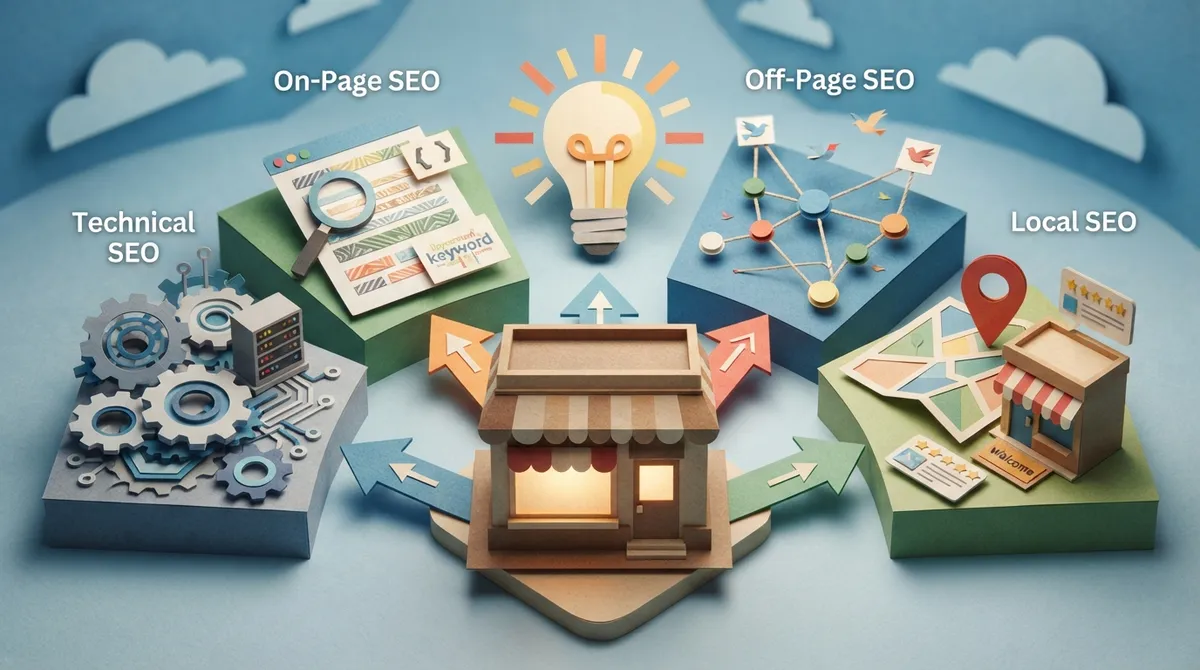
Search engines look at your website from many angles. They check your code. They check your content. They check what other sites say about you. They even check if people nearby can find you. Each of these checks falls under a different type of SEO.
Skip one type, and your rankings suffer. That’s why the best SEO strategies combine all four working together. Think of it like a car. You need an engine, wheels, a steering system, and brakes. Miss one part, and the whole thing stalls.

1. On-Page SEO: Optimizing What’s On Your Website
On-page SEO covers everything you control directly on your website. This includes your titles, headings, images, and the words you use in your content.
Search engines read your pages to understand what you offer. If your text is clear and organized, they reward you with better rankings. If it’s messy or thin, you get buried.
Key Elements of On-Page SEO
- Title tags and meta descriptions that include your target keywords
- Header tags (H1, H2, H3) that organize content logically
- Image alt text that describes pictures for search engines
- Internal links connecting related pages on your site
- Fast-loading pages and mobile-friendly design
- Quality content that actually answers what people search for
Small business owners often skip this step, thinking a pretty website is enough. It’s not. Our content writing services focus heavily on this type of SEO because words matter just as much as design. E-commerce retailers especially need strong product descriptions and category pages that speak directly to shopper intent.
2. Off-Page SEO: Building Trust Beyond Your Website
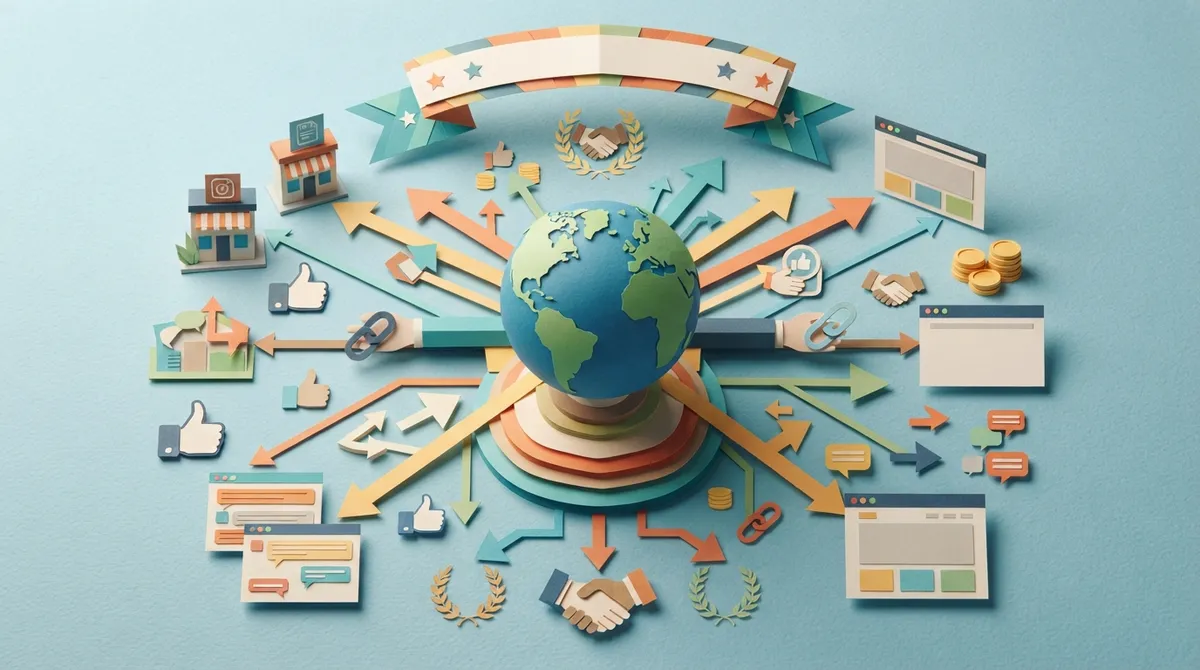
Off-page SEO happens outside your website. It’s mostly about backlinks, which are links from other websites pointing to yours. Think of backlinks like votes of confidence. The more trusted sites that link to you, the more Google trusts you too.
But it’s not just about quantity. Quality matters more. A single link from a respected industry publication can outweigh dozens of low-quality links.
Common Off-Page SEO Tactics
- Earning backlinks through guest posts on relevant industry blogs
- Getting featured in local news or business directories
- Building relationships with influencers who mention your brand
- Encouraging customer reviews on trusted platforms
- Social media mentions and shares that drive traffic back to your site
Wondering if this actually works? Check out our article on whether backlinks really help organic traffic to see the data behind this strategy. Marketing managers juggling multiple channels often find off-page SEO takes the longest to build, but it pays off with lasting authority.

3. Technical SEO: Making Sure Search Engines Can Read Your Site
Technical SEO is the behind-the-scenes work that most people never see. It’s about making sure search engines can crawl, read, and index your website without problems.
You could have the best content in the world, but if your site loads slowly or has broken links, search engines may never find it. This type of SEO is especially critical for startups launching a new website and e-commerce retailers with hundreds of product pages.
Technical SEO Checklist
| Technical Factor | Why It Matters |
|---|---|
| Site speed | Slow sites lose visitors and rank lower in search results |
| Mobile responsiveness | Most searches happen on phones; Google prioritizes mobile-friendly sites |
| XML sitemap | Helps search engines find and index all your pages |
| SSL certificate (HTTPS) | Builds trust and is a confirmed Google ranking factor |
| Structured data (schema markup) | Helps search engines understand your content and display rich results |
| Broken link cleanup | Prevents lost traffic and poor user experience |
This is where working with a professional team pays off. Our website design team builds sites with technical SEO baked in from day one, so you’re not fixing problems later. Reliable WordPress Hosting also plays a role here, since a slow server can hurt every other SEO effort you make.
4. Local SEO: Getting Found by Customers Nearby
Local SEO is a game-changer for service providers and small businesses with a physical location. It focuses on making sure your business shows up when someone nearby searches for what you offer.
Think “plumber near me” or “best coffee shop in Tampa.” These searches rely heavily on local signals like your Google Business Profile, local citations, and customer reviews.
Steps to Strengthen Local SEO
- Claim and fully complete your Google Business Profile with accurate hours and photos
- Keep your business name, address, and phone number consistent everywhere online
- Collect and respond to customer reviews regularly
- Create location-specific pages if you serve multiple areas
- Use local keywords naturally throughout your website content
We serve businesses throughout Brandon, Riverview, Valrico, Apollo Beach, Tampa, St. Pete, Clearwater, and Westchase, and local SEO is often the fastest way for these businesses to see results. You can read more in our guide on what local SEO is and why your business needs it. Want to see how real businesses feel about working with us? Take a look at Brain Buzz Marketing reviews on Google to see what our clients say.
How the 4 Types of SEO Work Together
None of these four types work well alone. On-page SEO gives search engines something great to read. Technical SEO makes sure they can actually read it. Off-page SEO builds trust in the wider web. Local SEO connects you with nearby customers ready to buy.
Marketing managers often ask which type matters most. The honest answer is that it depends on your goals. A local service provider might prioritize local SEO first. An e-commerce retailer might focus more on technical and on-page SEO to handle large product catalogs. A startup needs all four working from the very beginning to build a strong foundation.
Common Mistakes Businesses Make With SEO Types
Many business owners focus on just one type of SEO and wonder why results are slow. Here are mistakes we see often:
- Writing great content but ignoring site speed and mobile design
- Building backlinks without fixing broken pages or slow load times
- Optimizing locally but forgetting to update content regularly
- Chasing rankings without tracking what actually drives leads and sales
Avoiding these mistakes requires a coordinated strategy. That’s exactly what our digital marketing services are built to deliver. As search evolves with AI tools like ChatGPT and Google’s AI Overviews, businesses also need to think beyond traditional SEO. Learn more in our piece on generative engine optimization and why your business needs it.
Choosing the Right SEO Mix for Your Business
Not every business needs the same balance of these four types. Here’s a quick way to think about it:
| Business Type | Priority SEO Types |
|---|---|
| Small Business Owner | Local SEO, On-Page SEO |
| E-commerce Retailer | Technical SEO, On-Page SEO |
| Marketing Manager | All four, balanced strategically |
| Startup | Technical SEO foundation, then On-Page and Off-Page |
| Local Service Provider | Local SEO, Off-Page SEO (reviews) |
Our team has decades of combined experience helping all these business types grow. You can learn more about our background on our Our Story page or explore our certifications that back up our expertise.
Getting Started With a Complete SEO Strategy
SEO isn’t a one-time project. It’s an ongoing effort that pays off month after month. The businesses that win in search results are the ones that treat all four types of SEO as pieces of one puzzle, not separate tasks.
If you’ve been guessing at your SEO strategy, or if an agency never explained what they were actually doing for you, it might be time for a change. For more insight into building topical strength across your content, check out our resource on topical authority and why it matters for long-term rankings. You can also follow industry updates through resources like the Google Search Central documentation or stay current on marketing trends by checking out our Instagram for tips and updates.
Our founder also shares insights regularly, so feel free to follow Eric on LinkedIn or follow Nicole on LinkedIn for behind-the-scenes marketing advice. And if you want a tool that automates content creation for scale, SEO Rocket offers fully automated blog posts that rank.
Ready to Build a Stronger SEO Strategy?
Understanding the four types of SEO is the first step. Putting them into action correctly is where real growth happens. As a small but mighty, 100% virtual agency with roots dating back to 1998, we bring decades of experience to every project without the overhead of a big agency price tag.
Whether you need help with technical fixes, local visibility, content, or backlinks, we’re ready to build a custom plan for your business. Contact Us today and let’s talk about what your website needs to finally get found.
FAQs
Q: What are the 4 types of SEO?
A: The 4 types of SEO are on-page, off-page, technical, and local SEO. On-page covers your website content and structure, off-page focuses on backlinks and outside trust signals, technical SEO makes sure search engines can crawl your site properly, and local SEO helps nearby customers find your business. Together, they create a complete strategy for search visibility!
Q: Which type of SEO is most important?
A: Honestly, it depends on your business! A local coffee shop might lean hard into local SEO, while an online store might prioritize technical and on-page SEO. The good news is you don’t have to pick just one. A balanced approach across all four types usually delivers the best long-term results.
Q: How long does it take to see results from SEO?
A: Most businesses start seeing noticeable movement in 3 to 6 months, though it can vary based on your industry and competition. Local SEO tends to show results a bit faster than off-page link building. Patience really does pay off here, and consistent effort beats quick fixes every time.
Q: Can I do SEO myself, or do I need an agency?
A: You can absolutely start learning SEO basics on your own, and many business owners do! But as your website grows, juggling all four types of SEO gets time-consuming fast. That’s where a dedicated team can save you hours while making sure nothing falls through the cracks.
Q: Does local SEO still matter if I sell products online nationwide?
A: If you have a physical location or serve specific regions, local SEO still helps you capture nearby customers even alongside national e-commerce sales. But if you’re purely online with no local presence, you can shift more focus to technical and on-page SEO instead. It really comes down to how your customers find you!
Our Service Area