Classic SEO vs. AI Search SEO: Which Wins in 2026?
Compare classic SEO and SEO for AI search in 2026. Learn how each works and how to get your business cited by AI tools.

Key Takeaways
-
AI-referred traffic converts at 30-40%, significantly higher than standard channels, making optimization for AI search engines like ChatGPT and Perplexity crucial for business growth.
-
Don't abandon classic SEO—AI tools often cite pages that already rank well, so strong traditional SEO is the foundation for AI search visibility.
-
Write clear, direct answers under headings, use question-style headings matching how people talk to AI, and add schema markup to help AI tools understand and cite your content.
-
AI tools favor content that is well-organized, backed by facts and examples, mentioned across the web, and shows real expertise—aligning closely with Google's E-E-A-T guidelines.
-
Small businesses have a competitive advantage now since most haven't optimized for AI yet; early movers can establish brand authority and stand out with zero-click visibility.
-
Blend both SEO types strategically: start with classic SEO basics if brand-new, layer in AI-friendly content structure, and keep content fresh with updated stats and organized formatting.
Here’s something that might surprise you: more people are asking ChatGPT, Google’s AI Overviews, and Perplexity for answers than ever before. If you’ve been pouring time into classic SEO, you may be wondering whether it still works. Good news. It does. But it’s not the whole story anymore.
Welcome to the world of SEO for AI search. It’s a fresh way of making your website easy for AI tools to find, understand, and quote. And if you run a small business, an online store, or a growing company, this shift is a big deal.
In this friendly guide, we’ll compare classic SEO with AI search SEO side by side. You’ll learn what each one does, where they overlap, and how to use both without losing your mind. Think of it like pairing coffee with breakfast. Each is good alone, but together? Magic.
Let’s dig in and figure out which approach deserves your attention first.
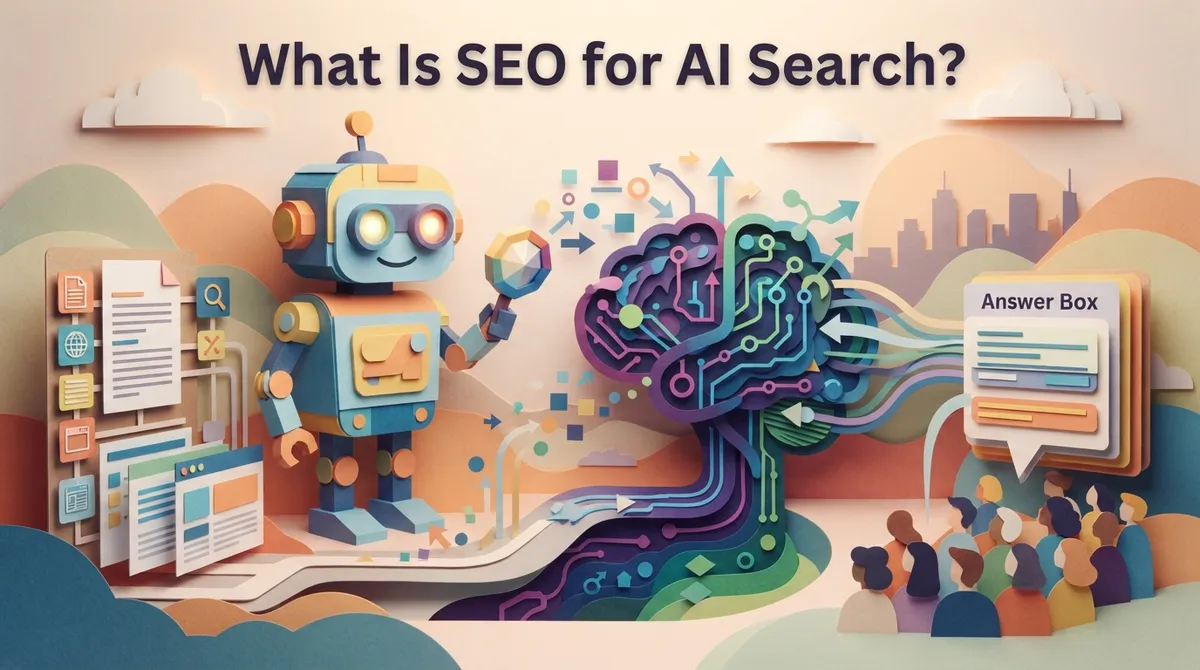
What Is SEO for AI Search?
SEO for AI search is the practice of shaping your content so AI-powered tools can pull it into their answers. These tools include Google’s AI Overviews, ChatGPT, Perplexity, and Claude. Instead of just ranking in a list of blue links, your goal is to get cited or recommended inside the answer itself.
You may also hear it called answer engine optimization or generative engine optimization. The names differ, but the idea is the same. You want AI to trust your business enough to mention it.
Why does this matter? Because AI tools often give people one clean answer. There’s no scrolling through ten results. If you’re not in that answer, you may not be seen at all. In fact, research shows that LLM-referred traffic converts at 30-40%, which is much higher than many standard channels.
What Is Classic SEO?
Classic SEO is the tried-and-true method of helping your pages rank in search engine results. It’s built on keywords, content quality, site speed, backlinks, and technical health. When someone types a search into Google, classic SEO helps your page show up near the top.
It’s still a powerhouse. Millions of people use traditional search every single day. If you want a refresher, our guide on organic SEO and how to grow your rankings without paid ads breaks it down nicely.
Classic SEO is also the foundation. AI tools often pull information from pages that already rank well. So skipping it would be like building a house with no floor.
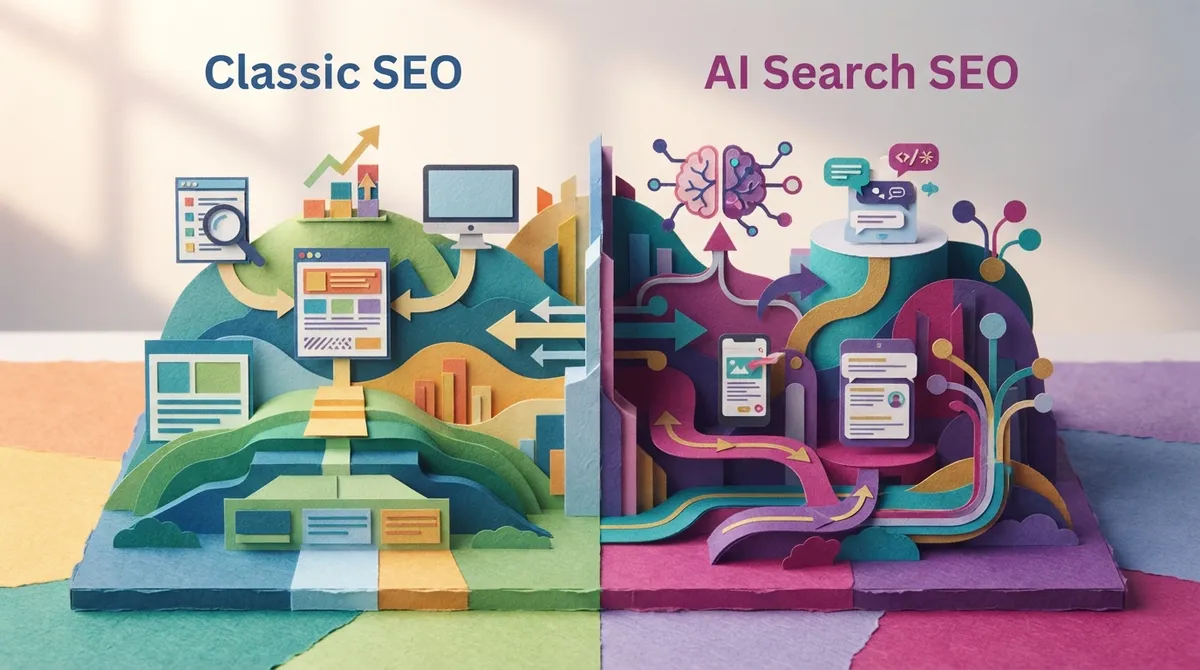
Classic SEO vs. AI Search SEO: Side-by-Side
Let’s put them head to head. Here’s a quick look at how they differ.
| Feature | Classic SEO | AI Search SEO |
|---|---|---|
| Main goal | Rank high in search results | Get cited in AI answers |
| Content style | Keyword-focused pages | Clear, direct answers to questions |
| Key signals | Backlinks, keywords, speed | Trust, structure, brand mentions |
| Where you show up | Search result pages | AI answers, summaries, chat replies |
| Success metric | Rankings and clicks | Citations and brand mentions |
| Speed of change | Steady and slow | Fast-moving and new |
Notice how they share a lot of DNA? That’s the secret. You don’t have to pick one and ditch the other.

Where Classic SEO Still Wins
Let’s give classic SEO its flowers. It still wins in several important ways.
- Proven results: Decades of data show it drives steady, lasting traffic.
- Clear tracking: You can measure rankings, clicks, and conversions with ease.
- Local power: Local searches like “plumber near me” still rely heavily on map listings and local rankings.
- Foundation for AI: AI tools often cite pages that already have strong rankings and trust.
For local service providers especially, classic and local SEO services remain the engine that brings in nearby customers. If you serve a specific area, don’t walk away from this.
Where AI Search SEO Pulls Ahead
Now let’s talk about where the new kid on the block shines.
- Higher-intent visitors. People who find you through an AI recommendation often arrive ready to act. They’ve already been told you’re a good fit.
- Less competition. Many businesses haven’t started optimizing for AI yet. That means early movers can stand out.
- Brand authority. Being named in an AI answer builds trust fast, like a friend giving you a shout-out.
- Zero-click visibility. Even when users never click, your name still appears in the answer. That’s brand exposure you didn’t have before.
If you want to see how this plays out, check out how to dominate zero-click searches for your business. It pairs well with this topic.
How AI Tools Decide What to Cite
Here’s the part that makes AI search SEO click. AI tools don’t just look at keywords. They try to understand meaning, context, and trust. If you’re curious about the nuts and bolts, our article on how AI search algorithms actually work goes deeper.
In simple terms, AI tools tend to favor content that is:
- Clear and easy to quote
- Written by a trusted, real source
- Well organized with headings and lists
- Backed by facts, examples, and experience
- Mentioned across the web, not just on your own site
This lines up closely with Google’s E-E-A-T guidelines: experience, expertise, authoritativeness, and trustworthiness. If your content shows real knowledge, AI is more likely to lean on it.
7 Practical Steps to Optimize for AI Search
Ready to roll up your sleeves? Here’s a simple plan you can start using today. These steps work for small businesses, online stores, startups, and growing companies alike.
- Answer questions directly. Put a short, clear answer right under each heading. Aim for two to three sentences. This makes your content easy for AI to lift.
- Use question-style headings. Headings like “How much does a new website cost?” match how people talk to AI tools.
- Add structured data. Schema markup helps machines understand your business, products, and FAQs.
- Build topical authority. Cover a subject deeply with several connected articles. Our piece on topical authority explains why this matters.
- Earn mentions and reviews. AI tools pay attention to what others say about you. Keep your Google Business Profile fresh and collect reviews.
- Keep content fresh. Update stats, dates, and advice so AI sees current information.
- Make your site fast and clean. A well-built, easy-to-read site helps both people and machines. Consider a quality website design if yours feels outdated.
For an even bigger list, take a peek at 10 ways to optimize for AI search results in 2026.
Content Writing That Works for Both
Here’s a little secret. Great content serves both worlds. You don’t need two separate writing styles. You just need to write clearly and helpfully.
Try this simple recipe for each page:
- Start with a short, direct answer.
- Follow with helpful details and real examples.
- Use lists and tables to organize information.
- Add a quick FAQ at the end.
- Include your brand name naturally so AI connects it with the topic.
Strong content writing is the backbone here. As we explain in 15 reasons content is the backbone of SEO in 2026, quality content still wins, no matter how search changes.
So Which One Should You Focus On First?
Honest answer? It depends on where your business stands today. Here’s a quick guide.
| Your Situation | Start With | Then Add |
|---|---|---|
| Brand-new website, no rankings | Classic SEO basics | AI-friendly content structure |
| Solid rankings, flat traffic | AI search SEO | Fresh content and schema |
| Local service business | Local SEO and Google Business Profile | FAQ content for AI answers |
| Online store | Product page SEO | Structured data and reviews |
| Outdated website | A site refresh | Both SEO types together |
For most businesses, the smartest move is to blend both. Build strong classic SEO, then layer on AI search tactics. If you’re still weighing the two, our comparison of SEO vs. AEO offers another helpful angle.
Common Mistakes to Avoid
Even smart business owners trip up here. Watch out for these.
- Dropping classic SEO. AI still leans on pages that rank well. Don’t abandon your base.
- Writing fluffy content. Long, wordy intros give AI nothing useful to quote.
- Ignoring reviews. Trust signals matter more than ever.
- Blocking AI crawlers by accident. Check your site settings so AI tools can read your pages.
- Expecting overnight wins. Like any good plant, SEO needs time to grow.
How Brain Buzz Marketing Can Help
Balancing both types of SEO can feel like juggling flaming torches. That’s where a friendly expert team helps. Brain Buzz Marketing is a small but mighty, husband-and-wife-run agency that’s been helping businesses grow since 1998. We handle SEO, AI search optimization, Google Ads, and custom websites, all with the personal attention a big agency can’t match.
Curious how others feel about working with us? Take a peek at our testimonials, or see what customers say when you visit us on Google — Brain Buzz Marketing. As a 100% virtual agency, we serve clients across Tampa, Brandon, Riverview, and all over Florida and the U.S.
Want to keep learning on your own? The team at SEO Rocket offers fully automated blog posts built to rank, which can be a handy tool alongside a solid strategy. And you can always follow Eric on LinkedIn for fresh marketing tips.
The Bottom Line
So, who wins the match: classic SEO or AI search SEO? Truthfully, it’s a tag-team victory. Classic SEO builds the foundation and brings steady traffic. AI search SEO helps you show up in the answers people increasingly trust. Together, they cover every path a customer might take to find you.
The best time to start was yesterday. The second best time is today. Begin by cleaning up your content, answering questions clearly, and earning trust through reviews and quality work.
Ready to make your business easy for both Google and AI to love? Reach out for a chat. Contact Brain Buzz Marketing today, and let’s build a search strategy that works now and in the years ahead.
FAQs
Q: What is SEO for AI search?
A: SEO for AI search is the practice of making your content easy for AI tools like ChatGPT, Perplexity, and Google’s AI Overviews to find, trust, and quote. The goal is to get your business named inside the AI’s answer, not just listed in search results.
Q: Is classic SEO still worth it with AI search growing?
A: Absolutely! Classic SEO is still the foundation, since AI tools often pull from pages that already rank well and look trustworthy. Think of it as the base layer, with AI search tactics stacked right on top.
Q: How do I get my business cited by AI tools?
A: Write clear, direct answers, use headings that match real questions, add schema markup, and earn reviews and mentions across the web. The more trusted and well-organized your content is, the more likely AI is to quote it.
Q: How long does it take to see results from AI search SEO?
A: Most businesses start noticing changes within a few months, though it varies by site and competition. Like classic SEO, it rewards patience and steady, quality work over quick tricks.
Q: Do small businesses need to worry about AI search?
A: Yes, and it’s actually a great opportunity. Since many competitors haven’t started yet, a small business that gets going now can stand out and build trust early.
Our Service Area