Conversational AI Advertising: A 2026 Guide for Businesses
Discover how conversational AI advertising works, what it costs, and how to start in 2026. A friendly guide for small businesses.

Key Takeaways
-
Conversational AI ads match the full intent of a user's question in an AI chat, not single keywords, so you describe the customer problem your business solves using context hints.
-
Conversational ads often face lower competition than traditional search ads, making them a good low-cost test channel for early adopters, especially small and local businesses.
-
ChatGPT ads currently require about $750/month in platform spend paid directly to OpenAI; Brain Buzz Marketing's management adds $250/month plus a $250 setup fee, per the article.
-
Conversational ads complement Google Ads: search ads capture ready-to-buy shoppers while chat ads reach researchers and decision-makers, so running both broadens coverage.
-
Pair paid ads with AEO and GEO optimization so AI tools recommend your business organically over the long term, not just through paid placements.
-
Before scaling spend, ensure a fast, clear landing page and analytics tracking are in place, since weak pages and untracked visits waste ad budget.
Picture this: a customer opens an AI chat tool and types, “What’s the best local company to redesign my website?” Instead of scrolling through ten blue links, they get one helpful answer, and maybe a clearly labeled ad right beside it. That is the world of conversational AI advertising, and it is already here in 2026.
If that sounds a little overwhelming, take a breath. You do not need a giant budget or a technical degree to understand it. Whether you run a small shop, a local service company, or a growing online store, this guide breaks it all down in plain language. You will learn what conversational AI advertising is, how it works, what it costs, and how to get started the smart way.
We will also share how a small, experienced team like Brain Buzz Marketing helps businesses show up where customers are asking questions today. Ready? Let’s dive in together.

What Is Conversational AI Advertising?
Conversational AI advertising means placing ads inside chat-style AI tools, where people ask questions and get answers in a natural back-and-forth. Think of tools like ChatGPT, Google’s AI features, and other assistants that talk with users instead of just listing links.
Here is the big difference from old-school ads. Traditional search ads match a short keyword like “plumber near me.” Conversational ads match a full thought, like “My kitchen sink is leaking and I need someone this weekend. Who should I call?” The ad appears because it fits the conversation, not just a single word.
That shift matters. People now speak to AI tools the way they would speak to a helpful friend. They share more details, ask follow-up questions, and expect useful answers. For advertisers, that means intent is clearer than ever.
Why It Matters for Your Business Right Now
More people are turning to AI chat tools for research and buying decisions. If your business does not show up in those conversations, your competitors’ customers might never find you. Even better, early adopters often enjoy lower competition and more attention.
Our team has also seen how AI-driven visitors tend to be well informed and ready to act. If you want to dig into that idea, check out why LLM-referred traffic converts so well.

How Conversational AI Advertising Works
The basics are simpler than you might think. Here is the typical flow, step by step:
- A user asks a question. They type or speak a full request into an AI chat tool.
- The AI understands the intent. It reads the whole conversation, not just one keyword.
- An ad is matched to that intent. Advertisers provide guidance, often called context hints, that tell the platform what kinds of conversations fit their offer.
- The ad appears with a clear label. Good platforms mark sponsored content so users always know what is an ad.
- The user clicks or keeps chatting. They land on your website, call you, or fill out a form.
Notice how step three is where the magic happens. Instead of choosing a list of exact keywords, you describe the problem your customer is trying to solve. It rewards businesses that truly understand their customers’ questions.
Context Hints Instead of Just Keywords
In traditional paid search, you bid on keywords. In conversational AI advertising, you often write short descriptions of the situations where your ad belongs. For example, a local roofing company might describe conversations about storm damage, leaks, or roof replacement quotes.
This is where clear, simple writing wins. The better you describe your customer’s problem, the better your ad can match. It is a lot like teaching a new team member who your ideal customer is.
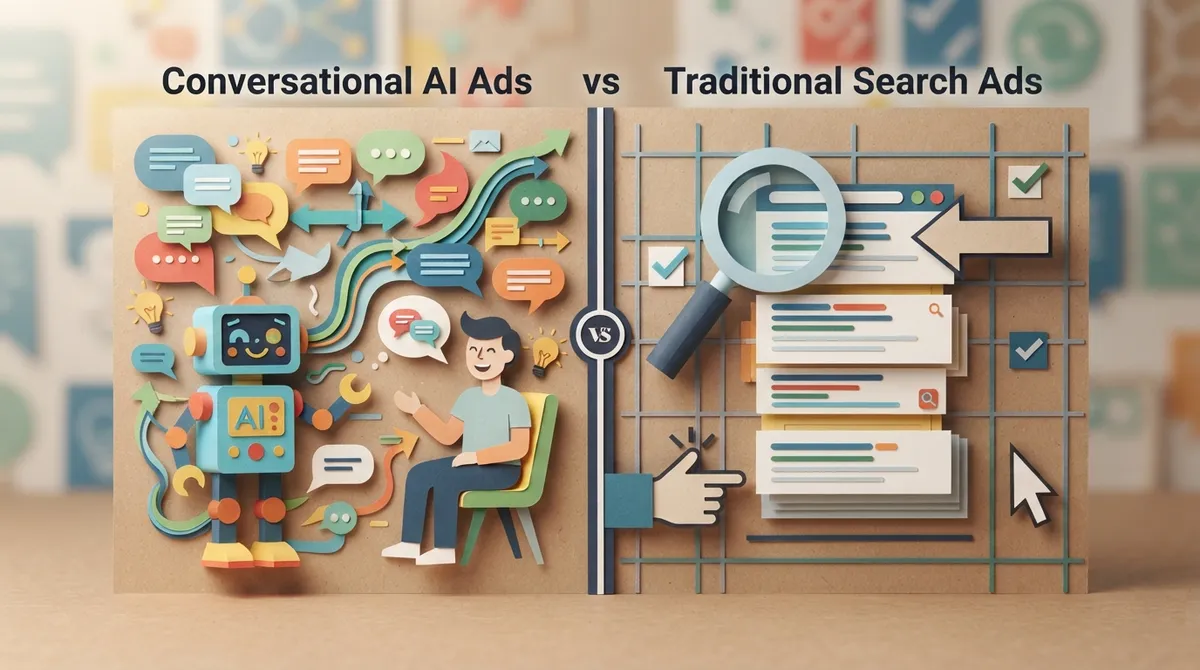
Conversational AI Ads vs. Traditional Search Ads
You might be wondering how this stacks up against the Google ads you may already run. Both can work well together, and each has its own strengths. Here is a quick side-by-side look:
| Feature | Traditional Search Ads | Conversational AI Ads |
|---|---|---|
| How people search | Short keywords | Full questions and conversations |
| How ads match | Keyword bidding | Intent and context hints |
| User mindset | Scanning and comparing | Asking for a recommendation |
| Competition level | Often high | Often lower for early adopters |
| Best for | Capturing ready-to-buy searches | Reaching researchers and decision-makers |
The takeaway? You do not have to pick one or the other. Many smart businesses run both. If you want a refresher on the classic side, our guide on how to run Google Ads that actually drive results is a great place to start.
Who Benefits Most from Conversational AI Advertising?
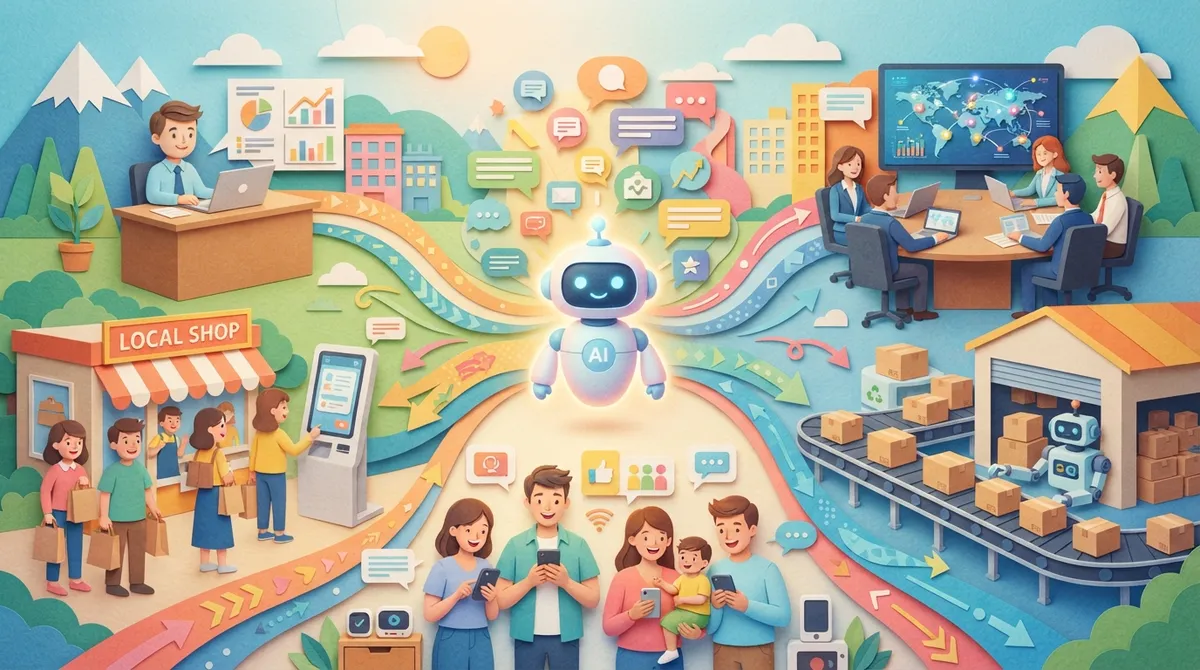
Good news: this is not just for big brands. Several types of businesses can benefit right away.
- Local service providers: People ask AI tools things like “Who is a trusted electrician in Brandon?” Showing up in that moment can win you a call.
- E-commerce retailers: Shoppers ask for product recommendations, comparisons, and gift ideas. Conversational ads can put your products in front of them at the perfect time.
- Startups: New companies can reach curious buyers quickly without years of search ranking history.
- Growing companies: Teams that already run SEO and paid search can add conversational ads as a new growth channel.
- Small business owners: With a modest monthly budget, you can test a fresh channel while competitors are still catching on.
If you serve customers in a specific area, local relevance matters even more. Pairing conversational ads with strong local visibility is a winning combo. Learn more in our post on what geo-targeting is and why your business needs it.
What Does Conversational AI Advertising Cost?
Cost is usually the first question we hear, and it is a fair one. Pricing varies by platform, but here is a helpful example of how things often break down.
With ChatGPT advertising, the platform currently asks for a minimum monthly ad spend that you pay directly to them. At Brain Buzz Marketing, our ChatGPT Ads management runs $250 per month plus a one-time $250 setup fee, and the platform’s ad spend of about $750 per month is paid directly to OpenAI. That makes it one of the more approachable ways to test a brand-new channel.
For comparison, our Google Ads management is $750 per month plus a $250 one-time setup fee. Many clients find that running a smaller conversational test alongside a proven search campaign gives them the best of both worlds.
What Is Included in Management?
When you work with a team, here is what good management typically covers:
- Eligibility checks against the platform’s ad policies
- Ad groups planned around real customer intent
- Context hint writing for each ad group
- Headline and description copywriting
- Location and device targeting
- Analytics tracking so you can see visitors from AI platforms
- Ongoing testing, budget monitoring, and monthly reporting
Curious about budgeting in general? Try our marketing spend calculator to see what makes sense for your goals.
How to Get Started: A Simple 6-Step Plan
Feeling ready to jump in? Here is a friendly roadmap you can follow.
- Define your best customer. Write down who they are, what they struggle with, and the exact questions they ask.
- Check platform eligibility. Make sure your business and offer follow the ad rules. Some industries are restricted.
- Plan your ad groups. Group your services by customer need, such as “emergency repair” or “new installation.”
- Write helpful context hints and ad copy. Speak plainly and focus on solving the problem.
- Send traffic to a strong landing page. A fast, clear page with an easy call to action is a must.
- Track, test, and improve. Watch what works, then do more of it.
That fifth step is where many businesses stumble. Great ads sending people to a weak page waste money. A professionally built site makes everything work harder, which is why our team often recommends starting with solid website design before scaling ad spend.
Conversational AI Advertising and SEO Work Better Together
Here is something many people miss. Paid conversational ads are only one piece of the puzzle. AI tools also recommend businesses organically, based on the content and trust signals they find online.
That is why smart brands combine ads with Answer Engine Optimization (AEO) and Generative Engine Optimization (GEO). These strategies help AI tools understand, trust, and recommend your business without a paid placement. Think of ads as the fast lane and optimization as the long-term road.
If you want to explore that side, these guides are great next reads:
- What Is AEO and Why Does Your Business Need It?
- How to Get Your Business Recommended by AI Search
- 10 Ways to Optimize for AI Search Results in 2026
Strong SEO and quality content writing feed both your paid and organic visibility. When all the pieces line up, your brand shows up everywhere customers are asking questions.
Common Mistakes to Avoid
Every new channel comes with a learning curve. Here are the missteps we see most often, so you can sidestep them.
- Writing hints that are too vague. “Business services” tells the AI nothing. Be specific about the problem you solve.
- Ignoring the landing page. A slow or confusing page loses visitors fast.
- Skipping tracking. If you cannot measure visits and leads, you cannot improve.
- Being too salesy. Conversational ads work best when they feel helpful, not pushy.
- Expecting instant perfection. Testing and tweaking is part of the process. Give it time.
Budget leaks in other ad channels teach the same lessons. Our article on pay-per-click advertising mistakes that drain your budget shares tips that apply here too.
Looking Ahead: Where Conversational Advertising Is Going
The trend is clear. More shopping, research, and local discovery will happen inside AI conversations. Platforms are still shaping their ad formats, targeting options, and reporting tools, which means the rules will keep evolving.
For businesses, that is actually exciting. Learning now means you will be comfortable while others scramble later. Staying flexible and focused on genuinely helping customers will always serve you well. For a broader view of where marketing is heading, see our look at AI CEOs’ 2026 predictions and how marketing must change.
Why Work with a Small, Experienced Team?
Brain Buzz Marketing has been helping businesses grow online since 1998. We are a small, husband-and-wife-led team, which means you work directly with people who care about your results. Because we are 100% virtual, collaboration is easy and flexible wherever you are located. You can read more about Brain Buzz Marketing or see what clients say on our testimonials page. You can also visit us on Google for Brain Buzz Marketing reviews from our Tampa-area clients and beyond.
For more tips and behind-the-scenes marketing insights, you can follow us on Instagram or connect with Eric on LinkedIn. If you are curious about automated content that ranks, SEO Rocket is another resource worth exploring.
Final Thoughts: Start Small, Learn Fast
Conversational AI advertising is not a fad. It is a natural shift in how people look for answers, and it opens a friendly door for businesses willing to try something new. You do not need to master everything today. Start with a clear understanding of your customer, a strong website, and a small test budget. Then watch, learn, and grow.
If you would like a guiding hand, we would love to help you plan, launch, and manage your campaigns. Get in touch with our team today, and let’s talk about how conversational AI advertising can bring more of the right customers to your business.
FAQs
Q: What is conversational AI advertising?
A: Conversational AI advertising means showing ads inside AI chat tools where people ask questions in natural language. Instead of matching a single keyword, the ad matches the full intent of the conversation. It is a friendly, helpful way to reach customers right when they are asking for recommendations.
Q: Is conversational AI advertising worth it for small businesses?
A: For many small businesses, yes! It can reach well-informed buyers with less competition than crowded search ads, and you can start with a modest test budget. The key is a clear message, a strong landing page, and good tracking so you can see what works.
Q: How much does it cost to advertise on ChatGPT?
A: Platform ad spend is paid directly to the platform and currently starts around $750 per month. Management through Brain Buzz Marketing is $250 per month plus a one-time $250 setup fee. Costs can change as the platform evolves, so it is smart to confirm current details before you begin.
Q: Does conversational AI advertising replace Google Ads?
A: Not at all. Think of it as a great partner to Google Ads rather than a replacement. Search ads capture people ready to buy, while conversational ads reach those researching and asking questions, so using both can give you wider coverage.
Q: How is conversational AI advertising different from SEO?
A: Conversational ads are paid placements that appear in AI chats, while SEO, AEO, and GEO help your business get recommended organically over time. The best results usually come from combining both, so you win today and keep growing tomorrow.
Our Service Area