How to Structure Content So AI Tools Cite Your Business
How do I get AI tools to cite my business? Use answer-first writing, clear headings, schema, and trust signals in 2026.

Key Takeaways
-
Lead with a direct answer in the first 40-60 words at the top of each section—don't make AI dig for information, as this is the single biggest trick for getting cited.
-
Use clear, question-based H2 and H3 headings that match how people actually ask AI tools, and keep paragraphs to 2-4 sentences so AI can pull small, quotable chunks.
-
Add schema markup (LocalBusiness, FAQPage, Article) to label your content for machines, and ensure your business name, address, and phone match across your website, Google Business Profile, and all online directories.
-
Build trust with E-E-A-T signals by showing real project examples, citing credible sources, displaying customer reviews, and listing credentials—AI tools favor sources that look trustworthy and avoid spreading misinformation.
-
Use structured formats like lists, tables, and comparison grids instead of dense paragraphs, as AI tools love extracting from organized data and these formats are easier for readers to scan.
-
Update your top pages every 3-6 months with fresh stats, new questions, and current dates, while building topic clusters around related pages to show AI you're a deep expert in your subject.
Picture this. A potential customer opens ChatGPT, Perplexity, or Google’s AI Mode and types, “Who is the best plumber near me?” or “What’s the best way to fix my website’s SEO?” The AI gives a clean answer and names a few businesses. Is yours one of them? If not, you’re missing out on a new kind of customer who is ready to buy.
The good news? You don’t need a giant budget or a tech degree to fix this. You just need to know how to structure content so AI tools cite your business. AI tools pull from pages that are clear, organized, and trustworthy. When your content is built the right way, AI models can find it, understand it, and quote it.
In this friendly guide, we’ll walk through the exact steps. Whether you’re a small business owner, an online store operator, a startup, or a local service provider, you can use these tips right away. Let’s get your business into the AI conversation!
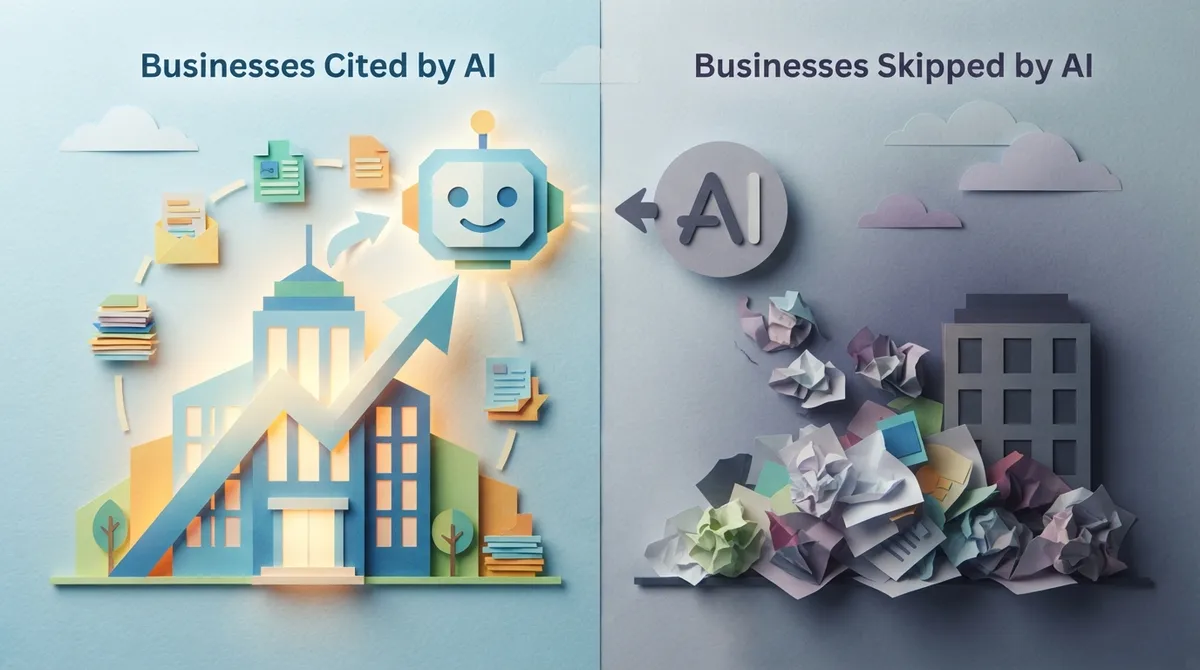
Why AI Tools Cite Some Businesses and Skip Others
Before we dive into the steps, let’s talk about how AI tools pick their sources. Think of an AI tool like a very fast, very picky research assistant. It scans the web, looks for clear answers, and decides which sources it can trust.
AI tools tend to cite content that is:
- Easy to read: Short sentences, clear headings, and direct answers.
- Well organized: A logical flow that AI can break into small pieces.
- Trustworthy: Backed by real experience, facts, and credible sources.
- Consistent: The same business details show up everywhere online.
This is a big shift from old-school SEO. If you want a deeper look at the difference, check out this guide on 7 key differences between AEO and SEO. The short version is simple. Ranking on page one is great, but getting quoted inside the answer is even better.

How to Structure Content So AI Tools Cite Your Business: Step by Step
Ready for the good stuff? Here is a simple, repeatable process. Follow these steps for each page or blog post you publish.
- Start with the question your customer is really asking.
- Give a direct answer in the first 40 to 60 words.
- Use clear H2 and H3 headings that mirror real questions.
- Break ideas into short paragraphs, lists, and tables.
- Add proof, such as stats, examples, and sources.
- Add schema markup so machines understand your page.
- Keep your business details the same everywhere.
- Update your content often so it stays fresh.
Let’s break each one down so you can put it to work.
Step 1: Start With the Real Question
Every great AI-friendly page starts with a real question. People talk to AI tools like they talk to a friend. They ask full questions like “How much does a website cost?” instead of typing short keywords.
So, write your content around those natural questions. Look at your customer emails, phone calls, and reviews. What do people ask you over and over? Those questions are gold.
Here are a few easy places to find real questions:
- Your own inbox and contact form messages
- Google’s “People Also Ask” boxes
- Reviews and comments on your Google Business Profile
- Questions your sales team hears every week
Step 2: Lead With a Direct Answer
This is the single biggest trick. Put the answer right at the top of the section. Don’t make AI (or your reader) dig for it.
Here’s a simple example. Say your heading is “How much does a website cost?” Your first sentence should answer it right away. Something like: “A professional small business website typically costs between $800 and $2,500, depending on the number of pages and features.” Then you can explain more below.
This style is often called the “answer-first” approach. It helps AI tools lift your text word for word. It also helps busy readers. To learn more about this style, read what answer engine optimization is and how to do it.
Step 3: Use Headings That Match Real Questions
Headings are like road signs for AI. They tell the tool what each section is about. Vague headings like “Our Approach” don’t help. Clear headings like “How Long Does Local SEO Take to Work?” do.
Follow these heading tips:
- Use one H2 for each main topic.
- Use H3s for smaller sub-points under each H2.
- Write headings as questions or clear statements.
- Keep them short and plain.
Think of your page like a book with a good table of contents. If AI can scan your headings and instantly know what you cover, you’re in great shape.
Step 4: Break Ideas Into Short Chunks
AI tools don’t read your page like a novel. They pull out small “chunks” of text. So each paragraph should stand on its own and make sense without the paragraphs around it.
Here are some easy rules for chunking:
- Keep paragraphs to 2 to 4 sentences.
- Cover just one idea per paragraph.
- Use bullet lists for features and tips.
- Use numbered lists for steps and processes.
- Use tables to compare options.
Short, clean chunks are easier for AI to quote. They’re also easier on human eyes. Everybody wins!
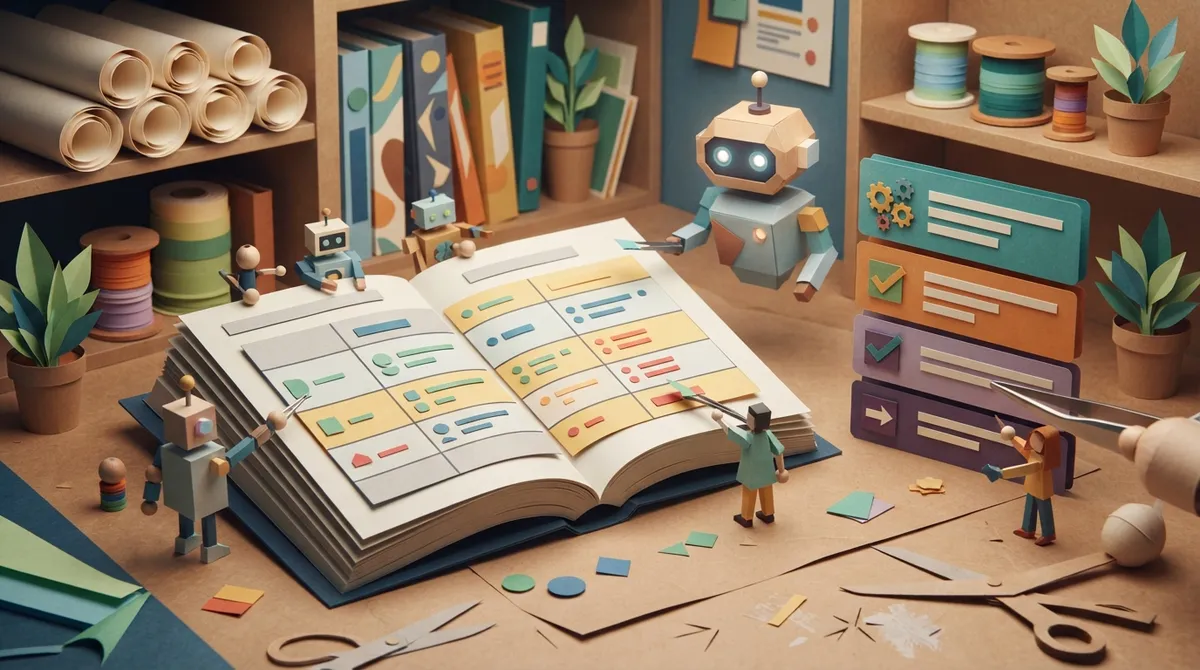
Use Tables and Lists AI Loves to Quote
Tables and lists are like candy for AI tools. They’re neat, clear, and easy to lift. When you have data, comparisons, or steps, put them in a structured format.
Here’s a quick look at which content formats work best for different goals:
| Content Format | Best Used For | Why AI Likes It |
|---|---|---|
| Numbered list | Step-by-step instructions | Shows a clear order of actions |
| Bullet list | Features, tips, benefits | Easy to scan and quote |
| Comparison table | Pricing, options, pros and cons | Packs facts into a tidy grid |
| FAQ section | Common customer questions | Matches how people ask AI |
| Short definition | Explaining a term | Gives a quotable one-line answer |
You don’t have to use all of these on every page. Just pick the ones that fit your topic. A pricing page might use a table. A how-to post might use a numbered list.

Build Trust With Proof AI Can Verify
AI tools want to avoid sharing wrong information. So they lean toward sources that look trustworthy. This is where something called E-E-A-T comes in. It stands for Experience, Expertise, Authoritativeness, and Trustworthiness.
You can show these signals in simple ways:
- Show real experience. Share real project examples and results from your own work.
- Add author names. Put a real person’s name and short bio on your posts.
- Cite your sources. Link out to respected sites when you share a stat.
- Share reviews. Real customer feedback builds trust fast.
- List credentials. Awards, years in business, and certifications all help.
If you’re curious how trust signals work, take a look at our certifications and testimonials pages. They show exactly how a business can display proof in a clear way.
Also, always back up your claims. For example, the Google Search Central guide to helpful content explains how people-first content earns more trust. Linking to sources like this makes your page look more credible to both readers and AI.
Add Schema Markup So AI Understands Your Page
Schema markup sounds scary, but it’s really just a bit of hidden code. It tells machines exactly what your page is about. Think of it like a name tag for your content.
Here are the most helpful schema types for small businesses:
- Organization or LocalBusiness: Shares your name, address, phone, and hours.
- FAQPage: Marks up your question-and-answer sections.
- Article: Tells machines who wrote a post and when.
- Review: Highlights customer ratings.
- Service or Product: Describes what you sell.
You don’t have to code this yourself. Many website builders and plugins can add schema for you. A well-built site makes this much easier. If your current site is outdated, a custom website design can build schema in from day one.
Keep Your Business Info Consistent Everywhere
Here’s something many people miss. AI tools don’t just read your website. They check other places too. They look at your Google Business Profile, directories, social pages, and review sites.
If your business name, address, and phone number don’t match across these places, AI gets confused. And a confused AI will usually skip you.
Do a quick check on these spots:
- Your website footer and contact page
- Your Google Business Profile
- Social media profiles like Instagram and LinkedIn
- Online directories and review sites
Make sure your name, address, phone number, and service descriptions match everywhere. This is especially important for local service providers. If you want help with this, our guide on Google Business Profile management walks through the steps. You can also see what real customers say when you visit us on Google — Brain Buzz Marketing.
Write Clear, Simple, Human Content
Here’s a fun truth. AI tools favor content that sounds like a real person wrote it. Stuffing in keywords or using fancy jargon backfires.
Follow these simple writing rules:
- Use short sentences, about 15 to 20 words each.
- Choose everyday words over fancy ones.
- Write like you talk to a friend.
- Define any tricky term the first time you use it.
- Use active voice, like “We build websites,” not “Websites are built by us.”
Clear writing helps everyone, including people who skim. It also helps AI pull accurate quotes. If you need a hand with this, our content writing services are built for exactly this kind of clear, search-friendly writing.
Create Topic Clusters to Show You’re the Expert
One great page is good. A group of related pages is even better. This is called a topic cluster. It shows AI that you really know your subject.
Here’s how it works. Pick one main topic, like “local SEO.” Then write several supporting posts around it. You might cover costs, timelines, common mistakes, and step-by-step guides. Link them all together.
When AI sees that you cover a topic deeply, it trusts you more. You become the go-to source. To learn more about this idea, read about topical authority.
A simple cluster for a local plumber might look like this:
- Main page: Emergency plumbing services
- Supporting post: How much does a plumber cost?
- Supporting post: What to do before the plumber arrives
- Supporting post: Signs you have a hidden water leak
Keep Your Content Fresh and Up to Date
AI tools love fresh information. An article from years ago may get passed over for something newer. So make updating a habit.
Try this simple routine:
- Review your top pages every 3 to 6 months.
- Update stats, prices, and dates.
- Add new questions you’ve been hearing.
- Show a clear “last updated” date on the page.
Fresh content tells AI that your business is active and reliable. It’s a small effort with a big payoff.
Make Sure AI Can Actually Reach Your Site
Even the best content won’t get cited if AI tools can’t reach it. So let’s do a quick technical check. Don’t worry, it’s easier than it sounds.
- Fast loading: Slow pages lose readers and crawlers.
- Mobile friendly: Your site should look great on phones.
- Crawlable: Don’t accidentally block AI bots in your robots.txt file.
- Clean structure: Use real text, not just images of text.
- Secure: Use HTTPS so your site is safe.
If your site feels slow or outdated, it may be time for a refresh. Our guide on 10 ways to optimize for AI search results in 2026 covers many of these technical basics.
Common Mistakes That Keep AI From Citing You
Let’s save you some headaches. Here are the mistakes we see most often:
- Burying the answer. Long intros hide what AI is looking for.
- Vague headings. “Learn More” tells AI nothing.
- Thin content. Short, shallow pages rarely get cited.
- Inconsistent info. Mismatched details erode trust.
- No proof. Claims without sources feel risky to AI.
- Old content. Outdated pages lose out to fresher ones.
The good news is every one of these is fixable. Start with your most important pages and work your way down.
A Simple Checklist to Keep Handy
Before you hit publish, run through this quick list:
- Does the page answer one clear question?
- Is the direct answer at the top of each section?
- Are headings clear and question-based?
- Are paragraphs short and focused?
- Did you add a list, table, or FAQ where it helps?
- Do you cite real sources and show real experience?
- Is schema markup added?
- Do your business details match everywhere?
If you can say yes to most of these, you’re well on your way. For even more ideas, see how to get your business recommended by AI search.
Let’s Get Your Business Cited by AI
Learning how to structure content so AI tools cite your business is one of the smartest moves you can make in 2026. Lead with clear answers, use tidy headings, add proof, keep your details consistent, and refresh your pages often. These small habits add up fast.
And you don’t have to do it alone. Brain Buzz Marketing has been helping businesses grow online since 1998. As a small but mighty, fully virtual team, we handle SEO, GEO, and AEO content strategy so your business shows up in both search results and AI answers. Want help? Contact Us today and let’s get your business into the conversation. You can even follow Eric on LinkedIn for more marketing tips.
FAQs
Q: How do I structure content so AI tools cite my business?
A: Start each section with a direct answer, use clear question-based headings, and keep paragraphs short. Add lists, tables, schema markup, and real proof like reviews and sources. Keep your business details the same everywhere online so AI trusts you.
Q: Does schema markup help AI tools cite my website?
A: Yes, it really does! Schema markup is like a name tag that tells machines what your page is about. FAQ, LocalBusiness, and Article schema are great places to start.
Q: How long does it take for AI tools to start citing my content?
A: It varies, but many businesses see early results within a few weeks to a few months. Fresh, well-structured pages on trusted sites tend to get picked up faster. Staying consistent is the real secret.
Q: Is optimizing for AI different from regular SEO?
A: They overlap a lot, but they aren’t identical. Regular SEO focuses on ranking in search results, while AI optimization focuses on getting your answers quoted directly. The best plan uses both together.
Q: Do I need a new website to get cited by AI tools?
A: Not always! Many businesses can improve by restructuring existing pages. If your site is slow, outdated, or hard to update, though, a redesign can make everything much easier.
Our Service Area