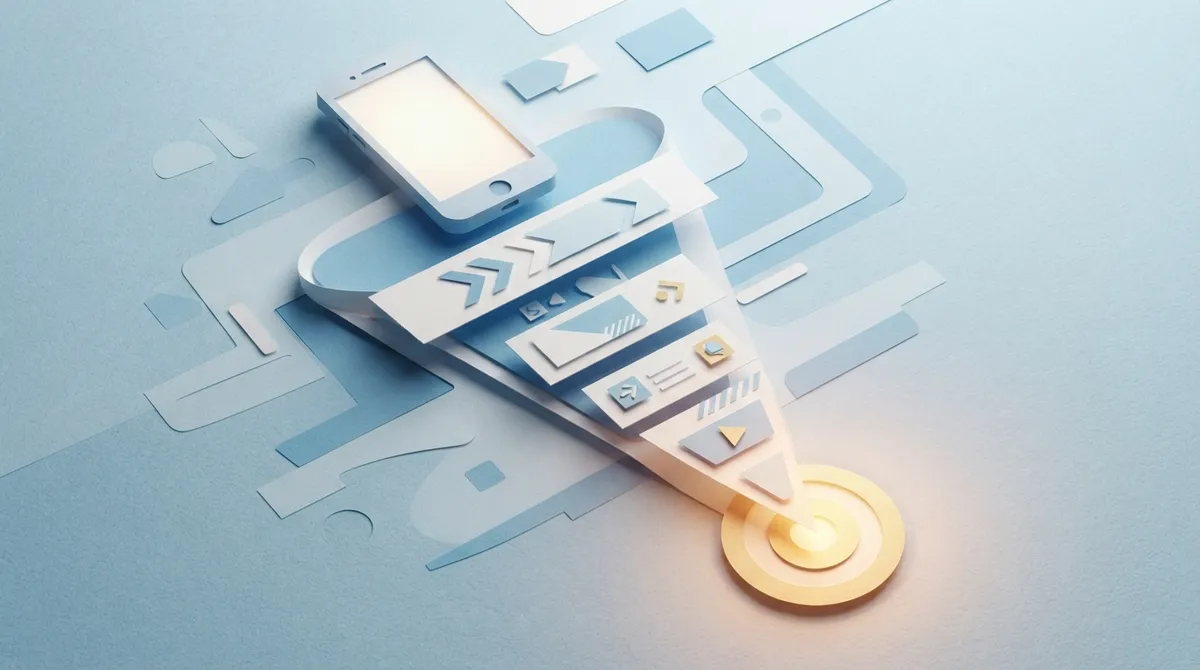
The Website Design Process: 7 Steps to a Site That Sells
Discover the 7-step website design process agencies use to build sites that rank higher and turn visitors into customers.

Key Takeaways
-
Build SEO, mobile optimization, and proper site structure into the design phase from the start rather than adding them later, as retrofitting SEO costs time and money while proper planning prevents costly redesigns.
-
Follow a 7-step proven process (discovery, keyword planning, wireframing, design, development, testing, launch) instead of skipping to design immediately, preventing expensive rework and ensuring your site attracts actual customers.
-
Establish clear communication with one point contact on your team and prepare brand assets before the project starts to shave weeks off timeline and prevent miscommunication between departments.
-
Test every link, form, and page across multiple devices and browsers before launch, including checking page load speed, alt text, and analytics installation to prevent broken features frustrating potential customers.
-
Plan for ongoing website maintenance and updates after launch as a living asset requiring regular care, security patches, and content additions rather than treating it as a finished product.
-
Conduct keyword research and content planning by understanding what customers actually search for before designing pages, including how people interact with AI tools like ChatGPT and Google AI Overviews.
Ever wonder what actually happens between hiring a marketing agency and seeing your new website go live? You’re not alone. Most small business owners feel a little lost when they hear terms like “wireframe” or “staging site” tossed around. The good news? The website design process doesn’t have to feel like a mystery, and it definitely shouldn’t feel scary.
At Brain Buzz Marketing, we’ve walked hundreds of business owners through this journey since 1998. Whether you’re a startup founder in Tampa or an e-commerce retailer shipping products nationwide, understanding the website design process helps you make smarter decisions and get better results. Let’s break it down step by step, in plain language, so you know exactly what to expect.

What Is the Website Design Process, Really?
The website design process is the series of steps an agency follows to turn your ideas into a working website. Think of it like building a house. You don’t just start hammering nails. You plan, sketch, build a frame, then add the finishing touches.
A good website design process balances three things: how your site looks, how it works, and how well it performs in search engines. Skip any of these, and you end up with a site that’s pretty but doesn’t attract customers, or one that ranks well but confuses visitors the moment they land on it.

Why the Right Process Matters for Your Business
Small business owners often think website design is just about picking colors and fonts. It’s so much more than that. A thoughtful process directly affects whether your website design actually brings in leads and sales.
Here’s why following a proven process matters:
- It prevents costly redesigns down the road
- It keeps your project on budget and on schedule
- It ensures your site is built with SEO in mind from day one
- It gives you, the business owner, clear checkpoints to review progress
- It reduces stress because you always know what’s happening next
We’ve seen too many businesses hire a freelancer who skips straight to design without any planning. The result? A site that looks nice for a month, then falls apart when they try to add new pages or products.

The 7 Steps of a Proven Website Design Process
Here’s how a professional website design process typically unfolds. This is the same framework we use for clients across Tampa, Brandon, Riverview, and beyond.
1. Discovery and Goal Setting
Every good website starts with questions, not design software. Your agency should ask about your business goals, your target customers, and what you want visitors to do once they land on your site. This is also when we talk about your competitors’ online presence and where your business fits in the market.
For local service providers, this step often includes discussing your service area and how local SEO services will tie into your new site’s structure.
2. Keyword and Content Planning
Before a single page gets designed, smart agencies figure out what your customers are actually searching for. This step ties your website’s structure to real search behavior, including how people ask questions to AI tools like ChatGPT or Google’s AI Overviews.
This is where content writing services come into play. Every page needs a purpose and a keyword focus, whether it’s your homepage, service pages, or blog.
3. Sitemap and Wireframing
A sitemap is basically a blueprint. It shows every page your site will have and how they connect. Wireframes are simple sketches showing where buttons, images, and text will go on each page, without worrying about colors or fonts yet.
This step matters because it’s much cheaper to move a box around on a wireframe than to redesign a fully built page later.
4. Visual Design
Now comes the fun part. This is where your brand colors, logo, fonts, and imagery come together into an actual look and feel. If you don’t have a logo yet, many agencies offer logo design services as part of the package.
Good design isn’t just about looking pretty. Every visual choice should guide visitors toward taking action, whether that’s calling your business or making a purchase.
5. Development and Coding
This is where designers hand off files to developers who build the actual, functioning website. This step includes making sure your site loads fast, works on mobile phones, and connects properly with tools like WordPress hosting.
A well-built site also needs to be structured correctly for SEO from the start. This includes proper heading tags, image alt text, and clean code that search engines can easily read.
6. Testing and Quality Checks
Before anything goes live, your site needs thorough testing. This means checking every link, every form, and every page on different devices and browsers. Nothing frustrates a potential customer more than a broken contact form or a page that looks great on desktop but falls apart on a phone.
Here’s a simple checklist agencies should run through before launch:
- Test all forms and buttons for proper function
- Check page load speed on mobile and desktop
- Review every page for spelling and grammar errors
- Confirm all images have proper alt text for accessibility and SEO
- Verify tracking tools like Google Analytics are installed correctly
- Test the site across multiple browsers like Chrome, Safari, and Firefox
- Double-check that contact information matches your Google Business Profile
7. Launch and Ongoing Optimization
Launch day is exciting, but the process doesn’t end there. Your website needs regular updates, security patches, and content additions to keep performing well in search results. Many businesses don’t realize that a website is never really “finished.” It’s a living asset that needs care.
This is also the point where ongoing SEO work and possibly Google Ads Management come into play to drive traffic to your brand-new site.

Website Design Process Timeline: What to Expect
One question we hear constantly: “How long is this going to take?” The honest answer is that it depends on your site’s complexity. Here’s a general breakdown to help you plan.
| Project Type | Typical Timeline | Best For |
|---|---|---|
| Simple 3-page site | 1-2 weeks | Startups, service providers needing a basic online presence |
| Standard business site (5-10 pages) | 2-4 weeks | Small businesses, local service providers |
| Custom site with CMS | 4-6 weeks | Growing businesses needing to update content themselves |
| E-commerce website | 6-10 weeks | Online retailers needing product pages and checkout |
Keep in mind these are estimates. Adding professional SEO content, custom features, or e-commerce functionality can extend the timeline. It’s always better to build it right the first time than to rush and redo work later.
Common Mistakes That Slow Down the Website Design Process
We’ve seen plenty of projects hit unnecessary bumps. Here are the biggest culprits:
- Not having your content ready when design begins
- Changing your mind repeatedly during the design phase
- Skipping keyword research entirely
- Choosing a template site instead of a custom build for a growing brand
- Forgetting about mobile users when reviewing designs
- Not budgeting time for revisions and feedback rounds
If you want to avoid these headaches, check out our guide on website design factors that actually drive results for more insight.
How Marketing Managers Can Streamline the Process
If you’re a marketing manager juggling multiple projects, the website design process can feel like just one more thing on your plate. Here’s how to make it smoother:
- Assign one point of contact on your team to communicate with the design agency
- Gather brand assets like logos and photos before the project starts
- Set clear KPIs for what success looks like, whether that’s leads, sales, or sign-ups
- Schedule regular check-ins so feedback doesn’t pile up at the end
- Plan your content calendar alongside the design timeline
This kind of preparation can shave weeks off your project timeline and prevent miscommunication between departments.
Why SEO, GEO, and AEO Belong in Your Website Design Process
Search has changed a lot. It’s not just about ranking on Google anymore. Today, your website also needs to show up in AI-generated answers from tools like ChatGPT and Google’s AI Overviews. This is where Generative Engine Optimization (GEO) and Answer Engine Optimization (AEO) come in.
Building these strategies into your website design process from the start means your content is structured to answer questions clearly, which both humans and AI models love. According to Google E-E-A-T guidelines, demonstrating real experience and expertise matters more than ever for ranking well. That’s why our team weaves these principles into every custom website design project we take on.
A Quick Look at What Small Business Owners Should Prepare
Before you reach out to an agency, gather a few things to speed up the process:
- Your business logo and brand colors (if you have them)
- A list of services or products you offer
- Any existing content like an “about us” page or testimonials
- Examples of websites you like the look of
- Your Google Business Profile information
Speaking of Google Business Profiles, if you want to see how a real Tampa-based agency handles its own online presence, feel free to visit us on Google — Brain Buzz Marketing and see what our clients have to say.
Local Businesses We’ve Guided Through This Process
Over the years, we’ve worked with all kinds of local businesses. For example, we’ve partnered with wellness and care providers like InCare to build sites that clearly communicate their services to families searching for support. We’ve also worked alongside adventure and recreation companies like Gulfside Adventures to create sites that capture the excitement of their offerings while making booking simple for visitors.
Every business is different, which is exactly why a one-size-fits-all template rarely works. The website design process should flex around your specific goals, whether you’re in Brandon, Riverview, Valrico, Apollo Beach, St. Pete, Clearwater, Westchase, or anywhere else in Florida.
Questions to Ask Any Agency Before You Start
Before committing to a website design process with any agency, ask these questions:
- What does your typical process and timeline look like?
- Will I be able to update the site myself after launch?
- How do you handle SEO during the design phase?
- What happens if I need changes after the site goes live?
- Do you offer ongoing support or hosting services?
An agency that can answer these clearly, without hesitation, is one you can trust. If you want a deeper look into finding the right partner, our article on what web design agencies do and how to choose one covers this in more detail.
Bringing It All Together
The website design process might seem like a lot of steps, but each one exists for a good reason. Skipping planning leads to costly rework. Skipping SEO planning leads to a beautiful site nobody finds. Skipping testing leads to broken forms and frustrated customers.
When you understand the process, you become a better partner in your own project. You know what questions to ask, what to expect at each stage, and how to spot red flags early. That knowledge alone can save you time, money, and a lot of stress.
We’re a small, husband-and-wife-owned team, and we’ve been doing this since 1998. That means decades of experience helping small businesses, startups, and e-commerce brands navigate this exact process, all handled 100% virtually so you get expert results without the hassle of in-person meetings. You can also follow along with industry updates through our Instagram and Facebook pages, or connect with our founders directly, follow Eric on LinkedIn and follow Nicole on LinkedIn, to see more of what goes on behind the scenes.
Ready to start your own website design process the right way? Get in Touch with Our Team and let’s build something that actually grows your business.
FAQs
Q: How long does the website design process usually take?
A: It really depends on the size of your site! A simple 3-page site might take just 1-2 weeks, while a full e-commerce store can take 6-10 weeks. We always give you a clear timeline upfront so there are no surprises along the way.
Q: Do I need to have content ready before starting the website design process?
A: Having some content ready definitely speeds things up, but don’t worry if you don’t! Many agencies, including ours, offer content writing as part of the package so you’re never stuck staring at a blank page.
Q: What’s the difference between a template site and a custom website design process?
A: Template sites use pre-built layouts that are quick but limited in flexibility. A custom website design process builds everything around your specific brand and goals, which usually performs better for growing businesses.
Q: Why does SEO need to be part of the website design process instead of added later?
A: Building SEO in from the start means your site’s structure, headings, and content are search-friendly right out of the gate. Adding it later often means redoing work that could have been done right the first time, saving you time and money.
Q: Can I make changes to my website after the design process is complete?
A: Absolutely! Most modern websites are built with a content management system so you can update text and images yourself. And if you ever need bigger changes, your agency should be there to help long after launch day.
Our Service Area