Key Takeaways
-
Implement JSON-LD schema markup on all key pages immediately—this is the single highest-impact action because AI agents cannot understand your site without structured data.
-
Rewrite key pages with plain language answering four specific questions: what you offer, who it’s for, what it costs, and how it works—AI agents skip sites buried in marketing jargon.
-
Build consistent positive reviews across Google, industry directories, and platforms because AI agents cross-reference your entire online reputation as a trust signal.
-
Publish regular fresh content with ‘last updated’ dates and refresh core pages quarterly—AI agents treat stale content as a reliability penalty.
-
Create niche-specific guides and comparison pages to establish clear category ownership, training AI models to associate your brand with specific expertise.
-
Prioritize this optimization now while competitors sleep—early adopters will compound a first-mover advantage monthly as AI agent recommendations drive recurring traffic and authority.
The way customers find businesses online is changing fast. For decades, people typed queries into search engines, clicked through results, and browsed websites on their own. That era is ending. In 2026, AI agents are beginning to do the searching, comparing, and recommending — often before a human ever visits a single page. This shift is what experts are calling the third major internet revolution, and it is reshaping SEO from the ground up.
Understanding AI agents SEO is no longer optional for businesses that want to stay visible online. Whether you run a local service company, an e-commerce store, or a growing startup, the same rules now apply. AI agents scan your website, pull structured data, compare you against dozens of competitors in seconds, and make a recommendation — all without a human clicking a single link. If your site is not optimized for this new reality, you simply will not make the short list.
This article breaks down exactly what AI agents look for, and the 11 most important steps you can take right now to make sure they find — and choose — your business.
What Are AI Agents and Why Do They Matter for SEO?
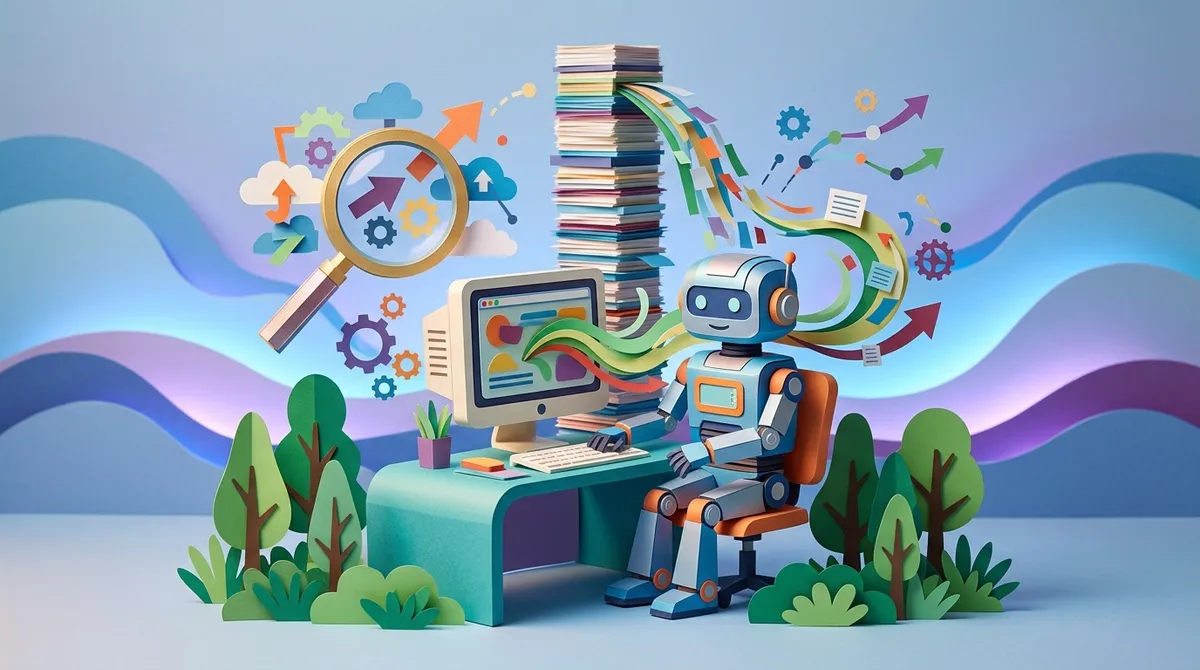
AI agents are software programs that act on behalf of a user to complete tasks. In the context of online shopping and research, an agent might receive a prompt like, “Find me the best digital marketing agency in Tampa under a certain budget.” It then visits websites, reads data, compares options, and returns a ranked recommendation — all autonomously.
This compresses the traditional customer journey dramatically. Awareness, consideration, and decision all happen inside one AI conversation. Your website no longer needs to persuade a human visitor. It needs to communicate clearly with a machine. According to industry research, generative AI reached 53% global adoption in just three years — faster than any technology in history, including the personal computer.
Gartner projects that by 2028, trillions of dollars in B2B purchases will involve AI agents in the decision-making process. The window to adapt is not years — it is months. Understanding digital marketing services through the lens of AI readiness is now a business-critical priority.
11 Ways AI Agents SEO Will Transform Your Website
1. Structured Data Becomes Non-Negotiable
Schema markup and JSON-LD are the languages AI agents speak. These structured data formats tell an agent exactly what your page is about — what you sell, who it serves, what it costs, and how it works. Without them, your site is essentially invisible to AI agents. Adding product schema, service schema, FAQ schema, and review schema to every key page is the single highest-impact action you can take right now. Think of it as putting a clear name tag on your business at a crowded networking event.
2. Content Clarity Replaces Marketing Jargon
AI agents do not respond to clever taglines or emotional brand storytelling. They scan for direct, specific, machine-readable answers. Every key page on your site must clearly answer four questions:
-
What do you offer?
-
Who is it for?
-
What does it cost?
-
How does it work?
If those answers are buried in five paragraphs of brand narrative, the agent will skip your site entirely. Short paragraphs, clear headers, and plain language are now essential SEO tools — not just readability best practices.
3. Website Accessibility Signals Become AI Visibility Signals
This is one of the most surprising insights from the AI agent revolution: the same elements that make a site accessible to people with disabilities — clean HTML structure, ARIA tags, and clear labels — are the exact same signals AI agents use to understand your content. Accessibility improvements are now directly tied to AI visibility. A well-structured website design serves both human users and AI agents equally well.
4. API Compatibility Opens Direct Agent Access
Advanced AI agents are not just reading text — they are looking for systems they can connect to directly. If an agent can query your inventory, check your pricing, or book an appointment through a clean API, you gain a massive competitive advantage. Google’s Universal Commerce Protocol, launched in 2026, allows agents to handle everything from product discovery to checkout. Businesses that plug into these systems first will be recommended first.
5. The Entire Customer Journey Gets Compressed
The traditional funnel — awareness, interest, consideration, evaluation, purchase — no longer plays out across multiple sessions and website visits. AI agents compress all of these stages into a single conversation. This means your website must be persuasive to a machine in a single pass. There are no second chances to win over a slow-to-decide visitor browsing over several days.
6. Online Reputation Becomes an AI Trust Signal
AI agents do not just read your website. They cross-reference your entire online footprint — reviews, brand mentions, citations, and third-party content. If the broader internet is not talking about you positively, agents will not trust you. Building a strong reputation across review platforms, industry directories, and relevant publications is now a direct AI SEO strategy. Your client testimonials and reviews carry more weight than ever before.
7. Content Freshness Signals Reliability
AI agents heavily favor current information. Stale pages signal unreliability. Adding “last updated” dates to your content, refreshing core service pages quarterly, and publishing new case studies and reviews on a regular basis all improve your standing with AI agents. Content that appears outdated is essentially a trust penalty. Your content writing strategy must now include a consistent update schedule.
8. Brand Category Association Drives Long-Term Advantage
One of the most powerful long-term AI SEO strategies is teaching AI agents exactly what category your brand owns. Generic positioning — “We are a marketing agency” — does not create strong associations. Specific positioning does. Creating comparison pages, category-specific guides, and niche-focused content trains AI models to associate your brand with a defined area of expertise. The more consistent and specific your messaging, the stronger that association becomes over time.
9. E-E-A-T Principles Apply Directly to AI Agents
Google’s framework of Experience, Expertise, Authoritativeness, and Trustworthiness — known as Google E-E-A-T — was designed for human evaluators and search algorithms. It now applies directly to AI agent decision-making as well. Agents prioritize brands that demonstrate real expertise through detailed content, credible citations, and verified credentials. Publishing authoritative, experience-backed content is a core requirement for AI agent visibility.
10. First-Mover Advantage Creates a Compounding Flywheel
Every major internet shift has rewarded early movers with durable advantages. Businesses that optimized for traditional SEO early in the 2000s still hold dominant rankings today. The same dynamic is playing out with AI agents SEO — but the window is much shorter. Early adopters gain more AI recommendations, which drives more traffic, which builds more authority, which generates more recommendations. It is a flywheel effect. The businesses that start now will compound their advantage every single month.
11. SEO, GEO, and AEO Must Work Together
Traditional Search Engine Optimization (SEO) is no longer the only game in town. Generative Engine Optimization (GEO) focuses on making your content surfaceable in AI-generated answers from tools like ChatGPT and Perplexity. Answer Engine Optimization (AEO) ensures your brand appears in direct response formats used by voice assistants and AI agents. An integrated strategy that addresses all three disciplines is the new standard for complete digital visibility. Brain Buzz Marketing offers a fully integrated SEO, GEO, and AEO content strategy designed specifically for this new landscape.
How AI Agents Evaluate Your Website: A Quick Reference
The following table summarizes what AI agents prioritize when scanning a website, and what that means for your optimization efforts:
|
AI Agent Priority |
What It Means |
Action Required |
|---|---|---|
|
Structured Data |
Schema markup tells agents what your page contains |
Add JSON-LD schema to all key pages |
|
Content Clarity |
Plain-language answers to core questions |
Rewrite key pages for clarity, not cleverness |
|
API Access |
Direct agent queries for inventory, pricing, scheduling |
Open clean data feeds or booking APIs |
|
Online Reputation |
Cross-referenced reviews, mentions, and citations |
Build reviews and brand mentions consistently |
|
Content Freshness |
Recency signals reliability to agents |
Update pages quarterly with current data |
|
Brand Specificity |
Clear category ownership trains AI association |
Create niche-specific guides and comparison content |

The Agent-Ready Website Checklist
Use this checklist to assess your current readiness for AI agents SEO. If you cannot check most of these boxes, your website is likely invisible to AI agent recommendations today:
-
Schema markup is implemented on all service, product, FAQ, and review pages
-
Every key page answers: what you offer, who it serves, what it costs, and how it works
-
HTML structure is clean, with proper heading hierarchy and ARIA labels
-
Pricing or scheduling information is accessible through a data feed or API
-
The business has consistent positive reviews across major platforms
-
Content pages include “last updated” dates and are refreshed regularly
-
Brand messaging consistently references a specific niche or category
-
The site demonstrates expertise through detailed, original content
Why Local and Small Businesses Cannot Afford to Wait
The urgency of AI agents SEO is especially high for small businesses, local service providers, and startups. Large enterprises have entire teams dedicated to emerging technology. Small businesses have a narrow window to act before those larger competitors lock in AI agent recommendations for their category. The good news is that the optimization steps required are accessible to any business — they simply require immediate action.
If you are a local service provider in Tampa or anywhere else in Florida, now is the time to ensure your local SEO services strategy accounts for AI agent behavior. An agent asked to find the best local plumber, contractor, or marketing agency will return results based on structured data and reputation signals — not just traditional keyword rankings. Learn more about how local SEO drives more customers in 2026.
For e-commerce retailers, the stakes are equally high. AI shopping agents are already active on platforms like ChatGPT and Perplexity. If your product data is not structured and your reputation is not strong, you will not appear in agent-generated recommendations — regardless of how good your product actually is.
Steps to Start Optimizing for AI Agents SEO Today
Getting started does not require a complete website overhaul. These are the highest-priority actions to take in the next 30 days:
-
Audit your structured data. Use Google’s Rich Results Test to identify missing schema markup and add service, FAQ, and review schema to your most important pages.
-
Rewrite your top service pages. Strip out marketing jargon and replace it with plain, specific answers to the four core questions AI agents prioritize.
-
Build your review presence. Actively request reviews on Google, industry directories, and relevant platforms. Consistent positive sentiment is a direct AI trust signal.
-
Add freshness signals. Include “last updated” dates, publish a new case study or blog post, and set a quarterly content refresh schedule.
-
Create category-specific content. Publish at least one detailed guide or comparison page that positions your brand as the authority in your specific niche.
Staying connected to the latest developments in AI and digital marketing is also essential. Follow Brain Buzz Marketing on Facebook and Instagram for regular updates on AI agents SEO and emerging digital marketing strategies.
The Competitive Opportunity Right Now
Here is the most important insight from this entire shift: most businesses are not paying attention yet. The majority of your competitors have not updated their schema markup, have not rewritten their pages for AI clarity, and have not started building the reputation signals that AI agents rely on. That represents a significant opportunity for businesses willing to act now.
The first-mover window in AI agents SEO is measured in months, not years. Every week of inaction is a week your competitors could be gaining ground. Every optimized page, every new review, and every piece of category-specific content you publish today compounds into a stronger AI recommendation position tomorrow. If you are ready to explore how to position your business for AI-driven search, visit our SEO services near me page or learn more about how to choose SEO services that actually grow your business.
Conclusion
AI agents SEO is not a future trend — it is happening right now in 2026. The businesses that adapt their websites to communicate clearly with AI agents will gain a powerful compounding advantage. Those that wait will find themselves invisible to an entirely new category of buyer. Structured data, content clarity, reputation building, freshness, and category-specific authority are the five pillars of AI agent readiness. Implementing them today puts your business on the right side of the third great internet shift.
Brain Buzz Marketing specializes in helping businesses of all sizes navigate this new landscape. From structured data implementation to full SEO, GEO, and AEO content strategies, our team is built to make your brand visible to both human users and AI agents alike. You can visit us on Google to see what our clients say about working with us. When you are ready to take the next step, reach out to our team and let us build an AI-ready digital strategy tailored to your business goals.
FAQs
Q: What is AI agents SEO and how is it different from traditional SEO?
A: AI agents SEO refers to optimizing your website so that autonomous AI programs can read, understand, and recommend your business to users. Unlike traditional SEO, which focuses on ranking for human-driven search queries, AI agents SEO requires structured data, content clarity, and strong reputation signals so that agents can extract precise information and include your brand in their recommendations.
Q: How quickly do businesses need to adapt to AI agents SEO?
A: The adaptation window is urgent — industry data indicates AI agents are already influencing purchasing decisions in 2026, and mainstream adoption is expected within 12 to 18 months. Businesses that implement structured data, clear content, and strong reputation signals now will gain a compounding advantage over those that delay.
Q: What is the most important first step to optimize for AI agents?
A: Adding schema markup — specifically JSON-LD structured data — to all key pages is the single highest-impact first step. This tells AI agents exactly what your business offers, who it serves, and how it works, making your site legible and trustworthy to automated decision-making systems.
Q: Does AI agents SEO replace traditional SEO strategies?
A: AI agents SEO does not replace traditional SEO — it expands it. The same foundational elements that drive traditional rankings, including structured data, content quality, and domain authority, are also core requirements for AI agent visibility. A comprehensive strategy now integrates SEO, Generative Engine Optimization (GEO), and Answer Engine Optimization (AEO) together.
Q: Can small businesses compete with larger companies in AI agents SEO?
A: Yes — and the current moment presents a rare opportunity for small businesses to gain ground. Most large competitors have not yet adapted their websites for AI agent readability. Small businesses that implement structured data, build strong review profiles, and publish clear category-specific content now can establish AI agent associations before larger competitors lock in those positions.