
Key Takeaways
-
Mobile-first design is critical: over 60% of web traffic comes from mobile devices, and Google prioritizes mobile versions for ranking, making mobile optimization essential for reach and SEO performance.
-
Page load speed directly impacts conversions: visitors expect websites to load in under 3 seconds, and every delay reduces conversions significantly while also affecting Google rankings.
-
Clear navigation and visual hierarchy reduce bounce rates: limit main menu items to 5-7 options and use size, color, and spacing to guide visitors toward your most important elements like headlines and CTAs.
-
Trust signals and social proof are conversion essentials: display customer testimonials, certifications, reviews, and notable client logos to reduce visitor hesitation and increase likelihood of action.
-
SEO must be built into design from the start: proper heading structure, keyword-optimized titles, clean URLs, and internal linking help search engines understand your site and improve rankings.
-
Analytics integration enables ongoing optimization: implement Google Analytics 4 and heatmapping tools from launch to track visitor behavior, identify drop-off points, and make data-driven improvements that increase conversion rates.
Your website is often the first impression a potential customer has of your business. In 2026, that impression needs to be exceptional. A poorly designed website drives visitors away. A well-designed one turns them into paying customers.
But what separates a website that converts from one that frustrates? The answer lies in specific, measurable design factors that affect user experience, search rankings, and sales. Whether you run a small business, manage an e-commerce store, or lead a startup, understanding these factors can transform your online results.
This article breaks down 11 critical website design factors that directly impact performance. Each one plays a role in how visitors perceive your brand and whether they take action. Apply these principles and your website becomes a powerful growth tool — not just a digital placeholder.

1. Mobile-First Design
More than 60% of all web traffic now comes from mobile devices. If your website isn’t built for mobile users first, you’re losing a significant portion of your audience. Google also uses mobile-first indexing, meaning it ranks the mobile version of your site before the desktop version.
A mobile-first approach means your layout, buttons, and text are all optimized for small screens. Navigation must be simple. Load times must be fast. Content must be easy to read without zooming.

2. Page Load Speed
Visitors expect a website to load in under three seconds. Every second of delay reduces conversions significantly. Slow websites frustrate users and push them toward leaving before they ever see your offer.
Speed is also a direct Google ranking factor. A fast website ranks higher, attracts more traffic, and provides a better user experience. Optimizing images, using clean code, and investing in quality WordPress hosting are essential steps to improving load speed.
3. Clear Navigation Structure
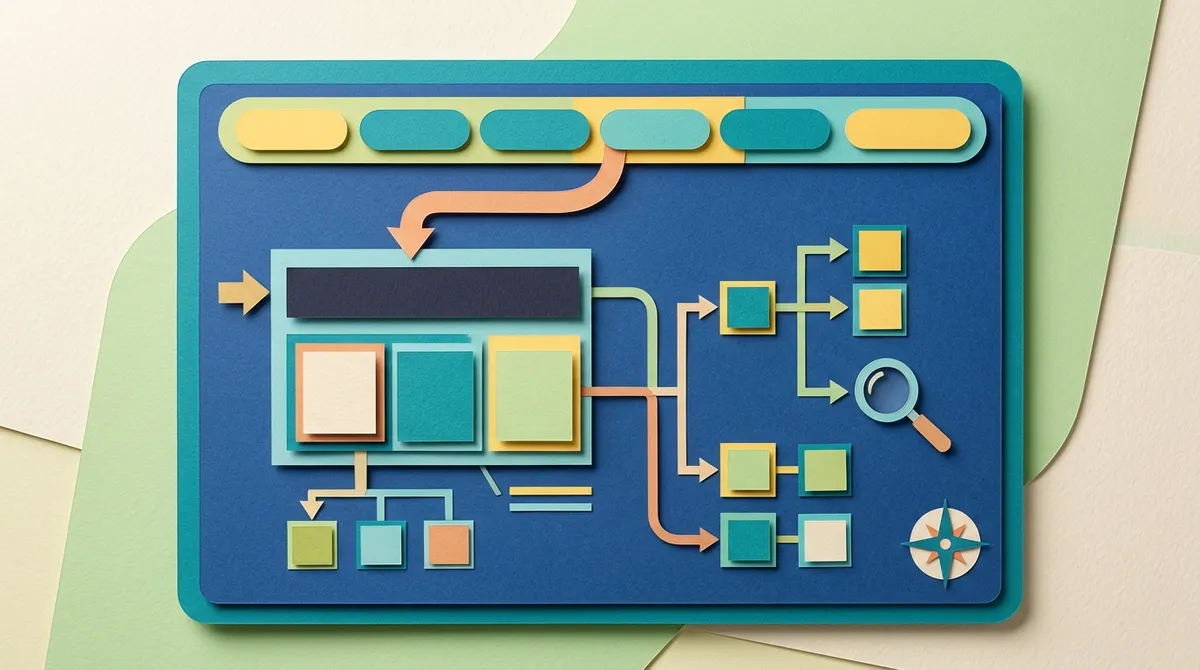
Users should find what they need within seconds. A confusing menu or buried information causes frustration and increases bounce rates. Clear navigation guides visitors toward the information or product they came for.
Best practices for navigation include:
-
Limit main menu items to 5–7 options
-
Use descriptive, simple labels for each page
-
Include a search bar for larger websites
-
Place the navigation in a consistent location on every page
-
Make the logo clickable and linked to the homepage

4. Strong Visual Hierarchy
Visual hierarchy tells the visitor’s eye where to look first. It directs attention to the most important elements — your headline, value proposition, and call-to-action. Without it, visitors feel confused and overwhelmed.
Effective visual hierarchy uses size, color, contrast, and spacing to rank information by importance. Your headline should be the largest text. Your call-to-action button should stand out. Supporting content should be clearly secondary. This structure makes your website intuitive to use.
5. Consistent Branding and Visual Identity
Every page of your website should feel like it belongs to the same brand. Consistent colors, fonts, imagery, and tone build trust and recognition. Inconsistency signals amateurism and undermines credibility.
Your branding should align with your logo design and carry through every visual element. This consistency reinforces your brand identity with every page a visitor views.
Key elements of consistent branding include:
-
A defined color palette used across all pages
-
Two to three complementary fonts used consistently
-
High-quality, on-brand photography and graphics
-
A consistent tone of voice in all written content
6. Compelling Calls-to-Action
A call-to-action (CTA) tells visitors exactly what to do next. Without clear CTAs, visitors browse and leave without converting. Every key page on your website needs at least one strong CTA.
|
CTA Type |
Best Placement |
Goal |
|---|---|---|
|
“Get a Free Quote” |
Homepage, Service Pages |
Lead Generation |
|
“Shop Now” |
Product Pages, Banner |
E-commerce Sales |
|
“Book a Consultation” |
About Page, Contact Page |
Service Inquiries |
|
“Read More” |
Blog Listings |
Content Engagement |
|
“Subscribe” |
Footer, Blog Posts |
Email List Building |
Make CTAs visually distinct using contrasting button colors. Use action-oriented language. Place them above the fold and repeat them further down the page for longer content.
7. SEO-Optimized Structure
A beautiful website is worthless if no one can find it. SEO must be built into your website design from day one. This includes proper heading structure, keyword-optimized page titles, meta descriptions, and clean URL formats.
Search engines read your website structure to understand what each page is about. A well-organized site with clear topic hierarchies ranks more effectively. Google’s search algorithm rewards websites that make it easy for both users and search engines to navigate and understand content.
Core SEO design elements include:
-
Descriptive, keyword-rich page titles
-
Proper use of H1, H2, and H3 heading tags
-
Alt text on all images
-
Clean, readable URLs
-
Internal linking between related pages
-
Schema markup for enhanced search results
8. Trust Signals and Social Proof
Visitors decide whether to trust your business within seconds of landing on your site. Trust signals reduce hesitation and increase the likelihood of conversion. Without them, even the most beautiful website will struggle to generate leads.
Effective trust signals for your website design include:
-
Customer testimonials and case studies
-
Recognizable industry certifications or awards
-
Google reviews and star ratings
-
Logos of notable clients or media mentions
-
A visible physical address or contact information
You can see how Brain Buzz Marketing builds trust by reading real client feedback in our testimonials section. Building credibility on your website is a foundational part of converting visitors into customers.
9. High-Quality, Purposeful Content
Content and design work together. Well-written content placed strategically throughout your website informs, persuades, and converts. Thin or irrelevant content drives visitors away and hurts your search rankings.
According to Google E-E-A-T guidelines, content must demonstrate experience, expertise, authoritativeness, and trustworthiness to rank well. This means your website needs more than filler text. Every page should serve a clear purpose and answer the questions your audience is actually asking.
Pairing strong content writing services with expert website design ensures your site not only looks professional but also delivers the information your visitors need to make a decision.
10. Accessibility and Inclusive Design
Web accessibility ensures your site is usable by everyone, including people with visual, motor, or cognitive disabilities. Beyond being the right thing to do, accessible websites rank better and serve a wider audience.
Steps to improve accessibility in website design:
-
Use sufficient color contrast between text and backgrounds
-
Add descriptive alt text to all images and media
-
Ensure all interactive elements are keyboard-navigable
-
Use clear, simple language throughout all content
-
Provide captions or transcripts for video content
Accessibility improvements also align with on-page SEO best practices, making your website more visible and more usable at the same time.
11. Analytics Integration and Ongoing Optimization
Launching your website is the beginning, not the end. The most effective websites are built with tracking tools integrated from the start. Analytics reveal how visitors interact with your site, where they drop off, and what content drives conversions.
|
Tool |
Primary Use |
Key Insight |
|---|---|---|
|
Google Analytics 4 |
Traffic & Behavior Tracking |
Where visitors come from and what they do |
|
Google Search Console |
SEO Performance |
Keyword rankings and crawl errors |
|
Heatmapping Tools |
User Behavior Visualization |
Where users click and scroll |
|
Conversion Tracking |
Goal Completion |
Which pages generate leads or sales |
Use this data to make informed improvements over time. Small adjustments — like repositioning a CTA or simplifying a form — can significantly increase conversion rates. Working with a professional website agency ensures your site is built with performance tracking in mind from the very start.
How These Factors Work Together
Each of these 11 factors is important on its own. But the real power comes when they work together as a cohesive system. A fast, mobile-friendly website with clear navigation, strong branding, and SEO-optimized content creates an experience that both users and search engines reward.
Consider this layered approach to website design:
-
Foundation: Mobile-first design, speed, and accessibility
-
Structure: Navigation, visual hierarchy, and SEO framework
-
Conversion: CTAs, trust signals, and targeted content
-
Growth: Analytics, ongoing optimization, and content strategy
Businesses that invest in each layer build websites that generate real, measurable results. If you are a local service provider or a growing startup, a professionally designed website built on these principles gives you a significant competitive advantage.
Why Professional Website Design Matters for Small Businesses
Many small business owners attempt to build their own websites using basic template tools. While this approach can produce a functional site, it rarely produces an optimized one. Template websites often lack proper SEO structure, slow down under traffic, and fail to convert visitors at an acceptable rate.
A professionally designed website, built by an experienced Tampa website designer or virtual agency, is built around your business goals. Every element is intentional. Every page serves a purpose. The result is a digital asset that works for your business around the clock.
Follow Brain Buzz Marketing on Facebook and Instagram for ongoing tips on website design, SEO, and digital marketing strategies that help small businesses grow.
Conclusion
A high-performing website in 2026 is not an accident. It is the result of deliberate decisions across design, content, SEO, and user experience. The 11 factors covered in this article represent a proven framework for building a website that attracts the right visitors and converts them into loyal customers.
From mobile-first development and page speed to trust signals and analytics, every element contributes to your online success. Ignoring even one of these areas can limit your results. Addressing all of them creates a website that truly works as a growth engine.
Brain Buzz Marketing specializes in digital marketing services including custom website design, SEO, and content strategy — all designed to help small and medium-sized businesses achieve measurable online growth. Visit us on Google to read our reviews and see why businesses across Tampa trust us with their digital presence. Ready to build a website that actually drives results? Get in touch with our team today and let’s build something exceptional together.
FAQs
Q: How much does professional website design cost for a small business?
A: The cost of professional website design varies based on the complexity, number of pages, and features required. Rather than focusing solely on price, consider the return on investment — a well-designed website generates leads, builds credibility, and supports long-term growth. Virtual agencies like Brain Buzz Marketing offer high-quality results at competitive rates without the overhead of large firms.
Q: How long does it take to design and launch a new website?
A: A professionally designed website typically takes four to twelve weeks to complete, depending on the scope of the project. This timeline includes discovery, design, development, content integration, SEO setup, and testing. Clear communication and timely feedback from the client can significantly speed up the process.
Q: What platform is best for small business website design?
A: WordPress is widely regarded as the most versatile and SEO-friendly platform for small business websites. It offers complete design flexibility, strong plugin support, and seamless integration with tools like Google Analytics. A skilled website design team can build a fully custom WordPress site tailored to your specific business goals.
Q: Does website design affect SEO rankings?
A: Yes, website design has a direct impact on SEO rankings. Factors like page load speed, mobile responsiveness, heading structure, URL format, and internal linking all influence how search engines evaluate and rank your site. A website built with SEO principles integrated into the design performs significantly better in organic search results.
Q: How often should a business update or redesign its website?
A: Most businesses benefit from a full website redesign every three to five years to stay current with design trends, technology standards, and user expectations. However, ongoing updates — such as refreshing content, improving page speed, and adding new service pages — should happen regularly to maintain strong search performance and user engagement.