Key Takeaways
-
AI search uses Retrieval Augmented Generation (RAG) to retrieve a small set of relevant pages then generate answers; if your content isn’t retrieved, it won’t appear in AI results regardless of Google ranking.
-
Branded mentions across credible, topic-relevant platforms have stronger correlation with AI visibility than backlinks; build brand association by pursuing PR coverage, guest contributions, and product reviews in your niche.
-
AI algorithms evaluate content on four core signals: relevancy (topic association), authority (credibility and E-E-A-T), structure (HTML hierarchy, headings, bullets, FAQs), and freshness (current information preferred).
-
Create deep content clusters that comprehensively own narrow topics rather than lightly covering broad subjects; AI treats comprehensive, interconnected coverage as authoritative signals for your brand.
-
Check your robots.txt file immediately—nearly 6% of websites accidentally block AI crawler bots like GPTBot, making all other optimization efforts worthless if bots cannot read your content.
-
Lead with your most important insight at the top of content, use clear headings and bullet points, and refresh pages regularly with new data; AI systems trim buried insights and strongly favor current information.
Search is changing fast. More and more people are turning to AI-powered tools to find answers online. Instead of clicking through ten blue links, they ask a question and get a direct response. This shift is reshaping how businesses earn traffic, leads, and customers. If your content is not being retrieved by AI search algorithms, it simply does not exist in those results — no matter how good it is. Understanding how these systems work is no longer optional. It is one of the most important things a business owner or marketer can do in 2026. This article breaks down exactly how AI search algorithms evaluate and retrieve content, what signals they prioritize, and what you can do right now to make sure your business shows up in AI-generated answers. Whether you run a small local business or manage marketing for a growing brand, this guide will give you a clear, actionable roadmap for staying visible in the new era of search.
What Makes AI Search Different from Traditional SEO
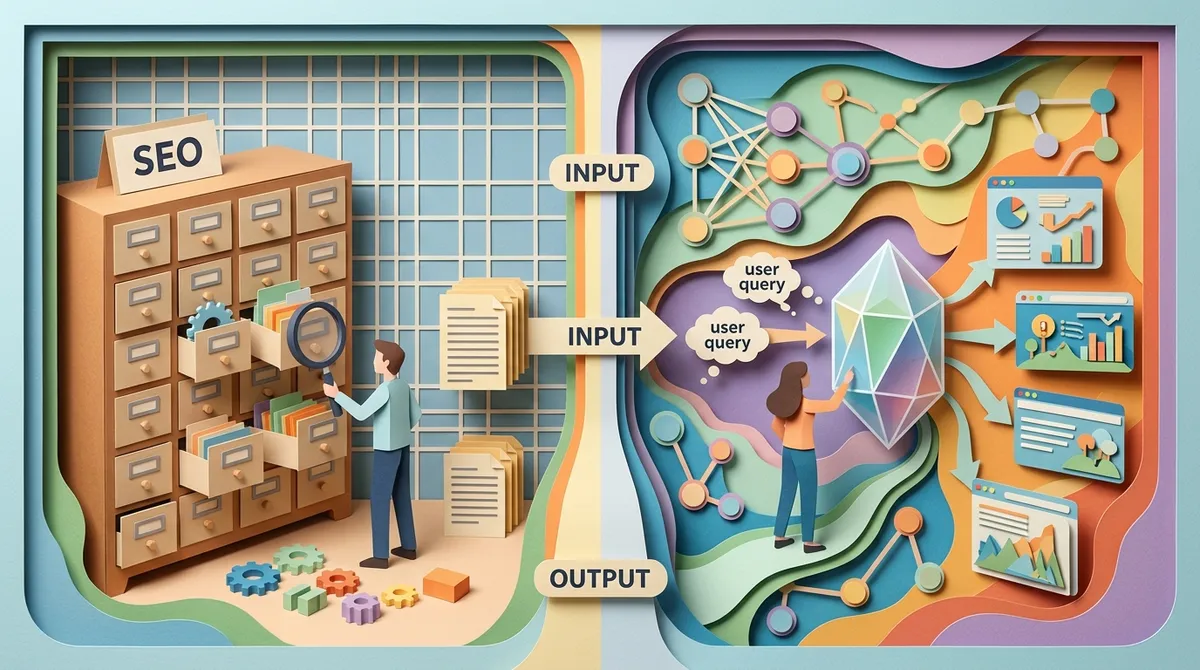
Traditional search engines like Google rank pages based on hundreds of signals — backlinks, keywords, page speed, and more. AI search works differently. These systems use a process called Retrieval Augmented Generation, or RAG. When someone asks an AI a question, the system does two things. First, it retrieves a small set of web pages it considers relevant and trustworthy. Then it generates a direct answer using those pages and cites them.
The key insight here is critical: the entire game is getting retrieved. If your content is not in that small set of pages the AI pulls, your content does not appear in the answer at all. You could rank number one on Google and still be nearly invisible in AI search results. In fact, research shows that ranking first on Google gives you only a 31.4% AI mention rate — and by rank four, that drops to just 2.6%. AI citations and Google rankings are simply not the same game anymore. To learn more about how this shift is unfolding, read The New SEO Game: How to Get Cited on Google’s AI Mode.

The Four Factors AI Search Algorithms Evaluate
AI search algorithms evaluate your content based on four core signals. Understanding these signals is the foundation of any effective AI optimization strategy. Here is what they look for:
-
Relevancy: Is your content clearly associated with the topic being asked? AI systems map your brand to specific subjects. A marketing agency writing about marketing belongs to the right neighborhood. A plumbing company writing about marketing does not. The AI knows the difference — and it matters.
-
Authority: Does the broader internet vouch for your source? AI algorithms evaluate credibility through brand mentions, reviews, backlinks, and Google E-E-A-T signals (Experience, Expertise, Authoritativeness, and Trustworthiness). The more trusted your source, the more likely it is to be retrieved.
-
Structure: Can the AI extract a clean answer from your page? AI systems read content by following HTML structure from top to bottom. Clear headings, bullet points, and FAQ sections are not just nice formatting choices — they are how the AI determines what your content is about and where the important points are.
-
Freshness: Is your content current? AI-cited content tends to be significantly fresher than content that ranks in traditional search. These systems strongly prefer up-to-date information, especially on topics that change quickly.
For a deeper look at how these principles connect to answer-focused content, explore What Is Answer Engine Optimization and How to Do It.

How to Get Your Content Retrieved by AI
Getting retrieved is the first and most important goal. There are three proven strategies to improve your retrieval rate across AI platforms.
1. Build Branded Mentions Across Relevant Platforms
Here is a fact that surprises most marketers: branded mentions have a stronger correlation with AI search visibility than backlinks, referring domains, or domain rating. Traditional SEO has focused on backlinks for decades — but AI search works differently. Large language models learn by reading the web. Every time your brand appears on a credible, topic-relevant site, it signals to the AI that your brand belongs in that subject area.
Think about it like brand association. When you hear a major athletic brand, you instantly think of sports performance. That happens because the brand appeared in those contexts constantly across the internet. AI search works the same way. To build more branded mentions:
-
Identify which sites, forums, and publications AI tools are already pulling from in your niche.
-
Pursue coverage through public relations outreach, guest contributions, podcast appearances, and product or service reviews.
-
Aim to appear consistently, positively, and in topically relevant contexts across as many credible platforms as possible.
This strategy is explored further in How to Get Your Business Recommended by AI Search.
2. Go Deep on Narrow Topics
AI search rewards sources that comprehensively own a specific problem or topic. Generalist sites that lightly touch many subjects perform poorly. Deep, interconnected content clusters perform well. A content cluster is a group of pieces that each cover a different angle of the same core subject — all linking to each other and building on each other.
When AI systems see comprehensive coverage of a topic, combined with brand mentions in that context across the web, they begin treating your brand as the authority. For a strong example of this approach in action, see Topical Authority and how it applies to modern content strategy.
3. Check Your robots.txt File Today
This is a quick but critically important technical fix. A study of 140 million websites found that nearly 6% — almost one in every twenty — were accidentally blocking AI crawler bots in their robots.txt file. If you are blocking bots like GPTBot or PerplexityBot, none of the other strategies in this article will matter. The AI simply cannot cite what it cannot read.
Visit yourdomain.com/robots.txt right now and verify that AI crawlers are not being blocked. It takes two minutes and could immediately improve your visibility across every major AI platform.

How AI Reads and Uses Your Content
Getting retrieved is only half the battle. Once the AI finds your page, it needs to be able to extract a useful answer from it. AI systems do not read articles the way humans do. They process content in chunks — paragraph by paragraph — deciding which parts are worth keeping for the answer. If your best insight is buried in paragraph fifteen of a 2,000-word article, the AI may trim it out entirely.
To make your content AI-usable, follow these principles:
-
Lead with the answer: Put your most important insight at the top. Do not build up to it — deliver it immediately, then support it.
-
Use clear headings: Organize content so each section stands on its own. The AI should be able to read any section independently and still understand the point.
-
Include bullet points and numbered lists: These help the AI extract structured answers quickly and accurately.
-
Add FAQ sections: Frequently asked questions map directly to how people prompt AI tools. They also improve featured snippet eligibility in traditional search.
-
Update content regularly: Refresh key pages with new statistics, examples, and updated publish dates. Outdated content gets deprioritized by AI systems that favor freshness.
For more on structuring content that performs in both traditional and AI-powered search, visit 15 Reasons Content Is the Backbone of SEO in 2026.
Why Your Own Website Matters More Than Ever
There is an important trend worth paying close attention to. Analysis of ChatGPT citations reveals a dramatic shift in how often AI tools cite brand websites directly. With earlier model versions, only 8% of citations went to brand websites. With newer premium models, that number jumped to 56%. Your website is increasingly becoming a primary citation target — not just third-party mentions about you.
This makes on-site structure, content clarity, and freshness more important than ever before. Your content writing strategy and your website design now work together as a unified AI visibility system. A disorganized site with outdated content will be skipped. A well-structured site with current, authoritative content will keep getting cited — and citations compound over time.
Comparison: Traditional SEO vs. AI Search Optimization
Understanding the differences between these two approaches helps you allocate your efforts effectively. Here is a clear comparison:
|
Factor |
Traditional SEO |
AI Search Optimization |
|---|---|---|
|
Primary Ranking Signal |
Backlinks and keyword density |
Branded mentions and topical authority |
|
Content Goal |
Rank on the first page |
Get retrieved and cited in AI answers |
|
Structure Priority |
Title tags, meta descriptions |
HTML hierarchy, headings, bullet points, FAQs |
|
Freshness Importance |
Moderate |
High — AI strongly favors current content |
|
Platform Focus |
Google primarily |
Multiple AI platforms (ChatGPT, Gemini, Perplexity, etc.) |
|
Citation Source |
N/A |
Your website and credible third-party mentions |
The Multi-Platform Reality of AI Search in 2026
One of the most important strategic shifts marketers must make in 2026 is moving beyond a Google-only mindset. The data tells a compelling story: 75% of all AI citations now come from non-Google sources. Google’s top ten results used to account for 76% of ChatGPT citations — now that number has fallen to 38%. Different AI platforms pull from different source pools, serve different audiences, and reward different content approaches.
Consider the scale of these platforms. ChatGPT has over 1.2 billion users and captures about 78% of LLM referral traffic. Gemini has 750 million users but captures only around 12% of referral traffic — meaning it generates far fewer clicks per user. These platforms behave differently, and your ideal customers may be using any of them. You cannot optimize for one and call it done.
To build a complete AI search strategy, you need to:
-
Create deep, structured content that works across multiple platforms.
-
Build brand mentions on the credible sources each platform favors.
-
Understand which platforms your target audience uses most frequently.
-
Monitor your AI citation performance just as you monitor organic rankings.
For a broader look at how GEO (Generative Engine Optimization) fits into this picture, read What Is Generative Engine Optimization and Why Does Your Business Need It. You can also explore how Local AEO vs. Traditional SEO compares for businesses targeting nearby customers.
What the Data Says About AI-Driven Leads
The business case for investing in AI search optimization is clear and growing. Across 22 companies tracked over a one-year period, GEO and AEO-driven leads grew from 3.1% of total leads in Q4 2024 to 7.4% by Q4 2025 — more than doubling in just twelve months. And data shows that LLM-referred traffic converts at 30–40%, significantly higher than many traditional traffic sources.
Brands that invested early in AI optimization saw an initial dip in returns — but those that stayed the course saw strong profitability emerge within a year. This is not a distant future trend. It is compounding right now, and the brands getting cited today will hold a growing advantage over those that wait.
At Brain Buzz Marketing, we specialize in building content strategies that work across traditional SEO, GEO, and AEO — helping small and medium-sized businesses stay visible no matter how search evolves. Follow us on Instagram and Facebook for the latest updates on AI search trends and digital marketing strategies.
Key Action Steps to Optimize for AI Search Algorithms
Here is a summary of the most impactful steps you can take right now:
-
Check your robots.txt file and make sure AI crawler bots are not blocked.
-
Lead every piece of content with your most important insight — not a long build-up.
-
Use clear HTML structure with headings, bullet points, and FAQ sections throughout your content.
-
Build branded mentions on credible, topically relevant platforms through PR, outreach, and thought leadership.
-
Create content clusters that go deep on narrow topics rather than lightly covering everything.
-
Refresh your best-performing pages regularly with new data, examples, and updated dates.
-
Expand your presence beyond Google to include platforms where your audience is actively searching.
For a step-by-step framework, see 10 Ways to Optimize for AI Search Results in 2026. You can also explore the digital marketing services we offer to help businesses implement these strategies effectively.
Conclusion
AI search algorithms are not a replacement for good content — they are a higher standard for it. The brands that win in this new environment are genuinely useful, clearly authoritative, and structured well enough that AI systems can confidently cite them. The rules have changed, but the opportunity is significant. Businesses that adapt now will compound their advantage as AI search continues to grow.
If you are ready to build a content strategy that gets your brand retrieved, cited, and trusted across AI platforms, our team is here to help. Visit us on Google to see what our clients are saying, or reach out to our team today to start optimizing for the future of search.
FAQs
Q: What is Retrieval Augmented Generation (RAG) and why does it matter for SEO?
A: Retrieval Augmented Generation (RAG) is the core process AI search tools use to answer questions. The system first retrieves a small set of trusted, relevant web pages, then generates a response using those pages as its source. If your content is not retrieved in that first step, it will not appear in the answer — making retrieval the most critical objective in any AI search strategy.
Q: How is AI search optimization different from traditional SEO?
A: Traditional SEO focuses heavily on backlinks and keyword rankings to earn visibility on Google. AI search optimization prioritizes branded mentions, topical authority, content structure, and freshness to get retrieved and cited by AI platforms like ChatGPT, Gemini, and Perplexity. Both approaches matter in 2026, but they require different tactics and content strategies.
Q: Why do branded mentions matter more than backlinks in AI search?
A: AI large language models learn by processing vast amounts of web content. When your brand consistently appears in credible, topic-relevant contexts across the web, the AI learns to associate your brand with that subject. This association — built through branded mentions rather than backlinks — is what drives AI search visibility and citation rates.
Q: How can I check if my website is blocking AI search bots?
A: Visit yourdomain.com/robots.txt and look for entries that block bots like GPTBot or PerplexityBot. If these bots are blocked, AI search platforms cannot crawl or cite your content regardless of its quality. Removing these restrictions is one of the fastest and most impactful fixes you can make for AI search visibility.
Q: Do I need to optimize for multiple AI platforms or just Google?
A: Optimizing for multiple platforms is essential in 2026. Data shows that 75% of AI citations now come from non-Google sources, and major platforms like ChatGPT, Gemini, and Perplexity each draw from different content pools and serve different user behaviors. A strategy focused solely on Google will leave a significant portion of your potential AI search visibility untapped.