Key Takeaways
-
GEO (Generative Engine Optimization) is not replacing SEO but expanding it; AI tools pull from websites already ranking well, so strong SEO foundations are essential for GEO visibility in 2026.
-
Optimize content directly answering questions with clear headings, structured data markup, and E-E-A-T signals (Experience, Expertise, Authoritativeness, Trustworthiness) to get cited in AI-generated responses.
-
Monitor whether your brand appears in AI tool responses by testing ChatGPT and Google AI Overviews with industry-related questions; if competitors appear and you don't, GEO optimization is critical.
-
Declining organic traffic despite stable rankings signals AI Overviews are answering questions before users click links, requiring a stronger GEO strategy to maintain visibility.
-
Build topical authority by creating content clusters around core subjects and earning high-quality backlinks from reputable industry sources, which both traditional search engines and AI tools value.
-
Small businesses and local service providers face competitive pressure from AI tool usage for local queries, making a combined local SEO and GEO strategy essential for 2026 customer discovery.
Search is changing fast. In 2026, more people are getting answers from AI tools like ChatGPT, Google’s AI Overviews, and Perplexity. These tools don’t just show a list of links. They generate direct answers. This shift has sparked a major question in the digital marketing world: Is GEO replacing SEO? The short answer is no — but the full answer is far more important for your business. Understanding how Generative Engine Optimization (GEO) fits into your strategy could be the difference between staying visible online and disappearing from search results entirely. Whether you’re a small business owner, a marketing manager, or a local service provider, this article breaks it all down in plain language.
What Is GEO in Digital Marketing?
GEO stands for Generative Engine Optimization. It is the practice of optimizing your content so that AI-powered search engines and large language models (LLMs) feature your brand in their generated responses. Think of it as SEO, but designed for AI tools instead of traditional search engines.
When someone asks ChatGPT or Google’s AI Overview a question, the AI pulls information from trusted sources across the web. GEO is about making sure your website and content are among those trusted sources. It involves writing content that is clear, authoritative, well-structured, and deeply relevant to specific questions your audience is asking.
Agencies like Brain Buzz Marketing have already evolved their approach to include GEO strategies alongside traditional SEO, recognizing that the future of search is AI-driven.
What Is the Difference Between GEO and SEO?
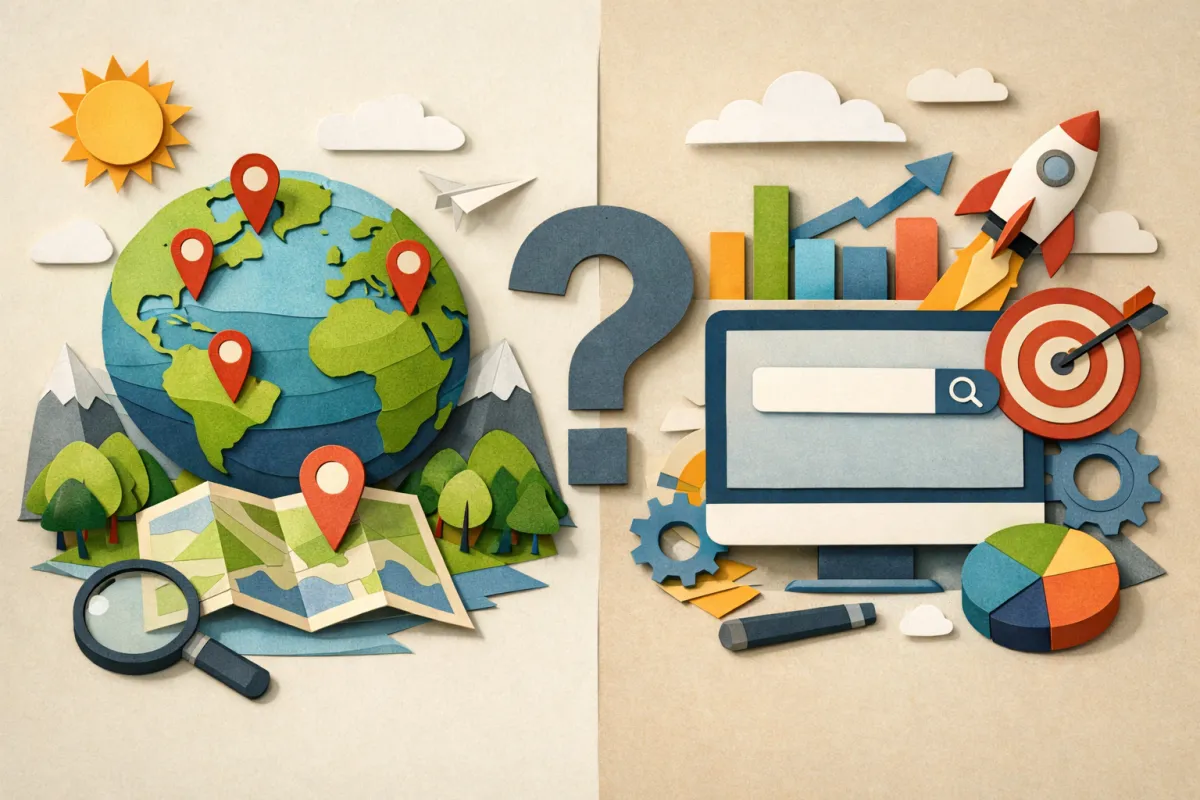
Both GEO and SEO share the same ultimate goal: getting your brand in front of the right people at the right time. But they work differently and target different systems.
| Feature | SEO (Search Engine Optimization) | GEO (Generative Engine Optimization) |
|---|---|---|
| Primary Target | Google, Bing search results | AI tools, LLMs, AI Overviews |
| Output Format | Ranked list of links | Direct generated answers |
| Key Focus | Keywords, backlinks, technical performance | Authority, clarity, structured data, citations |
| User Behavior | User clicks a link | User reads an AI-generated response |
| Content Style | Keyword-optimized articles and pages | Direct, factual, question-answering content |
| Measurement | Rankings, organic traffic, clicks | AI citations, brand mentions, topic authority |
As you can see, GEO and SEO are not the same thing. They complement each other. Strong SEO builds the foundation that GEO needs to work effectively.

Is GEO Actually Replacing SEO?
This is the big question. And the direct answer is: No, GEO is not replacing SEO. It is expanding what SEO means. Here’s why this distinction matters.
Traditional Search Is Still Dominant
In 2026, Google still processes billions of searches every single day. People still click on links. Businesses still get leads from organic search rankings. Abandoning SEO to focus only on GEO would be a serious mistake. The core principles of SEO — relevant content, technical performance, quality backlinks — are not going away.
GEO Builds on SEO Foundations
AI tools pull content from websites that already rank well and demonstrate authority. If your SEO is weak, your chances of appearing in AI-generated answers are even weaker. A strong local SEO services strategy actually supports your GEO visibility. The two work together, not against each other.
Both Are Needed in 2026
Smart businesses are no longer choosing between SEO and GEO. They are investing in both simultaneously. The digital marketing services landscape has evolved to include what experts now call a combined SEO + GEO + AEO strategy (Answer Engine Optimization), which prepares your brand for every type of search.

Why GEO Matters for Your Business Right Now
AI-generated answers are becoming the first stop for many consumers. When someone asks an AI tool for a recommendation, a service provider, or an answer to a business question, your brand either appears or it doesn’t. GEO determines which outcome happens for you.
Here are the key reasons GEO deserves your attention in 2026:
- AI search usage is growing rapidly. More consumers are turning to AI tools to make decisions before ever visiting a website.
- Zero-click searches are increasing. AI Overviews on Google often answer questions without the user clicking any link, making brand visibility in the answer itself critical.
- Early adopters gain a significant advantage. Businesses that optimize for GEO now will establish authority before their market becomes saturated.
- GEO rewards high-quality content. AI tools favor content that is accurate, well-organized, and written by credible sources.
- Local businesses are especially impacted. AI tools are increasingly used for local service queries, making GEO a priority for local businesses competing for customers in 2026.
How to Optimize for GEO: 5 Key Steps
Optimizing for generative engines requires a shift in how you think about content. Follow these five steps to start building your GEO presence.
- Write content that directly answers questions. AI tools love content that gets straight to the point. Use clear headings, short paragraphs, and direct answers to common questions in your industry.
- Build topical authority. Create a cluster of content around your core topics. The more thoroughly your website covers a subject, the more likely AI tools are to cite your brand as a trusted source.
- Earn high-quality backlinks and citations. AI systems value websites that other authoritative sources reference. Focus on earning links from reputable industry publications, directories, and news outlets.
- Use structured data and schema markup. Structured data helps AI tools understand your content more clearly. Implementing schema on your website makes your information easier to parse and cite.
- Align with Google E-E-A-T guidelines. Experience, Expertise, Authoritativeness, and Trustworthiness are central to both SEO and GEO. Content written by credible, experienced professionals ranks better in traditional search and gets cited more in AI responses.
What a Combined SEO and GEO Strategy Looks Like
The most effective digital marketing approach in 2026 combines SEO and GEO into one unified strategy. Here is what that looks like in practice.
Content That Serves Two Masters
Well-written content writing services can serve both traditional search engines and AI systems at the same time. The key is producing content that is keyword-optimized for Google while also being structured and authoritative enough for AI tools to cite confidently.
Technical SEO Still Matters
Page speed, mobile performance, and clean website architecture matter for both SEO rankings and AI crawlability. A well-built custom website design creates the technical backbone that supports both strategies.
Brand Authority Across Channels
Being active and visible across multiple online channels — including social media, local directories, and industry publications — strengthens your brand signal for both search engines and AI tools. Following Brain Buzz Marketing on Facebook and other platforms can give you a window into how leading agencies are adapting their strategies in real time.
Common Mistakes Businesses Make With GEO
As GEO gains traction, many businesses are making avoidable errors. Here are the most common ones to watch out for:
- Abandoning SEO entirely. Some businesses mistakenly assume GEO makes SEO obsolete. This is incorrect. Both are essential.
- Ignoring content quality. Thin, poorly written content will not get cited by AI tools. Quality matters more than ever.
- Skipping structured data. Many businesses overlook schema markup, missing a direct opportunity to improve AI visibility.
- Focusing only on keywords. GEO requires a broader focus on topics, intent, and authority — not just keyword density.
- Not measuring AI visibility. Businesses often track traditional rankings but forget to monitor whether their brand is appearing in AI-generated responses.
How to Know If Your Strategy Needs Updating
Not sure whether your current approach is keeping up with the changes in search? Here are three clear indicators that your strategy needs a refresh.
- Your organic traffic has declined despite maintaining keyword rankings. This may indicate that AI Overviews are answering questions before users reach your site, meaning you need stronger GEO presence.
- Your brand does not appear in AI-generated answers. Test this by asking ChatGPT or Google’s AI Overview questions related to your industry and services. If competitors appear and you don’t, that’s a problem.
- Your content is outdated or lacks depth. AI tools favor fresh, detailed, well-structured content. If your website content hasn’t been updated recently, it may be losing authority in both SEO and GEO rankings.
If any of these apply to your business, reviewing resources like how to choose SEO services that actually grow your business and 9 signs you need an SEO agency near you can help you determine your next steps.
Tools and Resources to Stay Ahead
Keeping up with search evolution requires the right tools. For businesses looking to automate and scale their content strategy, platforms like SEO Rocket (fully automated blog posts that rank) are emerging as practical solutions that bridge the gap between traditional SEO and modern AI-optimized content creation.
For local businesses in the Tampa area and beyond, working with an experienced agency that already understands both SEO and GEO is often the most efficient path forward. You can visit Brain Buzz Marketing on Google to read verified reviews and see how real clients have benefited from a modern, multi-layered search strategy.
The Future of Search Is Layered, Not Linear
Search is no longer a single channel or a single strategy. It is a layered ecosystem that includes traditional organic rankings, paid ads, AI-generated answers, voice search, and more. The businesses that thrive in this environment are the ones that adapt their strategy to cover all of these layers.
Understanding what local search engine optimization is and why your business needs it remains foundational. But layering GEO on top of that foundation is what positions your brand for long-term visibility in a world where AI is increasingly part of every search experience.
Conclusion
GEO is not replacing SEO. It is expanding what effective search optimization looks like in 2026. The businesses that succeed will be the ones that treat SEO and GEO as two essential components of one unified strategy — not competing ideas, but complementary disciplines working together. High-quality content, technical performance, brand authority, and structured data are the pillars that support both. The question is no longer whether you need GEO. The question is whether your current strategy includes it.
If you’re ready to future-proof your digital marketing approach and ensure your brand stays visible across both traditional and AI-driven search, reach out to our team today and discover how a combined SEO and GEO strategy can drive real, measurable growth for your business.
FAQs
Q: What does GEO stand for in digital marketing?
A: GEO stands for Generative Engine Optimization. It refers to the process of optimizing your content and online presence so that AI-powered tools — such as ChatGPT, Google AI Overviews, and other large language models — feature your brand in their generated responses. It is a newer discipline that works alongside traditional SEO.
Q: Do I still need SEO if I invest in GEO?
A: Absolutely. SEO remains essential in 2026 because traditional search engines still drive significant traffic and leads. GEO builds on the foundation that strong SEO creates. Without solid SEO, your chances of appearing in AI-generated answers are significantly reduced. The two strategies are complementary, not interchangeable.
Q: How do I know if my content is being cited by AI tools?
A: You can test this by entering questions related to your industry into AI platforms such as ChatGPT or Google’s AI Overview feature and observing whether your brand or content is referenced. Monitoring tools and periodic manual audits are currently the most practical methods for tracking AI citation visibility.
Q: What type of content performs best for GEO?
A: Content that performs best for GEO is clear, authoritative, factually accurate, and directly answers specific questions. Well-structured articles with proper headings, concise paragraphs, structured data markup, and strong E-E-A-T signals tend to be cited more frequently by AI-generated search tools.
Q: Is GEO relevant for small businesses and local service providers?
A: Yes, GEO is highly relevant for small businesses and local service providers. As more consumers use AI tools to find local services and make purchasing decisions, appearing in AI-generated recommendations is becoming increasingly important. A combined local SEO and GEO strategy ensures your business is discoverable across all modern search channels.