What Businesses Can Advertise on ChatGPT in 2026
Find out what businesses can advertise on ChatGPT in 2026, who's restricted, and how to know if ChatGPT ads fit your goals.

Key Takeaways
-
Most legitimate businesses can advertise on ChatGPT, including local services, professional firms, ecommerce stores, SaaS companies, startups, and education providers, as long as they follow OpenAI's ad policies.
-
ChatGPT ads target user intent within conversations rather than keywords, so plan ad groups around the problems customers are trying to solve, such as "find a local plumber" or "compare project management tools."
-
Restricted categories include illegal products, adult content, deceptive offers, and many weapons or regulated items, and health claims face strict rules, so check OpenAI's current policies before spending.
-
ChatGPT ads currently require a $750 monthly ad spend paid directly to OpenAI, so budget for that plus any management fees and landing page upkeep.
-
ChatGPT ads complement Google Ads rather than replace them: Google captures active searchers while ChatGPT reaches people exploring and comparing options in conversation.
-
Write honest, specific ad copy with a helpful tone, strong context hints, and a fast, mobile-friendly landing page, and track results to refine performance over time.
If you’ve been wondering whether your business can get in front of people who are asking ChatGPT for advice, you’re not alone. Millions of shoppers now use AI chat tools to compare services, find local help, and make buying decisions. So it’s a smart question to ask: what businesses can advertise on ChatGPT, and which ones actually should?
The short answer is that many types of businesses can advertise there, as long as they follow OpenAI’s ad policies. Local service providers, ecommerce shops, startups, and growing companies can all find a spot. But some industries are restricted, and the ones that do well tend to share a few traits.
In this guide, we’ll walk through who qualifies, who doesn’t, and how to tell if ChatGPT ads fit your goals. We’ll keep it simple and friendly, because this stuff should feel easy, not scary. Let’s dive in!
How ChatGPT Advertising Works in 2026
ChatGPT ads show up inside the chat experience when a user’s question matches what you sell. Instead of targeting a keyword like you do in search, you target intent. That means you plan ads around the problems people are trying to solve in their conversations.
Here’s the basic setup:
- Ad groups are built around customer intent, such as “find a local plumber” or “compare project management tools.”
- Context hints tell the platform what kinds of conversations your ad fits.
- Headlines and descriptions are short, clear, and written to match a helpful tone.
- Location and device targeting help you reach the right people nearby.
Think of it like being the helpful neighbor who speaks up at exactly the right moment. If you want a deeper walk-through, our guide on how to start advertising on ChatGPT in 2026 covers the setup in detail.

What Businesses Can Advertise on ChatGPT
Let’s get to the heart of it. A wide range of businesses qualify for ChatGPT ads, provided they’re legitimate, transparent, and follow policy. Here are the main groups that tend to be a good fit.
Local Service Providers
Plumbers, electricians, HVAC companies, cleaners, landscapers, and similar trades are strong candidates. People often ask AI for “who can fix this?” or “what should I look for in a roofer?” That’s a perfect moment for a local business to appear. If you serve a specific area like Brandon, Riverview, or Tampa, location targeting helps your ad reach nearby customers.
Professional Services
Law firms, accounting practices, consultants, real estate agents, and marketing agencies can all advertise, as long as they avoid making guarantees they can’t back up. Professional services do well because buyers ask a lot of research questions before they ever pick up the phone.
Ecommerce Retailers
Online stores selling physical products can reach shoppers who ask for recommendations, comparisons, or gift ideas. Clear product descriptions and honest claims go a long way here. If you’re building or upgrading your store, our post on must-have features for ecommerce websites is a great companion read.
Software and SaaS Companies
Software tools are a natural fit because users already ask AI to help them pick the right one. If your product solves a clear problem, you can show up when someone describes that problem.
Startups and New Brands
New companies can use ChatGPT ads to build awareness fast, without years of search history. This levels the playing field, since you’re matching intent rather than competing on domain age.
Health, Wellness, and Fitness (With Care)
Fitness studios, wellness coaches, and some healthcare providers may qualify, but they face tighter rules. Claims about health outcomes must be accurate and not misleading.
Education and Training
Online courses, tutoring services, and training programs often fit well. Learners love asking AI for guidance, so relevant ads can feel genuinely useful.
Quick Reference: Who’s Likely a Good Fit
| Business Type | Likely Eligible? | Best For | Watch Out For |
|---|---|---|---|
| Local services (plumbing, cleaning) | Yes | Nearby leads and calls | Service-area accuracy |
| Professional services | Yes | Consultations and inquiries | No guaranteed results |
| Ecommerce stores | Yes | Product discovery | Accurate pricing and claims |
| SaaS and software | Yes | Demos and free trials | Honest feature claims |
| Startups | Yes | Fast awareness | Clear value proposition |
| Health and wellness | Sometimes | Classes and coaching | Strict health-claim rules |
| Education and training | Yes | Enrollments | Truthful outcome claims |
What Businesses Cannot Advertise on ChatGPT
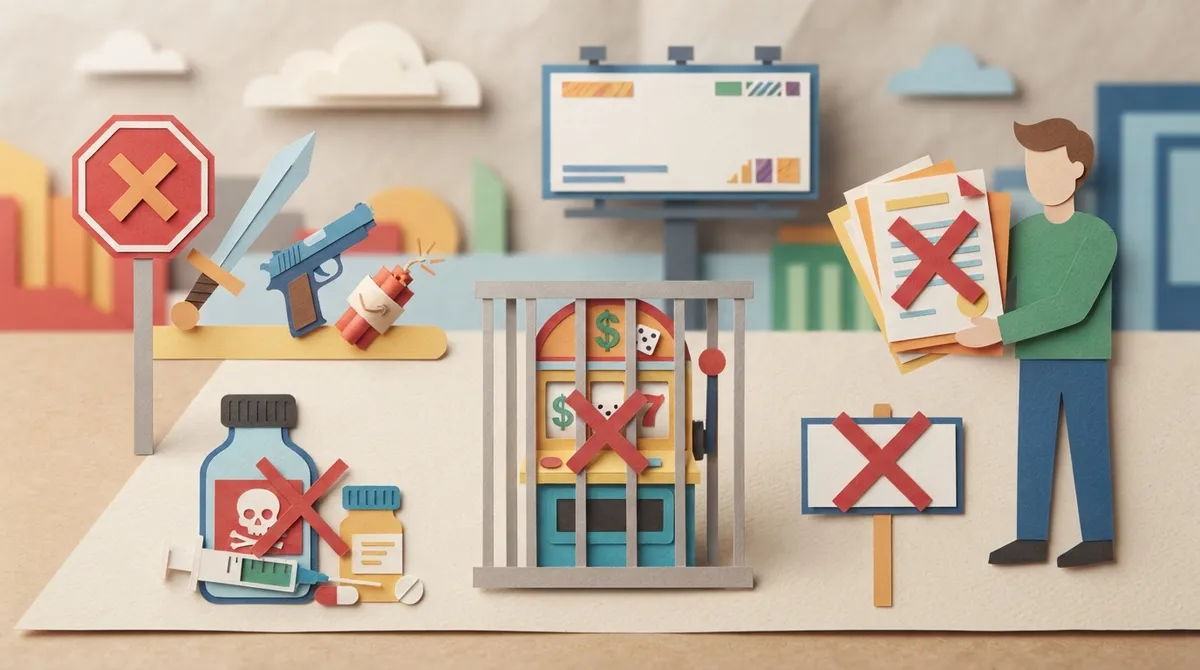
Just like other ad platforms, ChatGPT has limits. While exact rules can change, businesses in these categories are commonly restricted or face heavy review:
- Illegal products or services of any kind.
- Adult content and sexually explicit material.
- Weapons and dangerous goods in many cases.
- Misleading or deceptive offers, including fake promises and scams.
- Certain regulated items such as some drugs, gambling, or tobacco products.
The golden rule? Always check OpenAI’s current ad policies before you spend a dime. Policies update, and a quick eligibility check up front saves a lot of headaches later.
How to Know If Your Business Is a Good Fit
Being eligible and being a smart fit are two different things. Here’s a simple way to gut-check your business before you commit your budget.
- Do customers ask questions before buying? If your buyers research, compare, or ask for advice, you’re likely a match.
- Is your offer easy to explain? Short, clear value wins in a chat setting.
- Do you have a strong landing page? Clicks mean nothing if your page doesn’t convert.
- Can you track results? You’ll want analytics in place to see what’s working.
- Is your budget realistic? ChatGPT ads require a monthly ad spend paid directly to the platform, so plan for that on top of management costs.
Your landing page matters more than most people think. A fast, clear, mobile-friendly site turns curiosity into customers. If yours needs a refresh, our custom website design team can help you build one that converts.
ChatGPT Ads vs. Google Ads: Where Each One Shines
Many owners ask whether ChatGPT ads replace Google Ads. The honest answer is no. They work best as partners, because they reach people at different moments.
- Google Ads captures people actively searching with clear buying keywords.
- ChatGPT ads reach people who are exploring, comparing, and asking for advice in a conversation.
- Together, they cover both the research phase and the buying phase.
If you want to see how paid search fits into the bigger picture, check out how to run Google Ads that actually drive results. And for a closer comparison, read our take on ChatGPT ads vs. Google Ads to decide which to run first.
Tips for Writing ChatGPT Ads That Get Noticed
Once you know your business qualifies, the next step is making your ads shine. Here are some friendly tips to get you started.
Write for Conversations, Not Keywords
Imagine the exact question your customer would type. Then write your ad as the helpful answer. Keep it natural, warm, and clear.
Use Strong Context Hints
Context hints guide where your ad appears. Be specific about the problems you solve and the people you serve. Vague hints lead to wasted spend.
Be Honest and Specific
Skip hype and big promises. Real details, like service areas, pricing ranges, or clear benefits, build trust and keep you inside policy.
Test and Improve
Run a couple of ad variations and see which one performs better. Small tweaks to headlines can make a big difference over time.
If you’re working with Brain Buzz Marketing, we handle this for you through our ChatGPT ads management service, from eligibility checks to monthly reporting.
Setting a Smart Budget
Budgeting for ChatGPT ads is a bit different from other channels. Here’s what to keep in mind:
- Platform ad spend: ChatGPT currently requires a monthly ad spend of $750, paid directly to OpenAI.
- Management costs: If you hire an agency, expect a setup fee and a monthly management fee on top of ad spend.
- Landing page upkeep: A strong site is part of your investment, not an afterthought.
At Brain Buzz Marketing, ChatGPT ads management starts at $250 per month plus a $250 one-time setup fee. Setup includes an eligibility check, intent-based ad group planning, context hint writing, ad copy, location and device targeting, and Google Analytics tracking. Ongoing management covers hint refinement, A/B testing, budget monitoring, landing page recommendations, policy compliance, and monthly reports.
Why Local and Small Businesses Should Pay Attention
Here’s the exciting part: you don’t need a giant budget or a famous brand to benefit. Small and mid-sized businesses often win because they can be specific. A local roofer in Tampa or a boutique shop in Brandon can match the exact question a customer is asking.
Since 1998, our husband-and-wife team has helped businesses grow online, and we’ve seen new channels come and go. What stays the same is this: clear messaging, a great website, and consistent tracking always win. If you’d like to learn more about who we are, visit about Brain Buzz Marketing. And you can see what our clients say on Google — Brain Buzz Marketing.
Want to go beyond ads? Pairing paid placements with strong organic visibility helps even more. Our guide on how to get your business recommended by AI search shows how SEO, GEO, and AEO work together. For fresh strategies, you can also explore tools like SEO Rocket for fully automated blog posts that rank.
Common Mistakes to Avoid
- Skipping the policy check. A rejected ad wastes time.
- Sending traffic to a weak page. Fix your landing page first.
- Making big claims. Overpromising can break rules and trust.
- Ignoring tracking. Without data, you’re guessing.
- Setting and forgetting. Ads need regular tune-ups to stay sharp.
For more on common pitfalls, see our list of mistakes to avoid when you advertise on ChatGPT.
Ready to Get Started?
So, what businesses can advertise on ChatGPT? A lot of them! Local services, professional firms, ecommerce shops, software companies, startups, and more can all find success, as long as they play by the rules and show up with a clear, honest message. The real win comes from pairing the right ad with a strong website and good tracking.
We’d love to help you figure out if ChatGPT ads are right for your business. We’re a 100% virtual agency, so we can work with you wherever you are, from Tampa Bay to anywhere across the country. Get in touch with our team and let’s chat about your goals. Friendly advice is always free!
FAQs
Q: What businesses can advertise on ChatGPT?
A: Most legitimate businesses can advertise, including local service providers, professional firms, ecommerce stores, software companies, startups, and education providers. The key is following OpenAI’s ad policies and being honest in your messaging.
Q: Are there businesses that can’t advertise on ChatGPT?
A: Yes! Illegal products, adult content, deceptive offers, and many weapons or heavily regulated items are commonly restricted. Always check OpenAI’s current policies before you start, since the rules can change.
Q: Can a small local business advertise on ChatGPT?
A: Absolutely. Small and local businesses can use location and device targeting to reach nearby customers asking for help. Being specific about what you offer and where you serve often gives smaller businesses a real edge.
Q: How much does it cost to advertise on ChatGPT?
A: ChatGPT currently requires a monthly ad spend of $750, paid directly to them. If you work with Brain Buzz Marketing, management is $250 per month plus a $250 one-time setup fee.
Our Service Area