Key Takeaways
-
Over 80% of Google searches end in zero clicks by 2026, meaning AI delivers answers directly without users visiting websites—if you’re not optimized for AI engines, you’re invisible to most of your audience.
-
Master three interconnected layers: SEO (get found), AEO (get chosen as direct answer), GEO (get recommended by AI)—76% of AI citations come from top 10 traditional search results, so strong SEO is your foundation.
-
Create dedicated service pages for each offering with unique content, schema markup, and title tags instead of combining services on one page—this prevents services from competing and helps AI understand your specific offerings.
-
Use the Capsule Content Technique: write H2 headings as clear questions, answer directly in the first sentence without fluff, and keep that answer self-contained for easy AI extraction into featured snippets.
-
Build topical authority through blog clusters covering related angles of a subject, then repurpose content across YouTube, social media, and other platforms—diversified presence increases likelihood of AI recommendations.
-
Implement schema markup on every page (Service, LocalBusiness, FAQ, Article) and strengthen off-site signals through backlinks, business listings, and consistent NAP data to signal trustworthiness to AI engines.
Search has changed dramatically. In 2026, more than 80% of Google searches end in zero clicks. That means users get their answer directly from Google — without ever visiting a website. If your business isn’t showing up in AI-generated results, you’re invisible to a massive chunk of your audience.
This shift is why AI search optimization has become the most important topic in digital marketing right now. It’s not just about ranking on page one anymore. It’s about being found, chosen, and recommended by AI-powered search engines like Google AI Overviews, ChatGPT Search, and Perplexity. And yes — the good news is that this is absolutely achievable for small businesses.
In this article, we break down the three layers of modern search — SEO, AEO, and GEO — and give you 9 actionable strategies to start winning in the age of AI. Whether you’re a local service provider, an e-commerce store, or a startup trying to get discovered, this guide is for you. Let’s dive in!
Understanding the Three Layers: SEO, AEO, and GEO
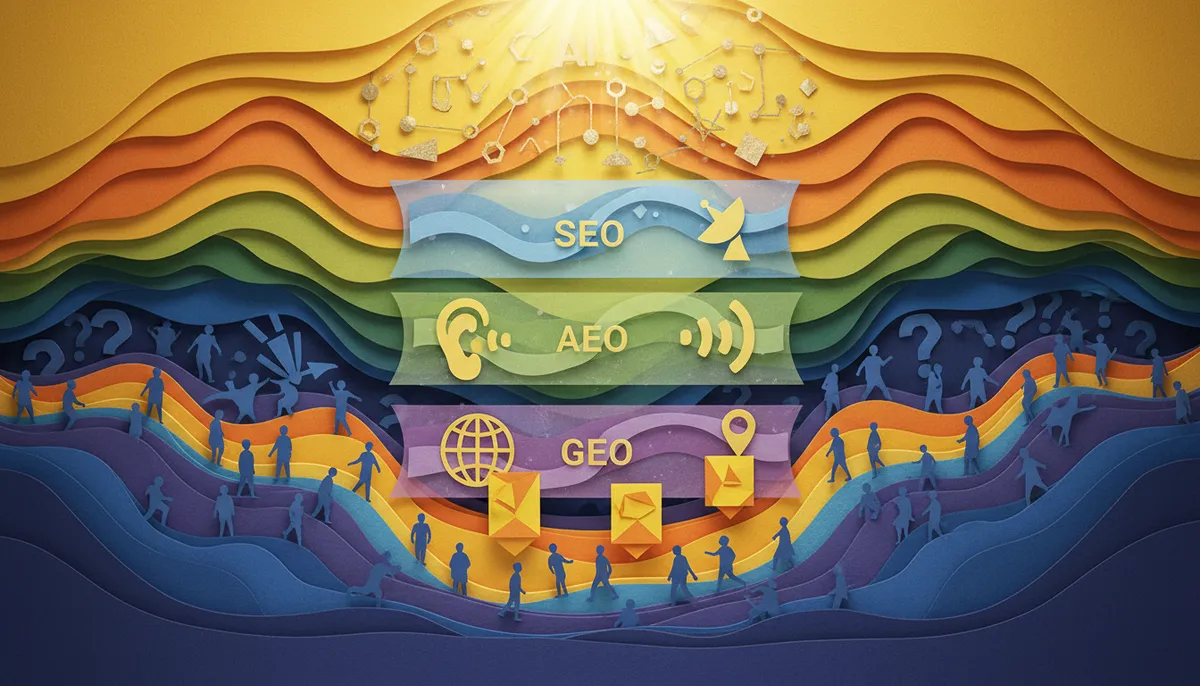
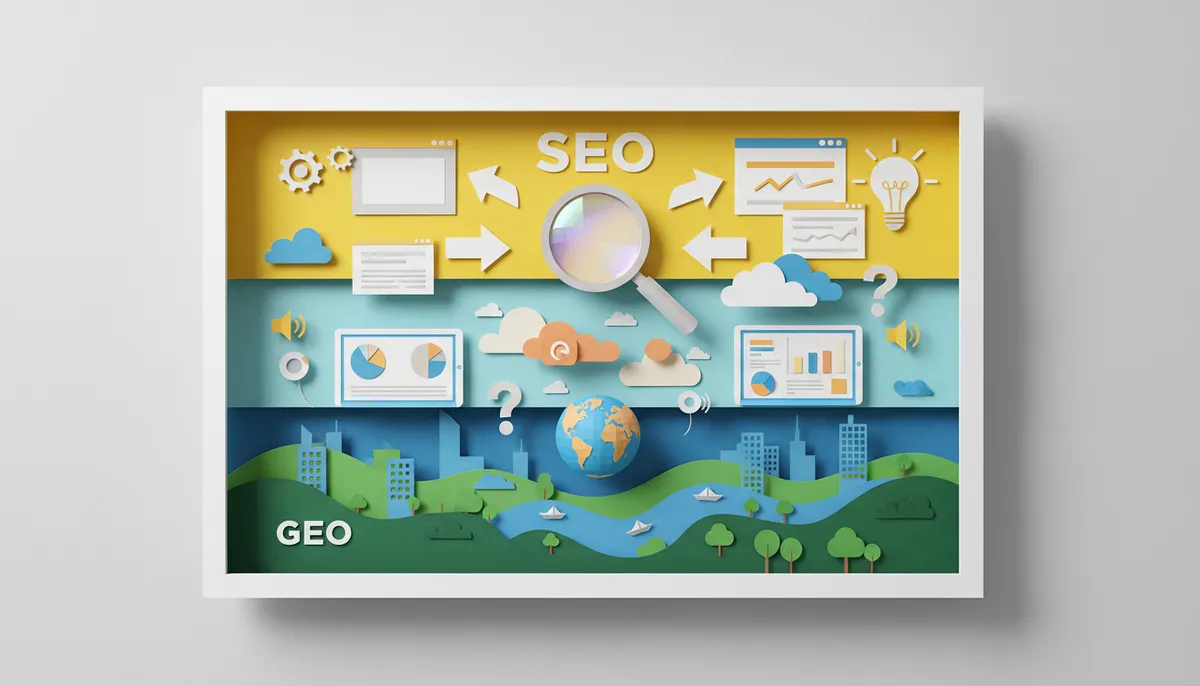
Before we get into the strategies, it helps to understand the landscape. Modern SEO has evolved into three distinct but interconnected layers. Think of them like building blocks — you can’t skip the foundation and expect the roof to hold.
-
SEO (Search Engine Optimization): Getting your website found by search engines
-
AEO (Answer Engine Optimization): Getting your content chosen as a direct answer
-
GEO (Generative Engine Optimization): Getting your brand recommended by AI engines
Here’s a simple way to remember it: SEO gets you found. AEO gets you chosen. GEO gets you recommended. All three work together. Skipping one is like trying to swim butterfly before you’ve learned to float.
|
Layer |
Goal |
Example Platform |
|---|---|---|
|
SEO |
Rank in search results |
Google, Bing, YouTube |
|
AEO |
Appear as a direct answer |
Featured Snippets, People Also Ask |
|
GEO |
Get cited by AI engines |
Google AI Overviews, ChatGPT Search, Perplexity |
Strategy 1: Build a Rock-Solid SEO Foundation First
Here’s a stat worth knowing: 76% of all AI Overview citations come from the top 10 pages of traditional search results. That means if your site isn’t ranking well organically, you won’t get cited by AI either. SEO is still your most important starting point.
Strong SEO breaks down into three areas:
-
On-site SEO: Is your content valuable and easy to read? Does your site structure make sense?
-
Technical SEO: Is your schema markup correct? Are your URLs clean? Do you have any 404 errors?
-
Off-site SEO: Are you earning backlinks? Is your brand mentioned on other websites and platforms?
All three must work together. You can learn more about how this works by checking out our local SEO services or our guide on how to choose SEO services that actually grow your business.
Strategy 2: Create Dedicated Service Pages (Not One Mega Page)
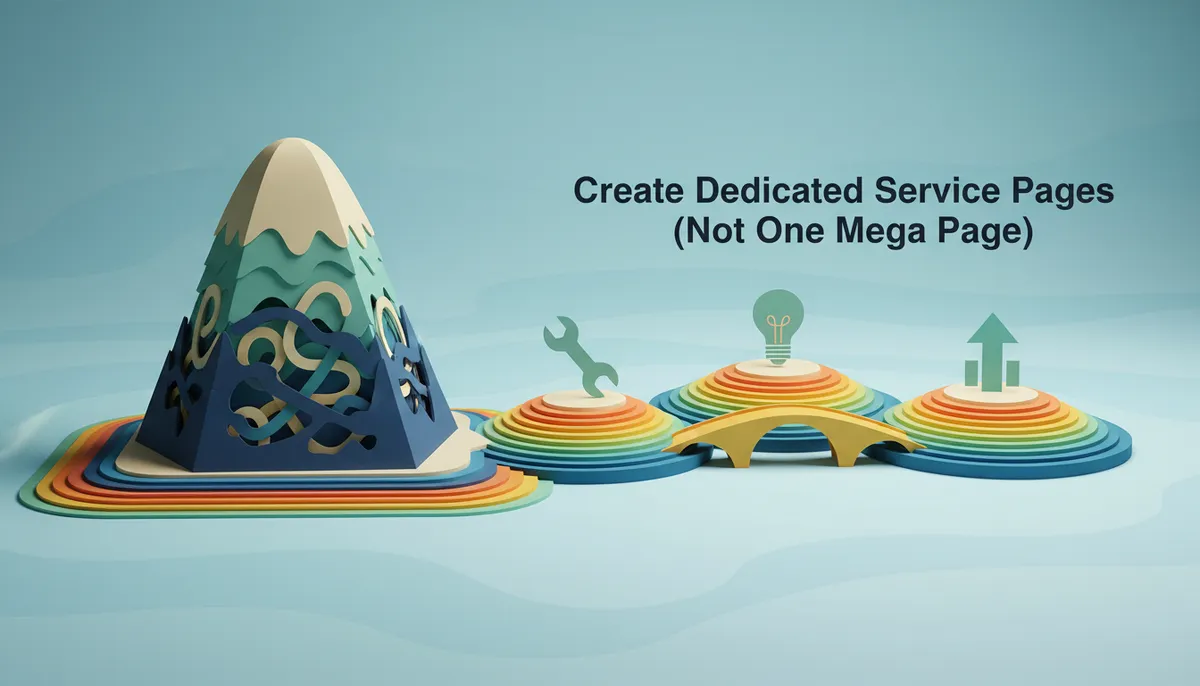
One of the biggest mistakes businesses make is putting all their services on a single page. This causes your services to compete against each other in search results. It also gives users and AI engines a confusing, unfocused experience.
Instead, give each service its own dedicated page. For example, if you offer four services, you need four separate pages. Each page should target a specific user search intent.
-
Create one page per service
-
Make sure each page is at least 50% different in content from the others
-
Use unique title tags, meta descriptions, and H1 headings
-
Add service-specific schema markup to each page
-
Keep the structure clean and easy to navigate
This structure helps search engines understand exactly what each page is about — and makes it easier for AI to pull your content as a relevant answer. A well-designed website with clear page architecture is a huge competitive advantage.
Strategy 3: Use Programmatic SEO for Local Domination
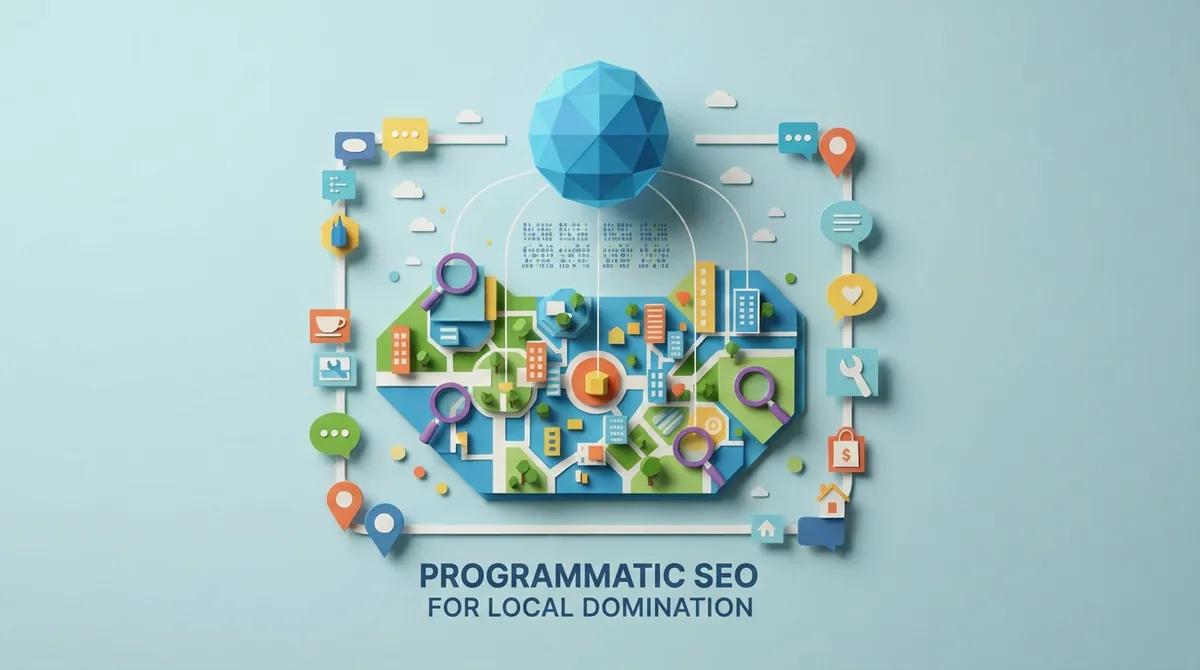
If your business serves multiple locations, programmatic SEO is a game-changer. This means creating individual pages for each service in each location you serve.
For example, a plumbing company in Austin might create:
-
A parent “Areas Served” page
-
Individual city or neighborhood location pages
-
Child pages for each specific service in each location (e.g., “Emergency Plumbing in Westlake Hills”)
Yes, this can mean building 100+ pages. But when done correctly, it delivers remarkable results. Community members using this strategy have indexed over 1,000 city pages and booked 99+ appointments per month — with zero ad spend. Our article on 7 ways local SEO drives more customers in 2026 covers more on this approach.
Strategy 4: Add Schema Markup to Every Page
Schema markup is one of the most powerful technical SEO tools available — and one of the most overlooked. It’s a type of code you add to your website that tells search engines and AI what your content means, not just what it says.
-
Use Service schema on each individual service page
-
Use LocalBusiness schema to help with local search visibility
-
Use FAQ schema to target People Also Ask boxes
-
Use Article schema for blog posts and guides
Think of schema as a cheat sheet for AI engines. When your schema is clear and accurate, AI tools are far more likely to pull your content as a trusted source. Understanding Google E-E-A-T principles goes hand in hand with proper schema implementation.
Strategy 5: Write Blog Content Using the Capsule Content Technique
Here’s where things get really exciting for AI search optimization. Blogs aren’t dead — their purpose has simply shifted. Today, the most valuable thing a blog post can do is establish topical authority and feed direct answers to AI engines.
The Capsule Content Technique works like this:
-
Write your H2 heading as a clear question (e.g., “What is Technical SEO?”)
-
Answer that question directly in the very first sentence below the heading
-
Keep that first answer self-contained — it should make sense completely on its own
-
Avoid fluffy intros like “In today’s digital landscape…” — get straight to the point
-
Do not include internal links in the first direct answer paragraph
This format makes it easy for AI to extract your sentence and use it as a cited answer. Our content writing services are built around this exact approach — writing for both humans and AI from the ground up.
Strategy 6: Build Topical Authority with Blog Clusters
AI engines trust sources that know their subject deeply. One blog post isn’t enough. You need to cover a topic from many different angles to become a recognized authority in that space.
For example, a plumbing business might write a cluster of blogs around pipe maintenance:
-
“How to Prevent Frozen Pipes in Winter”
-
“Signs Your Pipes Need Replacing”
-
“What to Do If a Pipe Bursts at Night”
-
“Copper vs. PEX Pipes: Which is Better?”
-
“How Water Quality Affects Your Plumbing”
Each blog post adds another layer of authority. AI engines begin to recognize your brand as the go-to expert on this topic. Over time, this leads to more citations, more featured snippets, and more organic traffic — without paying for a single ad.
Strategy 7: Optimize for Featured Snippets and People Also Ask
AEO (Answer Engine Optimization) is all about getting your content chosen as a direct answer. Two major opportunities exist right inside Google:
-
Featured Snippets: The highlighted answer box that appears at the top of search results
-
People Also Ask: The expandable question boxes that appear throughout search results
To win these spots, your content needs to be clear, direct, and well-structured. Use question-based H2 headings. Answer each question in 40–60 words. Use numbered lists for step-by-step content. Keep sentences short and scannable. If you want to see what this looks like in practice, check out our SEO services near me page for a live example of well-structured content.
Strategy 8: Diversify Your Content Across Platforms
Here’s something many business owners don’t realize: AI search engines pull citations from more than just websites. They also pull from YouTube, social media profiles, and other digital platforms. That means your digital footprint matters more than ever.
Start by repurposing each blog post into:
-
A YouTube video or short
-
An Instagram Reel or carousel post
-
A TikTok video
-
A LinkedIn article or update
Tools like Repurpose.io can automate much of this process — publish in one place and let it distribute everywhere else. The more places your brand appears with consistent, helpful content, the more likely AI engines are to recommend you. Follow us on Instagram and Facebook to see how we put this into practice ourselves.
Strategy 9: Strengthen Your Off-Site Signals and Brand Presence
AI engines don’t just look at your website. They look at your entire digital reputation. Off-site SEO signals — like backlinks, brand mentions, and consistent business listings — all contribute to how trustworthy your brand appears.
Here’s what to focus on:
-
Earn backlinks from reputable websites in your industry
-
Get your business mentioned on news sites, directories, and partner websites
-
Keep your Google Business Profile up to date
-
Maintain consistent NAP (Name, Address, Phone) data across all listings
-
Build out your LinkedIn, YouTube, and social media profiles fully
A strong off-site presence signals to AI that your brand is real, trusted, and worth recommending. You can visit our Google Business Profile to see how a well-maintained profile supports overall search visibility. Also, check out 9 signs you need an SEO agency near you if you’re unsure whether your current efforts are working.
Putting It All Together: Your AI Search Optimization Roadmap
The good news? If you do solid SEO, you’ve already completed about 70% of the work for AEO and GEO as well. The remaining 30% is about applying smart strategies like the Capsule Content Technique, proper service page architecture, and content diversification.
|
Priority |
Strategy |
Impact |
|---|---|---|
|
High |
SEO Foundation (On-site, Technical, Off-site) |
Core visibility across all platforms |
|
High |
Dedicated Service Pages with Schema |
Precise ranking for each service |
|
High |
Capsule Content Technique |
AI citations and featured snippets |
|
Medium |
Topical Authority Blog Clusters |
Long-term authority and trust |
|
Medium |
Content Diversification Across Platforms |
Broader AI citation footprint |
|
Medium |
Programmatic Local SEO |
Dominant local search presence |
At Brain Buzz Marketing, we help small and medium-sized businesses navigate all three layers of modern search — SEO, AEO, and GEO. We don’t just write for Google; we write for the future of search. From custom website design to AI-ready content strategy, our digital marketing services are built for 2026 and beyond.
Conclusion
AI search optimization isn’t some distant future concept — it’s happening right now, and it’s reshaping how customers find businesses like yours. The three layers of modern search (SEO, AEO, and GEO) work together as a system. Master all three, and you’ll be visible across traditional search, featured snippets, and AI-generated results.
Start with your SEO foundation. Add structured, answer-ready content. Diversify your digital presence. And never stop building topical authority in your space. If this feels like a lot to tackle on your own, you don’t have to do it alone. Reach out to our team today and let’s build an AI search strategy that gets your business found, chosen, and recommended.
FAQs
Q: What is AI search optimization and why does it matter in 2026?
A: AI search optimization is the process of making your website and content visible across AI-powered search engines like Google AI Overviews, ChatGPT Search, and Perplexity. It matters because over 80% of searches in 2026 end without a click — meaning AI delivers the answer directly. If you’re not optimized for AI, you’re missing most of your potential audience!
Q: What is the difference between SEO, AEO, and GEO?
A: Great question! SEO (Search Engine Optimization) helps you get found in traditional search results. AEO (Answer Engine Optimization) gets your content chosen as a direct answer in featured snippets and People Also Ask boxes. GEO (Generative Engine Optimization) gets your brand cited and recommended by AI search engines. All three work together — think of them as layers that build on each other.
Q: Do I need to change my existing website to optimize for AI search?
A: Not necessarily a complete overhaul, but some smart updates will go a long way! You’ll want to add schema markup, create dedicated service pages, and structure your blog content using clear question-and-answer formatting. A clean website architecture and well-organized content make it much easier for AI engines to understand and recommend your business.
Q: How long does it take to see results from AI search optimization?
A: Results vary depending on your starting point, but most businesses begin to see improvements in featured snippet appearances and AI citations within 3 to 6 months of consistent effort. Building topical authority through blog clusters and proper page structure takes time — but the long-term payoff is absolutely worth it!
Q: Can small businesses really compete in AI-driven search results?
A: Absolutely — and this is one of the most exciting things about AI search optimization! AI engines prioritize relevance, authority, and clear answers over big budgets. A small business with well-structured, helpful content can absolutely outrank a larger competitor. Focus on your niche, build topical authority, and use the strategies in this article to get started.