Key Takeaways
-
AEO and SEO are distinct strategies with different targets: SEO aims for rankings on traditional search engines, while AEO optimizes content to appear as direct answers in AI tools like ChatGPT and Google AI Overviews.
-
Structure content around clear questions and answers with schema markup for AEO success; AI tools extract direct, factual responses rather than ranking pages, requiring Q&A sections, FAQs, and structured data implementation.
-
Combine both strategies for 2026 competitiveness: strong SEO builds domain authority and trust, while AEO optimization ensures AI tools can extract and cite your content as a reliable answer source.
-
Shift keyword strategy from volume-based terms to conversational questions and natural language intent; AI tools prioritize how people actually speak rather than typed keywords.
-
E-E-A-T credibility signals are more critical for AEO than traditional SEO; AI engines prioritize expert-authored content, cited data, and trustworthy backlinks when selecting answers to surface.
-
Measure AEO success differently than SEO: track brand mentions in AI responses, featured snippets, and zero-click impressions rather than relying solely on organic traffic and click-through rates.
If you have been marketing your business online, you have likely heard of SEO. But a newer term is gaining serious traction in 2026: AEO, or Answer Engine Optimization. Many business owners are asking the same question — is AEO the same as SEO? The short answer is no, but they are closely related and work best together.
Understanding the difference between AEO and SEO is no longer optional. AI-powered search tools like Google’s AI Overviews, ChatGPT, and other large language models (LLMs) are changing how people find information online. If your content is not optimized for both, you risk losing visibility where it matters most.
This article breaks down 7 clear differences between AEO and SEO. By the end, you will know exactly how each strategy works, why both matter, and how to use them together to grow your online presence in 2026 and beyond.
What Is SEO?
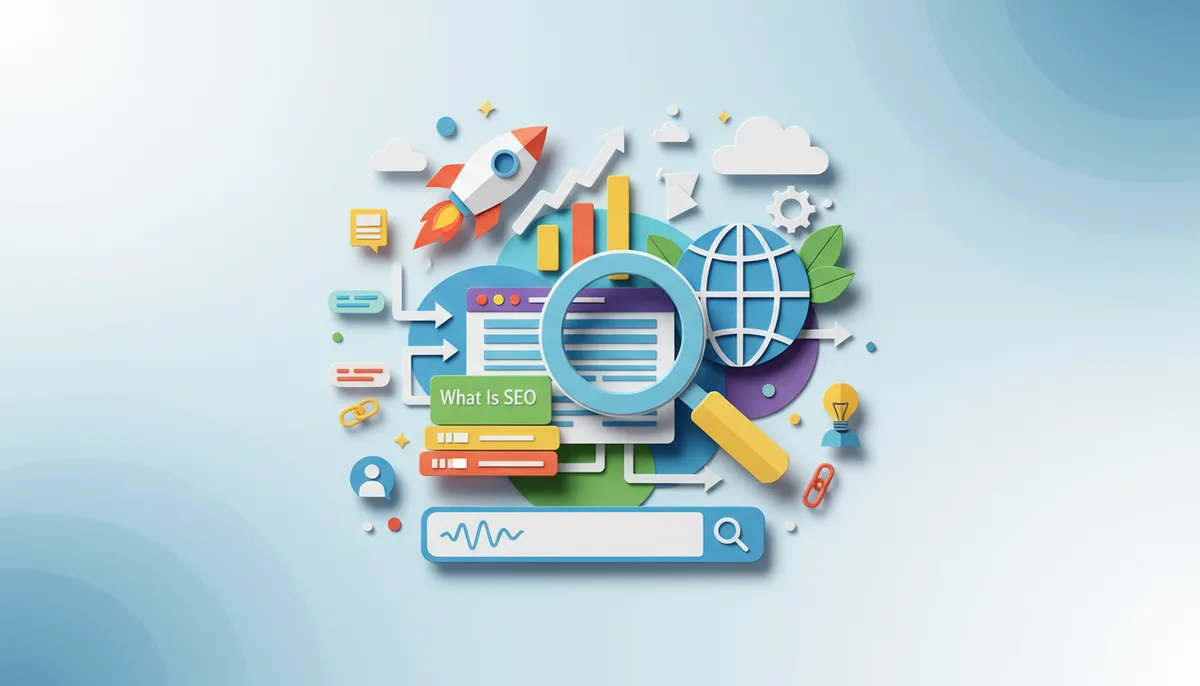
SEO stands for Search Engine Optimization. It is the practice of improving your website so that it ranks higher on search engine results pages (SERPs) like Google or Bing. When someone types a keyword into a search engine, SEO helps your page appear near the top of those results.
Traditional SEO services focus on elements like keyword research, on-page optimization, backlink building, and technical site health. The goal is to attract organic traffic — visitors who find you without paid advertising. It is a long-term strategy that builds authority and trust over time.

What Is AEO?
AEO stands for Answer Engine Optimization. It is the practice of structuring your content so that AI-driven answer engines can extract and display it as a direct response to a user’s question. Answer engines include tools like Google’s AI Overviews, ChatGPT, Perplexity AI, and voice assistants like Siri or Alexa.
Rather than just helping you rank on a results page, AEO aims to make your content the actual answer that gets surfaced. Think of it as optimizing for the moment when a user asks a question and an AI tool responds directly — ideally using your content as the source.

Is AEO the Same as SEO? Here Are 7 Key Differences
So, is AEO the same as SEO? They share some overlap, but they are distinct strategies with different goals, methods, and outcomes. Here are the 7 most important differences you need to understand.
1. The Target Platform Is Different
SEO targets traditional search engines like Google and Bing. Your goal is to appear on a results page where users click through to your website. AEO, on the other hand, targets answer engines and AI tools. Your goal is to have your content read aloud or displayed as a direct response — often without any click required.
This distinction matters because the user journey is completely different. With SEO, a click to your site is the goal. With AEO, visibility within the AI response itself becomes the win.
2. Content Structure Requirements Differ
For SEO, content is structured around keywords, headings, and topic clusters that signal relevance to search engines. For AEO, content must be structured around clear, concise questions and answers. AI tools are looking for direct, factual responses they can extract and present to users.
Best practices for AEO-friendly content structure include:
- Using question-based headings (H2s and H3s)
- Writing short, direct answer paragraphs immediately after each question
- Including FAQ sections with well-structured answers
- Using schema markup to label your content for machines
- Keeping language simple, clear, and factually precise
3. The Role of Schema Markup Is More Critical in AEO
Schema markup is code added to your website that helps search engines understand the context of your content. In traditional SEO, schema is helpful but not always essential. In AEO, it is far more important. Structured data like FAQ schema, HowTo schema, and Speakable schema directly help AI tools identify and surface your answers.
If your website design does not support proper schema implementation, you may be missing significant AEO opportunities regardless of how good your content is.
4. Keyword Strategy Shifts to Intent and Questions
SEO relies heavily on keyword volume and competition data. You find high-traffic keywords and build content around them. AEO shifts that focus to search intent and natural language questions. AI tools are trained on how people actually speak and ask questions, not just the keywords they type.
Here is a simple comparison of how keyword strategy differs:
| Strategy | SEO Focus | AEO Focus |
|---|---|---|
| Keyword Type | Short and long-tail keywords | Conversational questions and natural language |
| User Intent | Informational, navigational, transactional | Primarily informational and direct-answer intent |
| Content Format | Blog posts, landing pages, category pages | Q&A sections, FAQs, concise definitions |
| Optimization Goal | Rank on page one of results | Become the featured AI-generated response |
5. E-E-A-T Plays a Bigger Role in AEO
Google’s framework of Experience, Expertise, Authoritativeness, and Trustworthiness — known as Google E-E-A-T — is important for both strategies. However, it carries even more weight in AEO. AI tools are designed to pull answers from credible, authoritative sources. If your website lacks clear author credentials, cited data, or trusted backlinks, AI engines may ignore your content entirely.
Building E-E-A-T signals is an ongoing process. This includes publishing expert-authored content, earning quality backlinks, and maintaining a trustworthy, well-structured website. You can also review our certifications to understand what professional credentials look like in the digital marketing space.
6. Measuring Success Looks Different
With SEO, success is measured through organic traffic, keyword rankings, click-through rates, and conversions. These are trackable metrics inside tools like Google Search Console and Google Analytics. With AEO, measurement is more complex. When an AI tool surfaces your content, the user may not visit your site at all — making traditional traffic metrics less reliable.
Key ways to measure AEO performance include:
- Tracking brand mentions in AI-generated responses
- Monitoring featured snippet appearances in Google results
- Watching for increases in zero-click search impressions
- Tracking voice search traffic where available
- Monitoring direct traffic as brand awareness grows through AI visibility
7. Long-Term Strategy and Timelines Vary
SEO is well-established and has a proven track record. Most businesses begin seeing meaningful organic results within 3 to 6 months of consistent effort. AEO is newer and the timelines are less predictable. AI search behavior is still evolving rapidly, which means AEO strategies must evolve alongside it.
The smart move in 2026 is to invest in both. Local SEO services and broader digital strategies work in parallel with AEO to ensure your brand is visible across all search formats — traditional and AI-powered alike.
How AEO and SEO Work Together
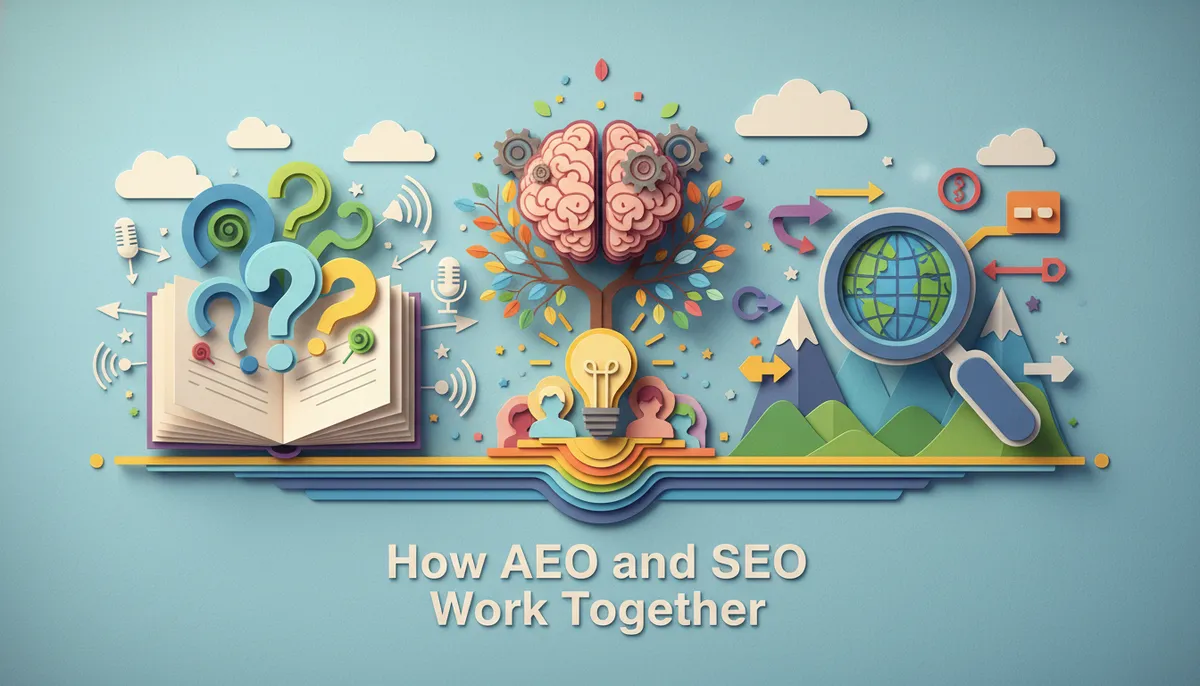
The most effective digital marketing strategies do not choose between AEO and SEO — they integrate both. Strong SEO lays the foundation. It builds domain authority, attracts backlinks, and ensures your site is technically sound. AEO builds on that foundation by optimizing the content itself for extraction by AI tools.
Here is how a combined AEO + SEO content strategy works step by step:
- Start with keyword and intent research — identify both search keywords and common questions your audience asks.
- Build topic clusters — create pillar pages and supporting content that covers topics deeply and answers related questions.
- Structure content for both humans and machines — use clear headings, short paragraphs, bullet points, and schema markup.
- Build authority and trust signals — earn backlinks, add author bios, cite credible sources, and maintain a professional online presence.
- Optimize for featured snippets — write direct answers to common questions, as these often become the basis for AI-generated responses.
- Review and update regularly — both SEO and AEO require ongoing content refreshes to maintain visibility as algorithms evolve.
This is exactly the approach taken by agencies that offer a full content writing services strategy — combining traditional SEO best practices with forward-thinking AEO content architecture.
Why AEO Matters More Than Ever in 2026
AI-powered search is not a future trend — it is the present reality. In 2026, a significant portion of search queries are being answered directly by AI tools without users ever clicking a traditional search result. If your business is not optimized for this shift, you are already losing visibility.
This is especially important for local service providers, small business owners, and e-commerce retailers who rely on search visibility for leads and sales. When a potential customer asks an AI assistant for a recommendation or answer, you want your business to be the source that gets cited.
The good news is that building strong AEO does not require starting from scratch. If you already have solid digital marketing services in place, adding AEO optimization is a natural and logical next step. Agencies like Brain Buzz Marketing have already integrated AEO, local SEO, and GEO (Generative Engine Optimization) into a unified content strategy — giving clients visibility across every type of search engine, traditional or AI-driven.
AEO vs SEO: A Side-by-Side Summary
| Factor | SEO | AEO |
|---|---|---|
| Primary Goal | Rank on search engine results pages | Appear in AI-generated answer responses |
| Platforms Targeted | Google, Bing, Yahoo | ChatGPT, Perplexity, Google AI Overviews, voice assistants |
| Content Format | Long-form articles, landing pages | Q&A, FAQs, concise factual answers |
| Schema Markup | Helpful | Highly important |
| Keyword Focus | Volume-based keywords | Intent-based questions |
| Success Metrics | Rankings, traffic, CTR | AI citations, featured snippets, brand mentions |
| Maturity | Established (25+ years) | Emerging and evolving rapidly |
Common Mistakes Businesses Make With AEO and SEO
Many businesses make avoidable errors when trying to implement these strategies. Here are the most common mistakes to watch out for:
- Treating AEO and SEO as separate silos — they must work together for best results.
- Ignoring schema markup — without structured data, AI tools struggle to identify your content as a reliable answer.
- Writing only for keywords, not questions — AEO requires conversational, question-focused content.
- Skipping E-E-A-T signals — AI tools prioritize trustworthy and authoritative sources above all else.
- Not updating content regularly — outdated content loses authority in both SEO and AEO rankings.
- Neglecting mobile and voice optimization — a large portion of AEO queries come from voice and mobile devices.
For businesses that want to get this right, working with an experienced team makes all the difference. You can explore how to choose SEO services that actually grow your business to understand what to look for in a qualified digital marketing partner.
Conclusion
So, is AEO the same as SEO? No — but they are two sides of the same coin. SEO gets your content ranking on traditional search engines. AEO gets your content featured as a direct answer in AI-powered tools and voice search results. In 2026, you need both to stay competitive online.
The businesses that thrive will be the ones that adapt early. Start by auditing your existing content, adding structured data, and building out a question-focused content strategy. If you need expert guidance, Brain Buzz Marketing offers fully integrated SEO, AEO, and GEO strategies built for small and medium-sized businesses. You can also visit us on Google to see what our clients have to say about working with our team.
Ready to future-proof your digital presence? Get in touch with our team today and let us build a content strategy that works across every search platform — now and in the years ahead.
Stay connected with us on Instagram and Facebook for the latest updates on AEO, SEO, and digital marketing trends.
FAQs
Q: Is AEO the same as SEO?
A: No, AEO (Answer Engine Optimization) and SEO (Search Engine Optimization) are not the same, though they are closely related. SEO focuses on ranking your website on traditional search engines like Google, while AEO focuses on getting your content featured as a direct answer in AI-powered tools, voice assistants, and platforms like ChatGPT or Google’s AI Overviews.
Q: Do I need AEO if I already do SEO?
A: Yes. In 2026, a growing share of search queries are answered directly by AI tools without users clicking on a traditional search result. If your content is not optimized for AEO, you risk losing visibility in AI-generated responses even if your SEO rankings are strong. Both strategies work best when used together.
Q: What type of content works best for AEO?
A: Content that works best for AEO is structured around clear questions and direct, concise answers. FAQ sections, how-to guides, definition paragraphs, and schema-marked-up content all perform well. The key is to write in natural, conversational language that mirrors how users actually ask questions to AI tools.
Q: How does schema markup help with AEO?
A: Schema markup is structured code added to your website that helps AI tools and search engines understand what your content is about. For AEO, schema types like FAQ, HowTo, and Speakable are particularly valuable because they label your content in a way that makes it easier for AI tools to extract and present as a direct answer.
Q: How long does it take to see results from AEO?
A: AEO is a newer and evolving discipline, so results can vary. Unlike traditional SEO, which typically shows measurable results within 3 to 6 months, AEO success depends on how quickly AI tools index and cite your content. Businesses that implement AEO alongside a strong SEO foundation tend to see faster and more consistent visibility gains.