
Key Takeaways
-
Install schema markup and structured data (article schema, FAQ schema) to earn rich results in Google—one of the most underused blog design strategies in 2026 that directly improves visibility and click-through rates.
-
Optimize page speed to load under 3 seconds and ensure Core Web Vitals performance; slow sites lose visitors and rankings, making this a critical factor for both user experience and search engine ranking.
-
Design every blog post with a clear, strategic call-to-action (CTA) guiding readers toward next steps like consultations or contact forms; posts without CTAs result in readers leaving without converting.
-
Use WordPress as your platform and structure your blog with organized content categories, consistent post templates, and an extensive internal linking strategy between posts and service pages for better SEO and user navigation.
-
Implement mobile-first responsive design with readable typography, clear formatting (short paragraphs, headers, images), and intuitive navigation; most readers browse on phones, and poor mobile experience directly hurts rankings.
-
Align your blog design with modern search requirements including Answer Engine Optimization (AEO) and Generative Engine Optimization (GEO) by using structured content formats like FAQs, numbered lists, and comparison tables that AI systems favor.
Your blog is one of the most powerful marketing tools you have. But only if it’s designed the right way. A poorly designed blog drives visitors away. A well-designed blog keeps them reading, builds trust, and converts them into customers. In 2026, blog website design is no longer just about how things look. It’s about how your site performs, ranks in search engines, and guides readers toward taking action. Whether you’re a small business owner, a startup, or a local service provider, your blog can become a consistent source of qualified traffic — but the design has to support that goal. This guide walks you through everything you need to know about building a blog that works hard for your business.

Why Blog Website Design Matters for Digital Marketing
Most businesses underestimate how much design affects blog performance. You can publish excellent content, but if the site is slow, hard to read, or confusing to navigate, visitors leave. That hurts your bounce rate and your search rankings. Good blog website design creates a seamless experience. It lets your content shine without technical friction getting in the way. Think of your blog design as the foundation beneath your content strategy. SEO and design work together. One without the other leaves results on the table.
According to research on Google E-E-A-T, search engines evaluate trust, authority, and experience signals — many of which are influenced by your website’s design and content quality. A professionally structured blog sends strong credibility signals to both users and search engines.

Core Elements of Effective Blog Website Design
The best blog designs share a set of common features. These features make the site easy to use and easy to find. Here are the most important elements to include in your blog website design:
- Clean, readable typography: Use fonts that are easy to read on all screen sizes. Size, spacing, and contrast matter more than most people realize.
- Fast load speed: Pages should load in under three seconds. Slow sites lose visitors and rankings.
- Mobile-first layout: Most readers browse on phones. Your blog must look and function perfectly on small screens.
- Clear navigation: Categories, search bars, and menus help readers find more content quickly.
- Strategic calls-to-action: Every blog post should guide readers toward a next step — a free consultation, a service page, or a contact form.
- Internal linking structure: Link between blog posts and service pages to keep visitors engaged and improve SEO.
Getting these elements right from the start saves you from expensive redesigns later. If you want professional help building a blog the right way, explore our website design services.
Step-by-Step: How to Plan Your Blog Website Design
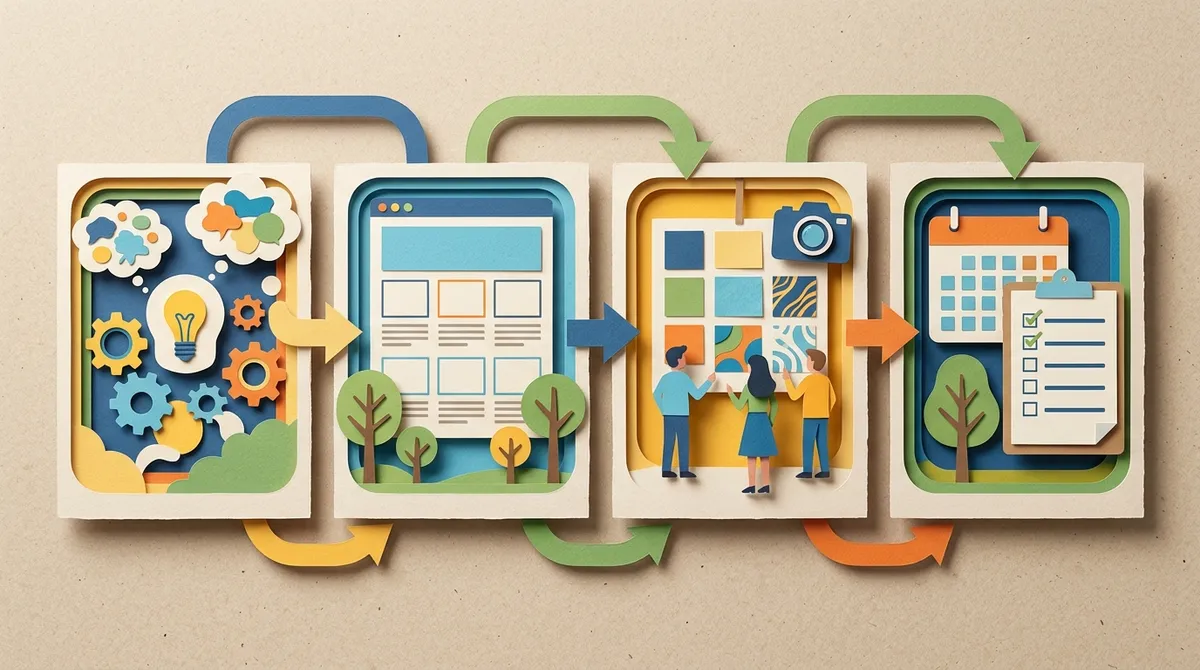
Planning your blog before you build it saves time, money, and frustration. Follow these steps to get the structure right from the beginning.
- Define your audience: Who are you writing for? Small business owners? E-commerce customers? Local homeowners? Knowing your audience shapes every design decision.
- Choose your platform wisely: WordPress is the industry standard for blog website design. It gives you full control over design, SEO, and performance. Learn more about our WordPress Hosting options to get started on a solid foundation.
- Map out your content categories: Organize your blog into clear topic categories. This helps readers navigate and helps search engines understand your site’s structure.
- Design your homepage and post templates: Create consistent layouts for your blog homepage and individual posts. Consistency builds brand trust.
- Set up your SEO framework: Install the right plugins and optimize your URL structure, meta tags, and image alt text before you publish your first post.
- Plan your internal linking strategy: Decide in advance how blog posts will link to your service pages and to each other. This is critical for on-page SEO performance.
Blog Design Features That Boost SEO Rankings
Design and SEO are deeply connected. The way your blog is built determines how well it ranks. Here are the design features that have the biggest impact on search engine performance.
Page Speed and Core Web Vitals
Google uses Core Web Vitals to measure user experience. These metrics include loading speed, interactivity, and visual stability. A blog that scores well in these areas ranks higher. Compress your images, use fast hosting, and minimize unnecessary scripts to keep your scores strong. Check out our post on 11 website design factors that actually drive results in 2026 for a deeper look at performance optimization.
Schema Markup and Structured Data
Schema markup tells search engines exactly what your content is about. For blogs, adding article schema and FAQ schema can earn rich results in Google — more visibility, more clicks. This is one of the most underused blog website design strategies in 2026.
Mobile Optimization
Google indexes the mobile version of your site first. If your blog doesn’t look great on a phone, your rankings suffer. A responsive design that adapts fluidly to any screen size is non-negotiable. Our 7 web design principles that drive real business results covers mobile optimization in detail.
Readable Content Layout
Long blocks of text push readers away. Break your content into short paragraphs, use headers to organize ideas, and include images or visuals to maintain interest. A well-laid-out blog post keeps readers on-page longer — a positive signal for search engines.
Blog Website Design vs. Standard Website Design
Not all websites are the same. A blog has unique design requirements that differ from a standard business website. Understanding these differences helps you make better decisions.
| Feature | Standard Business Website | Blog Website Design |
|---|---|---|
| Content Volume | Static, limited pages | Regularly updated posts |
| Navigation Style | Service/product focused | Category and topic focused |
| SEO Strategy | Page-level optimization | Content clusters and topic authority |
| User Journey | Direct path to conversion | Content engagement → trust → conversion |
| Update Frequency | Infrequent updates | Weekly or monthly publishing |
| Internal Linking | Limited | Extensive cross-linking between posts |
Understanding this distinction helps you allocate resources correctly. A blog that’s designed like a static brochure website will underperform. You need a structure built specifically for content marketing. Explore what our content writing services can do alongside a strong blog design to maximize your results.
Common Blog Website Design Mistakes to Avoid
Many businesses invest in blog design but make avoidable errors that limit their results. Here are the most common mistakes and how to fix them.
- No clear CTA on blog posts: Every post needs a next step. Without a CTA, readers leave without converting.
- Cluttered sidebar: Too many widgets, ads, or links in the sidebar distract readers and slow down the page.
- Ignoring image optimization: Large, uncompressed images are one of the top causes of slow load times.
- No email capture: Your blog should be building your email list. Include a simple, well-placed opt-in form.
- Poor category structure: Without organized categories, readers can’t find related content and search engines can’t understand your site’s focus.
- Inconsistent branding: Your blog should look and feel like an extension of your main website. Disconnected design erodes trust.
If you’re unsure whether your current blog has these issues, reach out to our team for a professional review.
How Content Strategy Connects to Blog Design
The best blog website design in the world won’t help if your content strategy is weak. Design and content must work together. Your blog’s structure should support your content pillars — the main topics you want to rank for and be known for.
In 2026, content strategy goes beyond traditional SEO. It includes Generative Engine Optimization (GEO) and Answer Engine Optimization (AEO). These approaches ensure your blog content surfaces in AI-powered search results, not just traditional Google searches. To learn more, read our guide on what AEO is and why your business needs it. Your blog’s design should accommodate structured content formats — like FAQs, numbered lists, and comparison tables — that AI systems favor when pulling answers.
At Brain Buzz Marketing, we build blog website designs that are optimized for the full spectrum of modern search — traditional SEO, GEO, and AEO — so your content reaches the widest possible audience.
Choosing the Right Design Partner for Your Blog
Building a blog that ranks and converts requires expertise across design, SEO, and content strategy. That’s a lot to manage alone. Partnering with the right agency makes the difference between a blog that sits unread and one that consistently generates leads.
When evaluating a design partner, look for these qualities:
- Experience with WordPress: WordPress powers the majority of high-performing blogs. Your agency should be highly proficient with it.
- SEO knowledge built into the design process: Design and SEO should not be treated separately. Look for agencies that integrate both from the start.
- Content strategy capability: The best design partners also understand how content performs and can align your blog structure to your keyword targets.
- Proven results: Ask for examples and read client reviews. Visit us on Google — Brain Buzz Marketing to read what our clients say about working with us.
You can also follow our latest insights on Instagram and Facebook to see how we approach blog design and digital marketing for businesses across Tampa and beyond.
What a Well-Designed Blog Can Do for Your Business
A professionally designed blog does far more than publish articles. When done right, it becomes a traffic engine, a lead generation tool, and a trust-building platform all in one. Here’s what consistent, well-designed blog publishing can deliver:
- Steady growth in organic search traffic month over month
- Increased time-on-site and lower bounce rates
- More qualified leads entering your sales funnel
- Stronger domain authority over time
- Better performance in AI-generated search results
These outcomes don’t happen by accident. They are the direct result of combining smart blog website design with a consistent content strategy. Read more about how content is the backbone of SEO in 2026 to understand just how powerful this combination can be.
For businesses ready to build a blog that drives measurable results, our digital marketing services provide everything you need — from custom design to keyword-targeted content and full SEO integration.
Start Building a Blog That Works for Your Business
Blog website design is one of the highest-return investments a business can make in its online presence. When your blog is designed strategically — with speed, SEO, content structure, and user experience all working together — it becomes a 24/7 marketing asset. Every post you publish builds authority. Every visitor who reads your content moves closer to becoming a customer.
The right design doesn’t just make your blog look professional. It makes every piece of content work harder and reach further. Whether you’re starting from scratch or redesigning an existing blog, now is the right time to get it right. Get in touch with our team and let’s build a blog that delivers real, lasting results for your business.
FAQs
Q: What is blog website design and why does it matter for SEO?
A: Blog website design refers to the structure, layout, and technical setup of a blog built to attract and retain readers. It matters for SEO because factors like page speed, mobile responsiveness, internal linking, and content formatting all directly influence how search engines rank your content.
Q: What platform is best for blog website design?
A: WordPress is widely considered the best platform for blog website design due to its flexibility, SEO capabilities, and extensive plugin ecosystem. It gives businesses full control over design, performance, and content management without requiring advanced technical skills.
Q: How often should I publish new content on my blog?
A: Consistency matters more than frequency. Publishing one to four high-quality, well-optimized posts per month is more effective than irregular bursts of content. Search engines reward sites that publish consistently over time.
Q: Can a well-designed blog generate leads for my business?
A: Yes. A strategically designed blog with clear calls-to-action, internal links to service pages, and SEO-optimized content consistently generates qualified leads. The key is aligning your blog’s design and content with your target audience’s questions and needs.
Q: How does blog design affect AI search results in 2026?
A: In 2026, AI-powered search engines favor content that is clearly structured, authoritative, and formatted with FAQs, lists, and tables. A blog designed with these elements in mind is more likely to be cited in AI-generated responses, expanding your reach beyond traditional search results.
Our Service Area