Key Takeaways
-
Geofencing delivers hyper-local targeting with real-time data and measurability, making it significantly more cost-efficient than traditional advertising for businesses that depend on foot traffic and nearby customers.
-
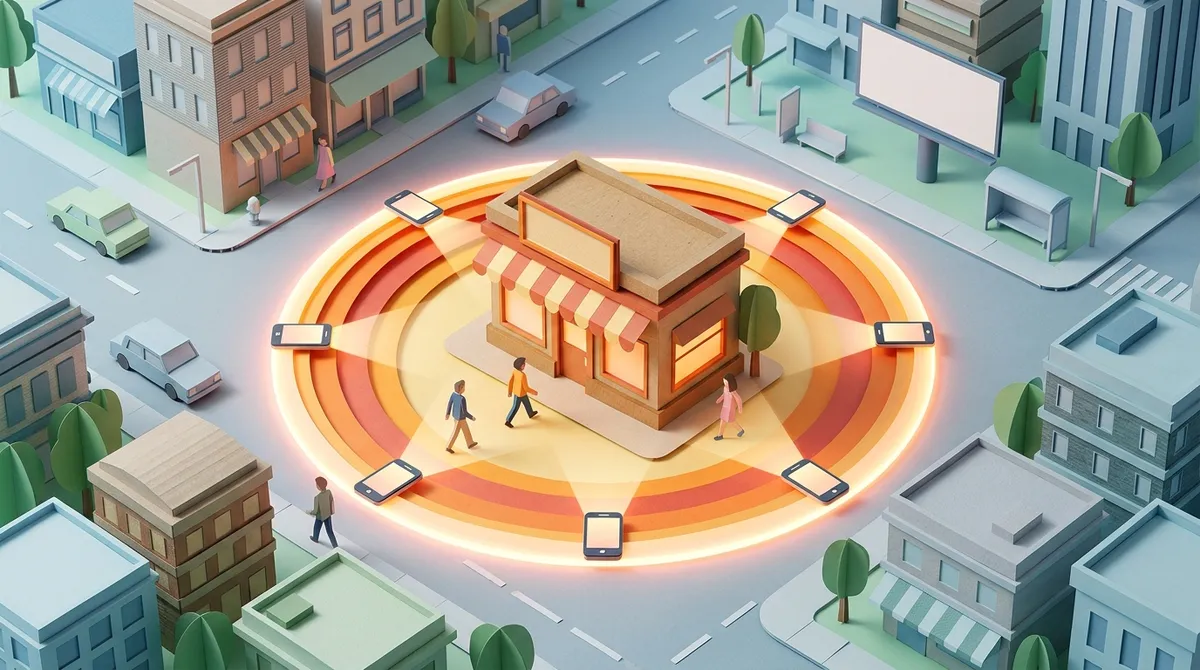
Geofencing works by creating virtual boundaries around physical locations using GPS/Wi-Fi technology, automatically serving targeted ads when mobile users enter or exit these zones, enabling precise budget control and reduced ad waste.
-
Businesses like restaurants, retail stores, real estate agents, and service contractors see exceptional ROI from geofencing by targeting ideal customers at specific locations during optimal times, rather than broadcasting to wide unfiltered audiences.
-
Geofencing campaigns are most effective when integrated with strong SEO, quality content, and mobile-friendly websites to guide users from the initial ad click through conversion, creating a complete customer journey.
-
Key limitations include reaching only smartphone users with location services enabled, privacy concerns reducing audience size, and reduced effectiveness in rural areas, making geofencing better suited for urban and high-traffic locations.
-
The smartest approach combines both strategies: use geofencing for precision targeting and immediate foot traffic, while maintaining traditional advertising for broad brand awareness and reaching older demographics less active on mobile devices.
Every marketing dollar counts, especially for small businesses and local service providers. You want your ads to reach the right people at the right time — not just anyone browsing the internet. That’s the core promise of geofencing marketing. But how does it stack up against traditional advertising methods? This comparison breaks down both approaches clearly, so you can make a smarter decision for your business in 2026.
Whether you run a local shop in Tampa, manage an e-commerce brand, or oversee marketing for a growing startup, understanding location-based advertising can transform how you spend your budget. Let’s explore both options side by side and determine which strategy delivers better results for today’s digital landscape.
What Is Geofencing Marketing?
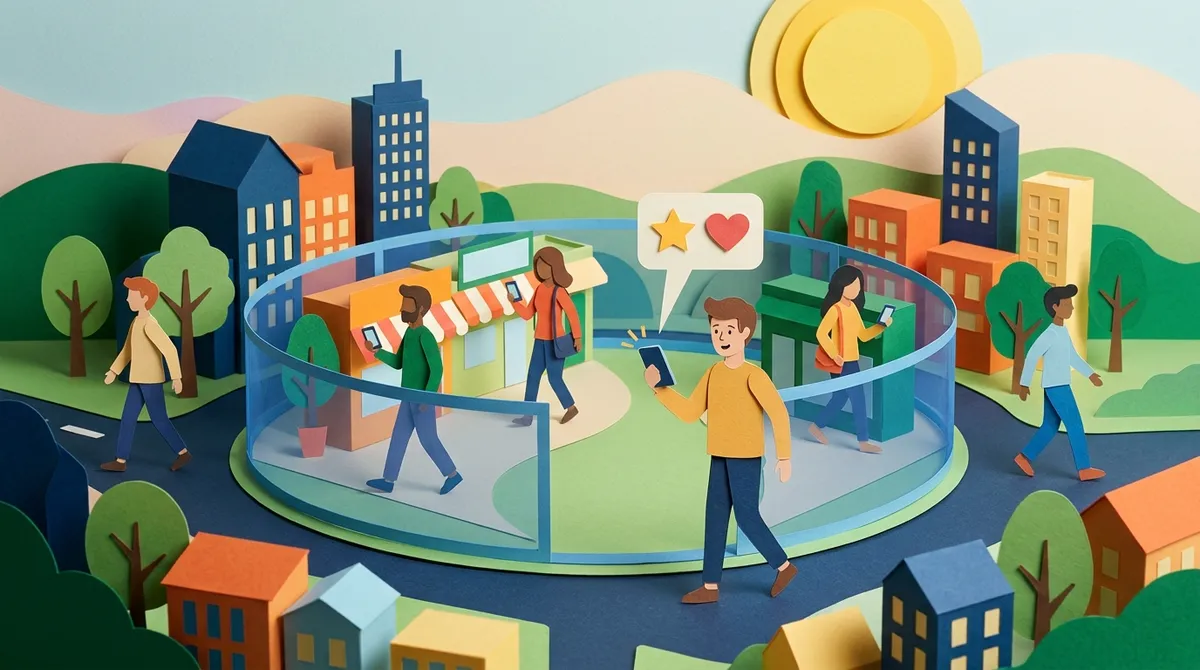
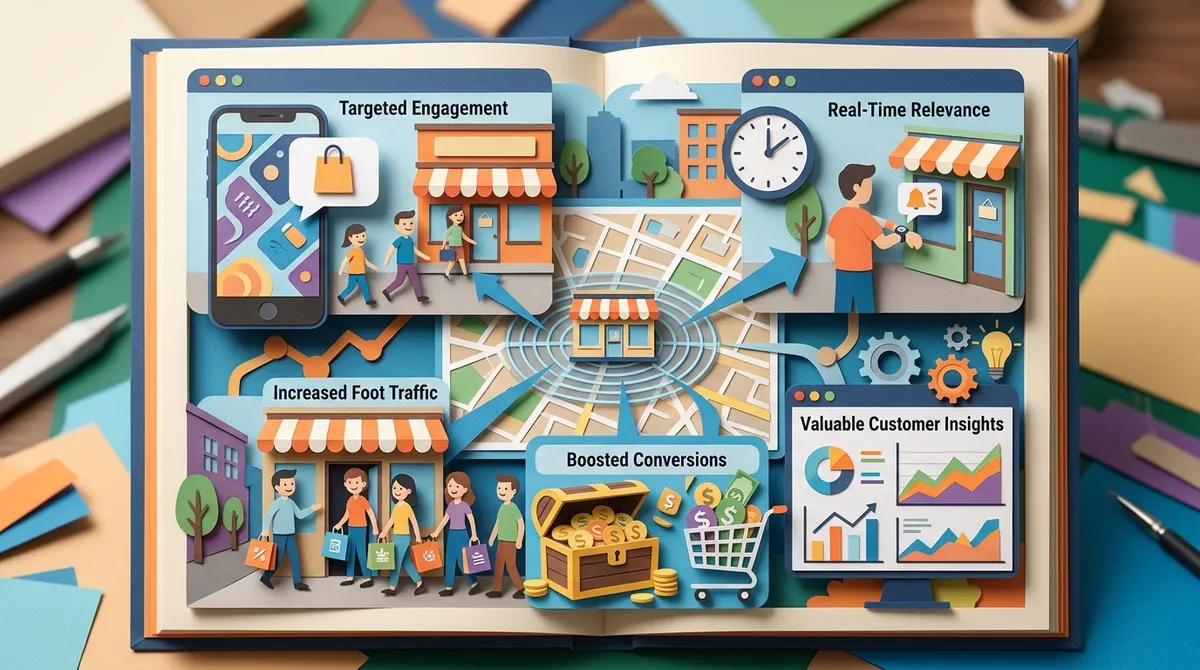
Geofencing marketing is a location-based digital advertising strategy. It uses GPS, Wi-Fi, cellular data, or RFID technology to create a virtual boundary — called a “geofence” — around a specific geographic area. When a user enters or exits that boundary, they receive a targeted ad, push notification, or mobile message.
Think of it as drawing an invisible circle around a place — a shopping mall, a neighborhood, or even a competitor’s parking lot — and serving ads only to people inside that circle. This level of precision makes geofencing one of the most powerful tools in digital marketing services today.
How Geofencing Works: Step by Step
- Define the zone: A digital boundary is drawn around a specific physical location using mapping software.
- Set your audience: You choose who receives ads based on location, behavior, or demographics.
- Trigger the ad: When a mobile device enters the geofenced area, the ad is automatically served.
- Track performance: Real-time data shows how many people saw the ad and took action.
- Optimize the campaign: Adjust the geofence size, ad creative, or budget based on results.
This process can be managed as part of a broader local SEO services strategy, especially for businesses that depend on foot traffic and nearby customers.

What Is Traditional Advertising?
Traditional advertising includes TV commercials, radio spots, print ads, billboards, direct mail, and newspaper placements. These channels have been used for decades to build brand awareness and reach large audiences.
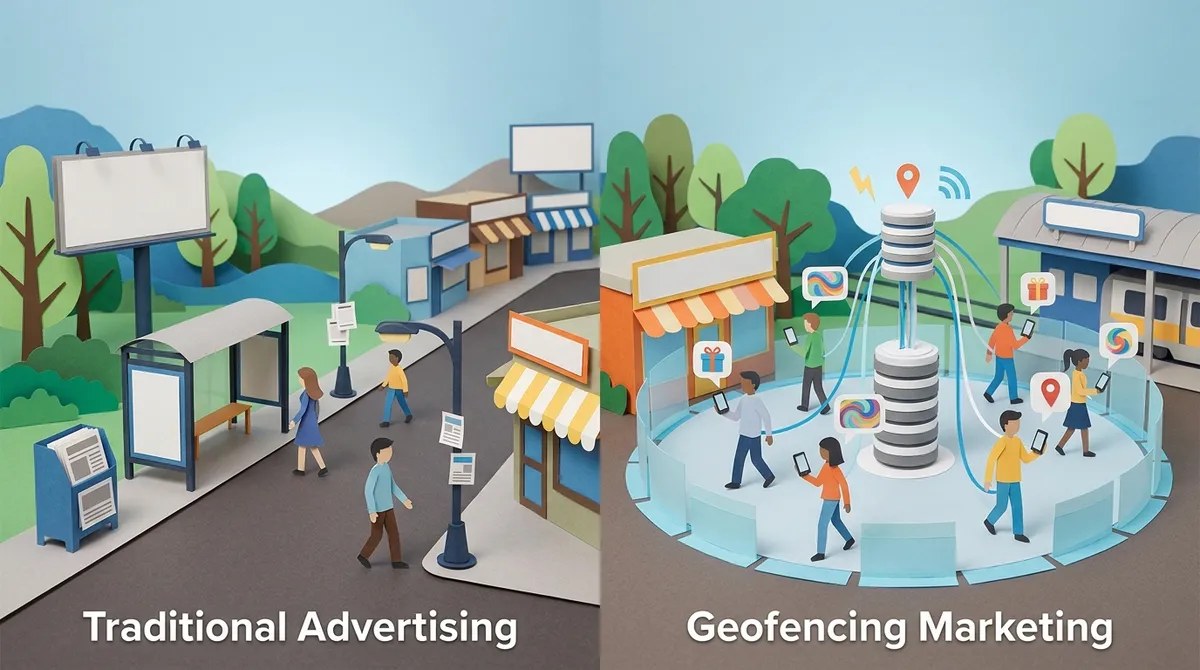
Traditional ads cast a wide net. A billboard on a busy highway reaches thousands of drivers daily — but there’s no way to know who saw it, whether they were interested, or if they ever took action. This lack of measurability is one of its biggest weaknesses in a data-driven world.
Geofencing vs. Traditional Ads: Side-by-Side Comparison
Here’s a direct comparison of both advertising approaches across the most important performance factors:
| Factor | Geofencing Marketing | Traditional Advertising |
|---|---|---|
| Targeting Precision | Hyper-local, behavior-based | Broad, demographic-based |
| Cost Efficiency | Higher ROI, lower waste | High cost, limited tracking |
| Measurability | Real-time data and analytics | Limited or estimated metrics |
| Personalization | Dynamic, location-triggered | Static, one-size-fits-all |
| Speed to Launch | Fast — days to deploy | Slow — weeks or months |
| Audience Reach | Targeted and local | Wide but unfiltered |
| Best For | Local businesses, events, promotions | National brand awareness |
Key Benefits of Geofencing Marketing
Geofencing marketing offers a range of advantages that traditional advertising simply cannot match. Here are the most significant benefits for small businesses, startups, and local service providers:
- Laser-focused targeting: Ads are shown only to people in a defined physical area.
- Higher engagement rates: Location-triggered ads are more relevant, leading to better click-through rates.
- Real-time data: You can track impressions, clicks, and conversions as they happen.
- Budget control: Spend is applied only where it matters most — no wasted impressions.
- Retargeting capability: You can follow up with people who visited a specific location days later.
- Event marketing: Perfect for targeting attendees at trade shows, concerts, or local events.
For businesses looking to improve their visibility in specific neighborhoods or cities, geofencing pairs exceptionally well with SEO and SEO services near me strategies. Together, they create a powerful presence both online and in the real world.
Limitations of Geofencing Marketing
No strategy is without its drawbacks. Being aware of geofencing’s limitations helps you plan a more balanced marketing approach.
- Requires mobile usage: It only reaches people using smartphones with location services enabled.
- Privacy concerns: Some users opt out of location tracking, reducing the reachable audience.
- Smaller reach: It doesn’t build broad brand awareness the way mass media can.
- Depends on foot traffic: Less effective in rural or low-traffic areas.
Understanding these limitations is just as important as knowing the benefits. A skilled digital marketing team can help you decide when geofencing is the right tool and when a different approach may serve you better.
When to Use Geofencing vs. Traditional Advertising
The best strategy often depends on your goals, budget, and audience. Here’s a practical guide:
Use Geofencing Marketing When You Want To:
- Drive foot traffic to a physical storefront or service location.
- Target customers near your business or a competitor’s location.
- Promote a limited-time offer or seasonal sale to nearby shoppers.
- Retarget people who visited a relevant location in the past 30 days.
- Track the real-world impact of your digital ad spend with measurable data.
Use Traditional Advertising When You Want To:
- Build broad awareness for a new brand launch.
- Reach older demographics less active on mobile devices.
- Reinforce brand recognition in a well-established local market.
- Supplement a digital strategy with physical touchpoints like direct mail.
Many successful businesses use both in tandem. For example, a local service provider might run a geofencing campaign to capture nearby mobile users while using direct mail to reach older homeowners. Pairing this with local SEO strategies that drive more customers in 2026 creates a well-rounded approach.
Geofencing and Digital Marketing: A Perfect Pairing
Geofencing doesn’t operate in isolation. It works best when integrated into a complete digital marketing strategy. When combined with strong content writing services and a well-designed website, geofencing campaigns can guide visitors through the entire customer journey — from discovering your business to making a purchase.
For example, a user sees your geofenced ad while near your location. They click through to a fast, mobile-friendly website. They read engaging, keyword-targeted content. They convert. That seamless experience is what separates effective digital campaigns from scattered advertising efforts. You can learn more about building this kind of strategy by exploring what local search engine optimization is and why your business needs it.
Content quality also plays a major role in how well your landing pages perform after a geofencing click. Following Google E-E-A-T principles ensures your content builds trust and authority with both users and search engines.
Practical Tips for Running a Geofencing Campaign
- Keep your geofence focused: A radius that’s too large dilutes targeting effectiveness. Aim for areas where your ideal customers actually spend time.
- Use compelling ad creative: Location-triggered ads work best when the message is timely and relevant to where the user is.
- Test multiple zones: Try different locations and compare performance data before committing your full budget.
- Align with your website: Make sure the landing page matches the ad’s promise. A strong website design improves conversion rates significantly.
- Combine with retargeting: Follow up with users who entered your geofence but didn’t convert immediately.
If you’re just getting started with location-based marketing, reading about how to choose SEO services that actually grow your business can help you understand how to build the right foundation first.
Who Should Invest in Geofencing Marketing?
Geofencing is not a one-size-fits-all solution. However, it offers exceptional value for specific business types in 2026. Here’s a quick breakdown:
| Business Type | Geofencing Benefit |
|---|---|
| Local Restaurants | Target lunchtime and dinner crowds nearby |
| Retail Stores | Drive in-store visits during sales events |
| Real Estate Agents | Reach buyers visiting open houses in target neighborhoods |
| Healthcare Providers | Target patients near clinics or urgent care facilities |
| Auto Dealerships | Capture shoppers browsing nearby dealerships |
| Service Contractors | Reach homeowners in specific zip codes or subdivisions |
If your business serves customers in a specific area, geofencing marketing can be one of the most cost-effective tools in your arsenal. The team at Brain Buzz Marketing helps businesses across Tampa and beyond implement these strategies as part of a full-service digital approach. You can visit our Google Business Profile to see what clients are saying about our work.
The Verdict: Which Strategy Wins?
Geofencing marketing wins when precision, budget efficiency, and measurable results are your top priorities. Traditional advertising still has a place for broad brand awareness, but it struggles to compete on cost-per-acquisition and real-time tracking.
In 2026, the most effective marketing strategies are data-driven and location-aware. Geofencing delivers both. When paired with strong SEO, quality content, and a high-converting website, it becomes a complete system for attracting and converting customers. Follow Brain Buzz Marketing on Facebook and Instagram for ongoing tips and insights on location-based and digital marketing strategies.
Conclusion
Geofencing marketing represents a major shift in how businesses connect with nearby customers. It’s precise, measurable, and built for the mobile-first world we live in today. Traditional advertising isn’t obsolete, but it can no longer serve as your primary channel if growth and ROI are the goal.
The smartest approach is an integrated one — combining geofencing with local SEO services, compelling content, and a professional website to create a full-funnel marketing experience. Whether you’re a small business owner, a startup, or a marketing manager looking to sharpen your strategy, location-based advertising deserves a serious look.
Ready to put geofencing and smart digital marketing to work for your business? Reach out to our team today and let’s build a strategy that gets results.
FAQs
Q: What is geofencing marketing and how does it work?
A: Geofencing marketing is a location-based digital advertising strategy that uses GPS or Wi-Fi to create a virtual boundary around a specific area. When a mobile user enters or exits that boundary, they are automatically served a targeted ad or notification relevant to their location.
Q: Is geofencing marketing effective for small businesses?
A: Yes, geofencing marketing is particularly effective for small businesses because it focuses ad spend on nearby customers who are most likely to convert. It reduces wasted impressions and delivers measurable results, making it a cost-efficient choice for businesses with limited budgets.
Q: How is geofencing different from traditional local advertising?
A: Traditional local advertising, such as flyers or billboards, reaches a broad and unfiltered audience with limited tracking capabilities. Geofencing targets specific individuals based on their real-time physical location and provides detailed performance data, making it far more precise and accountable.
Q: What types of businesses benefit most from geofencing campaigns?
A: Businesses with physical locations or service areas benefit most from geofencing, including restaurants, retail stores, healthcare providers, real estate agencies, and local contractors. Any business that relies on nearby foot traffic or location-specific customers can see strong returns from a well-executed geofencing strategy.
Q: Can geofencing marketing be combined with SEO and content strategies?
A: Absolutely. Geofencing marketing works best when integrated with SEO, targeted content, and a high-performing website. This combination guides users from the initial ad click through to a relevant landing page, creating a seamless journey that increases the likelihood of conversion.