Key Takeaways
-
73% of all search activity now happens outside Google across platforms like YouTube, Instagram, Amazon, TikTok, and AI tools—focusing only on Google rankings means missing most of your potential customers’ decision journey.
-
Search Everywhere Optimization means optimizing for validation across multiple platforms, not just visibility on Google; AI tools recommend brands based on cross-platform trust signals and mentions, not traditional rankings.
-
Use the RICE Framework (Reach, Impact, Confidence, Ease) to identify just 2-3 priority platforms for your business rather than spreading resources thin across every channel.
-
Each platform has its own ‘decision code’—TikTok drives emotion, Reddit demands authenticity, Amazon relies on social proof, ChatGPT needs citations—so copy-pasting content across platforms fails.
-
AI Optimization (GEO and AEO) is now essential; structure content so AI tools cite your brand as authoritative, and craft answers that position you as a trusted source in AI-generated responses.
-
Cross-platform influence compounds automatically—mentions on Reddit boost Google authority, YouTube expertise increases trust everywhere, and Amazon reviews influence decisions starting on TikTok, creating self-reinforcing authority.
If you’ve been obsessing over Google rankings lately, we need to have a friendly chat. The truth is, the new rules of SEO have changed dramatically, and most businesses haven’t caught up yet. Your customers are no longer just typing queries into Google and clicking through ten blue links. They’re watching TikTok videos, reading Reddit threads, asking ChatGPT for recommendations, and checking Amazon reviews — all before they ever land on your website. Sound familiar? It should, because this is how you probably make buying decisions too.
The digital landscape in 2026 looks nothing like it did five years ago. Roughly 73% of all search activity now happens outside of Google, scattered across platforms like YouTube, Instagram, Amazon, TikTok, and AI tools. That’s a massive shift. And if your entire digital marketing strategy is still built around Google alone, you’re leaving a huge portion of your potential audience completely untouched. The good news? Once you understand the new rules, you have a real opportunity to get ahead. Let’s break it down together.

What Is Search Everywhere Optimization?
Search Everywhere Optimization is the evolution of traditional SEO. Instead of focusing only on Google rankings, it means optimizing your brand’s presence across every platform where your customers make decisions. Think of it as expanding your SEO strategy to include every digital space where someone might discover, research, or validate a purchase.
Traditional SEO was about getting found on Google. Search Everywhere Optimization is about getting chosen across the entire internet. That’s a subtle but powerful distinction. Getting found is passive. Getting chosen is active. And in 2026, the brands that win are the ones showing up at every micro-decision moment — not just on page one of Google.
This concept was popularized by digital marketing expert Neil Patel, who noted that consumers are no longer searching the way we think — they’re deciding. A TikTok comment, a Reddit thread, a ChatGPT answer, or a friend’s Amazon review — these are all modern decision-making moments. Your digital marketing strategy needs to account for all of them.

The Google Trap: Why Rankings Alone Aren’t Enough
Here’s a sobering thought: you could be ranking number one on Google and still losing customers every single day. This is what’s called the Google Trap. You’re optimizing for visibility in one place, while your customers are making decisions everywhere else.
Google handles about 13.7 billion searches per day, which sounds enormous. But that only accounts for about 27% of all search activity on the internet. The remaining 73% is spread across platforms that most businesses don’t even think of as search engines:
-
YouTube (product tutorials, expert reviews, how-to content)
-
Amazon (product searches and review validation)
-
Reddit (honest community opinions and comparisons)
-
TikTok (discovery and trending product content)
-
ChatGPT and other AI tools (direct recommendations)
-
Instagram (lifestyle inspiration and brand discovery)
-
LinkedIn (B2B decisions and professional credibility)
Your customers are bouncing between these platforms rapidly. Someone might see your brand on TikTok, validate it in a Reddit thread, check your reviews on Amazon, and then ask ChatGPT if you’re legit — all within five minutes. If you’re only showing up on Google, you’re missing almost every step of that journey. Understanding this is the first step toward embracing the new rules of SEO.

How the Modern Consumer Decision Journey Actually Works
Forget the old marketing funnel. The modern consumer journey isn’t a straight line anymore — it’s more like a constellation of rapid, simultaneous micro-decisions. Here’s how it actually plays out in 2026:
-
What to Click — This still happens on Google.
-
What to Trust — This happens in Reddit threads and review platforms.
-
What to Buy — This is decided on Amazon and TikTok Shop.
-
What to Think — YouTube videos and podcasts shape opinions here.
-
What to Believe — AI tools like ChatGPT and Claude weigh in here.
-
Who to Follow — Instagram and LinkedIn influence this decision.
Each platform serves a completely different psychological function. And these stages don’t happen in order — they happen simultaneously. That’s why a multi-platform strategy isn’t just smart, it’s essential. Your content writing strategy needs to speak to customers at every one of these decision points, not just the first one.
Each Platform Has Its Own Decision Code
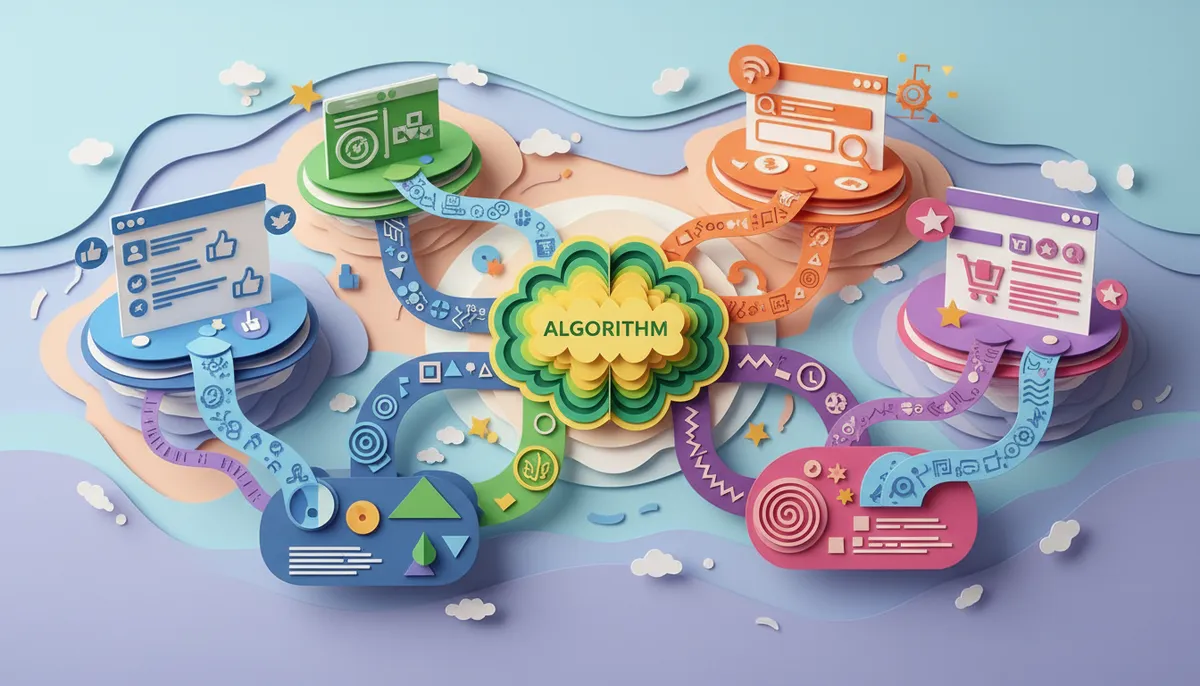
Here’s where many businesses go wrong. They create one piece of content — say, a blog post — and copy-paste it everywhere. That approach doesn’t work. Each platform has its own algorithm, psychology, and user behavior. You need to match your content to the platform’s unique “decision code.”
|
Platform |
Primary Decision Driver |
Content That Works |
|---|---|---|
|
TikTok |
Emotion and novelty |
Fast, visual, emotionally engaging content |
|
YouTube |
Expertise and depth |
In-depth tutorials, authority-building videos |
|
ChatGPT / AI |
Citations and factual clarity |
Clear, authoritative, factual written content |
|
Amazon |
Social proof and trust |
Genuine reviews and detailed product descriptions |
|
|
Aspirational identity |
Lifestyle imagery and brand storytelling |
|
|
Raw authenticity |
Honest, unfiltered, community-driven content |
What works on TikTok will fall flat on LinkedIn. What converts on Amazon won’t resonate on Reddit. Applying the new rules of SEO means developing platform-specific strategies — not just platform-specific posting schedules. If you need help building a content plan that speaks to multiple platforms, the team at Brain Buzz Marketing specializes in exactly this kind of multi-channel content strategy.
Visibility vs. Validation: The Real Difference
This is probably the most important mindset shift in the new rules of SEO: visibility is not enough. Visibility is the entry fee. What actually drives conversions is validation.
Here’s the difference broken down simply:
-
Visibility = showing up in search results
-
Validation = being mentioned and trusted in conversations
-
Visibility = having a TikTok account
-
Validation = someone else referencing your brand in their TikTok
-
Visibility = ranking on Google
-
Validation = being cited by ChatGPT as a trusted recommendation
Validation is what others say about you. And in an age where AI tools increasingly summarize and recommend based on cross-platform mentions and trust signals, being validated across multiple platforms is crucial. AI doesn’t scroll through search results the way humans do — it summarizes based on who gets mentioned most and trusted fastest. If your brand isn’t woven into that validation network, you simply don’t exist in AI’s decision-making process.
This is why building local SEO services and cross-platform trust signals together is so powerful. Following Google’s E-E-A-T principles (Experience, Expertise, Authoritativeness, and Trustworthiness) feeds directly into this multi-platform validation approach.
The RICE Framework: Where to Start Without Getting Overwhelmed
At this point, you might be thinking: “Do I really need to be active on every single platform?” The answer is a firm no. You don’t need to be everywhere. You just need to be trusted somewhere that matters to your audience.
The RICE Framework helps you prioritize smartly. Score each potential platform from 1 to 10 on these four factors:
-
Reach — How many of your target customers use this platform daily?
-
Impact — How much business impact could success here generate?
-
Confidence — How confident are you that you can execute well here?
-
Ease — How easy is it for your team to create content for this platform?
Multiply your scores together and rank your platforms. For most small and medium-sized businesses, this exercise will point to just two or three platforms to focus on — not ten. That’s a manageable and sustainable starting point. Once you build trust and traction there, you can expand strategically.
For example, a local service provider might focus on Google (for local search), YouTube (for expertise building), and Reddit or Nextdoor (for community validation). An e-commerce retailer might prioritize Amazon reviews, TikTok Shop content, and Instagram storytelling. The right combination depends on where your customers are actually making decisions. You can also check out this helpful guide on how to choose SEO services that actually grow your business to think about your broader strategy.
AI Optimization: The Biggest New Rule of SEO in 2026
If there’s one area where the new rules of SEO have the most opportunity right now, it’s AI optimization. ChatGPT, Claude, Gemini, and other large language models are increasingly becoming the first stop for consumer recommendations. When someone asks an AI tool “What’s the best marketing agency in Tampa?” — which brands show up matters enormously.
AI tools don’t rank websites the way Google does. Instead, they pull from sources they consider authoritative, frequently cited, and factually reliable. This is where Generative Engine Optimization (GEO) and Answer Engine Optimization (AEO) come in. These are the new content disciplines that complement traditional SEO:
-
GEO (Generative Engine Optimization) — Structuring your content so AI tools summarize and feature your brand in generated responses.
-
AEO (Answer Engine Optimization) — Crafting content that directly answers questions so AI tools pull your brand as a trusted source.
-
Traditional SEO — Still essential for Google rankings and organic search traffic.
-
Cross-platform mentions — Being cited in articles, Reddit threads, and podcasts that AI tools index as trusted sources.
The businesses that invest in AI-ready content right now have a first-mover advantage. Most businesses aren’t doing this yet, which means the playing field is wide open. Our SEO services are built to address all three layers — traditional SEO, GEO, and AEO — so your brand surfaces wherever your customers are searching.
The Power of Compounding Cross-Platform Influence
Here’s the really exciting part about Search Everywhere Optimization: when you do it right, your influence compounds automatically. The platforms reinforce each other in a powerful cycle:
-
A mention in a popular Reddit thread gets indexed by Google, boosting your organic authority.
-
Being cited by ChatGPT reinforces your credibility on every other platform.
-
Strong Amazon reviews influence buying decisions that started on TikTok.
-
YouTube videos build expertise that makes Google trust your website more.
This is why the goal isn’t omnipresence — it’s strategic presence. Once you’re woven into the fabric of how decisions get made in your industry, Search Everywhere Optimization starts working for you, rather than you constantly working for it.
Follow Brain Buzz Marketing on Instagram and Facebook for regular tips on building this kind of cross-platform authority for your business. You can also explore our 9 signs you need an SEO agency near you to see if you’re ready for a professional boost.
Your Action Plan: Start Small and Build Trust
The new rules of SEO don’t require you to overhaul everything overnight. Here’s a simple, three-step action plan to get started:
-
Audit your current presence. Where are you showing up right now? Where are your customers actually making decisions? Use the RICE framework to identify your top two or three platforms.
-
Build trust on one platform first. Pick one platform outside of Google and focus on earning genuine validation there. For a service business, that might be YouTube tutorials or Reddit community engagement. For e-commerce, it might be Amazon reviews or TikTok content.
-
Expand strategically. Once you’ve built real authority on your first platform, add the next one. Use each platform’s unique decision code to tailor your content. Consider optimizing your content for AI tools to future-proof your strategy.
If you’re a small business owner, a startup, or a local service provider, the opportunity right now is enormous. Most of your competitors are still stuck in the Google Trap. They’re fighting yesterday’s battle while the real action is happening on TikTok, Reddit, YouTube, and inside AI-generated responses. You can get ahead simply by playing the new game first. To learn more about how local search fits into this strategy, check out our guide on 7 ways local SEO near you drives more customers in 2026.
Conclusion: The New SEO Is Bigger, But Still Very Winnable
The new rules of SEO in 2026 are clear: stop optimizing only for Google and start optimizing for every place where your customers make decisions. Search Everywhere Optimization isn’t about doing more — it’s about doing the right things on the right platforms. It’s about earning validation, not just visibility. And it’s about understanding that your customers’ buying journey is a constellation of micro-decisions happening across a wide, wonderful digital landscape.
The brands that embrace this shift early will build compounding authority that grows on autopilot. The ones that don’t will keep wondering why their Google rankings aren’t translating into sales. At Brain Buzz Marketing, we’ve been helping small and medium-sized businesses navigate digital marketing since 1998, and the multi-platform future is something we’re deeply excited about. Visit us on Google to see what our clients are saying, and when you’re ready to build a strategy that truly works in 2026, reach out to our team and let’s get started together.
FAQs
Q: What are the new rules of SEO in 2026?
A: The new rules of SEO in 2026 center around Search Everywhere Optimization — the idea that you need to be present and trusted across multiple platforms, not just Google. This means building authority on platforms like YouTube, Reddit, Amazon, TikTok, and AI tools like ChatGPT, where your customers are actually making decisions.
Q: Do I still need Google SEO if I’m doing Search Everywhere Optimization?
A: Absolutely — Google SEO is still a critical part of the puzzle! Search Everywhere Optimization doesn’t replace Google SEO; it expands on it. Think of Google as one important platform in a bigger, smarter multi-platform strategy that includes AI tools, social platforms, and community sites.
Q: How many platforms do I need to focus on for Search Everywhere Optimization?
A: Great news — you don’t need to be everywhere at once! Using the RICE framework (Reach, Impact, Confidence, Ease), most businesses should start with just two to three platforms that align best with their audience. Build trust there first, then expand thoughtfully over time.
Q: What is the difference between visibility and validation in SEO?
A: Visibility means showing up in search results or on a platform, while validation means other people and platforms are actively mentioning and trusting your brand. Validation is far more powerful in 2026 because AI tools recommend brands based on cross-platform trust signals, not just who ranks highest on Google.
Q: How does AI affect the new rules of SEO?
A: AI tools like ChatGPT are now a major part of how consumers discover and validate brands, making AI optimization a key part of the new rules of SEO. Strategies like Generative Engine Optimization (GEO) and Answer Engine Optimization (AEO) help ensure your brand surfaces in AI-generated recommendations, giving you a serious competitive edge.