Key Takeaways
-
GEO targets zero-click results where AI provides direct answers, giving your brand exposure even without user clicks, while traditional SEO focuses only on ranking in lists of blue links.
-
AI search is accelerating—ChatGPT processes 100M queries daily and Google AI Overviews reach millions—making GEO essential to maintain visibility as users increasingly skip traditional link clicks.
-
GEO builds stronger brand authority by having AI engines cite your content, signaling trustworthiness that also improves SEO performance and conversion rates through pre-established user trust.
-
GEO requires demonstrating strong E-E-A-T signals through conversational content, structured formats, topical authority, and brand citations—a higher bar than traditional keyword-focused SEO.
-
GEO and SEO work together, not against each other: SEO builds the technical foundation while GEO ensures your brand is recommended by AI, creating maximum visibility across all search types.
-
Measuring GEO success involves tracking brand mentions in AI responses, direct traffic increases, branded keyword growth, and citation appearances in AI Overviews rather than traditional ranking metrics.
Search is changing fast. The way people find information online in 2026 looks very different from just a few years ago. AI-powered tools now answer questions directly. Voice assistants read answers out loud. Traditional search rankings still matter, but they are no longer the whole picture. This shift has created a new discipline in digital marketing called Generative Engine Optimization (GEO). Many marketers and business owners are asking the same question: why is GEO better than SEO? The honest answer is that GEO is not simply “better” — it is a necessary evolution. However, understanding how GEO builds on traditional SEO principles reveals why it delivers stronger results in today’s AI-driven landscape. This article breaks down both strategies, highlights the key differences, and explains why businesses that adopt GEO alongside SEO will have a major competitive advantage.

What Is GEO in Digital Marketing?
GEO stands for Generative Engine Optimization. It is the practice of optimizing your content so that AI-powered search engines and large language models (LLMs) — such as ChatGPT, Google’s AI Overviews, and Microsoft Copilot — recommend or cite your brand in their generated responses. Unlike traditional SEO, which focuses on ranking in a list of blue links, GEO focuses on being the answer that an AI engine surfaces directly to users.
When someone types a question into an AI search tool, the engine does not show ten links. It generates a direct, conversational response. GEO ensures your content, brand, and expertise are woven into that response. This makes GEO one of the most important digital marketing services available in 2026.

What Is SEO and Why Does It Still Matter?
Traditional SEO — Search Engine Optimization — is the process of improving your website so it ranks higher on search engine results pages (SERPs) like Google. It involves on-page optimization, keyword research, backlink building, technical improvements, and consistent content creation. SEO has been the backbone of digital marketing for over two decades.
SEO still matters. Millions of users still perform traditional keyword searches every day. A strong SEO foundation drives organic traffic, builds domain authority, and supports long-term visibility. In fact, local SEO services remain one of the most effective ways for small businesses to attract nearby customers. You can learn more about how this works in our guide on what local search engine optimization is and why your business needs it.
GEO vs. SEO: Key Differences Explained
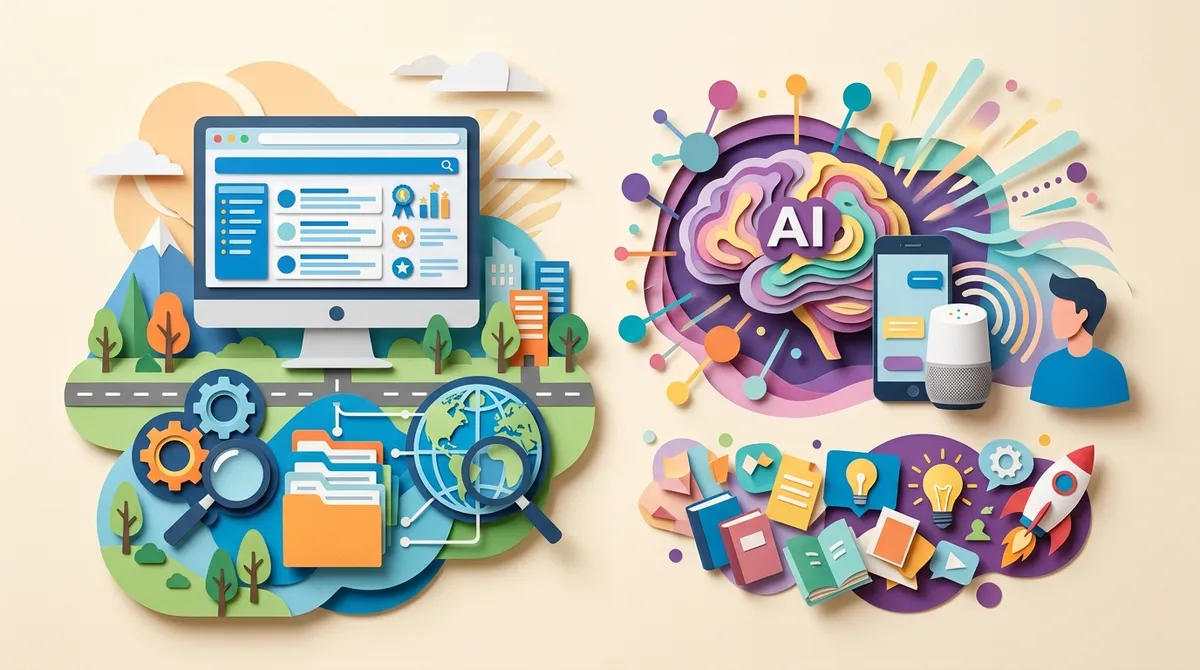
To understand why GEO is gaining priority, it helps to compare both approaches side by side. Below is a clear comparison of the two strategies.
| Feature | SEO (Search Engine Optimization) | GEO (Generative Engine Optimization) |
|---|---|---|
| Primary Goal | Rank high in traditional search results | Appear in AI-generated answers and responses |
| Target Platform | Google, Bing, Yahoo SERPs | ChatGPT, Google AI Overviews, Copilot, Perplexity |
| Content Format | Keyword-optimized web pages and blog posts | Authority-rich, conversational, structured content |
| Ranking Signal | Backlinks, keywords, page speed, metadata | E-E-A-T, citations, factual accuracy, brand mentions |
| User Interaction | User clicks a link from a list of results | AI reads and summarizes content for the user |
| Visibility Type | Link placement on page one | Brand cited as a trusted source within AI answer |

Why GEO Delivers Stronger Results in 2026
The shift toward AI-powered search is accelerating. Google’s AI Overviews now appear at the top of millions of search results. ChatGPT processes over 100 million queries per day. Users are increasingly getting their answers without ever clicking a traditional link. This means traditional SEO alone is no longer sufficient to capture full visibility.
Here are the top reasons why GEO outperforms SEO when used as the primary strategy in today’s search environment:
- GEO targets zero-click results. AI Overviews give users an answer immediately. If your content is the source that AI cites, you gain brand exposure even without a click.
- GEO builds stronger brand authority. Being cited by an AI model signals that your content is trusted, accurate, and authoritative — qualities that also support your SEO performance.
- GEO aligns with how users search today. People now ask full questions in natural language. GEO content is written to answer those questions clearly and directly.
- GEO future-proofs your content strategy. As AI search continues to grow, businesses optimized for GEO will maintain visibility while others lose traffic to AI-generated answers.
- GEO improves conversion rates. When an AI recommends your brand by name, the user already trusts you before visiting your site. This leads to higher-quality traffic and better conversions.
The Role of E-E-A-T in GEO Success
Both GEO and SEO rely on Google E-E-A-T signals — Experience, Expertise, Authoritativeness, and Trustworthiness. However, GEO places even greater weight on these factors. AI engines are trained to prioritize content from authoritative, credible sources. Generic or thin content will not be cited.
To succeed with GEO, your content must demonstrate real expertise. This includes:
- Clear, factual, well-researched information
- Attribution to credible authors and sources
- Consistent brand presence across digital platforms
- Structured data and schema markup to help AI parse your content
- Positive reviews and brand mentions across the web
Strong E-E-A-T signals benefit both your traditional SEO rankings and your GEO visibility. It is a foundational strategy that supports both channels simultaneously.
How to Optimize Content for GEO
Optimizing for GEO requires a different content approach than traditional keyword targeting. The focus shifts from placing keywords at a specific density to writing content that directly answers questions in a clear, authoritative voice. Here are the essential steps:
- Write conversational, question-based content. Think about the exact questions your audience asks. Structure your headings and answers around those questions.
- Use structured formats. AI engines parse tables, bullet lists, numbered steps, and FAQ sections very efficiently. Content that is well-structured is more likely to be cited.
- Establish topical authority. Cover your subject area deeply and consistently. AI models favor brands that demonstrate expertise across many related topics, not just a single page.
- Earn brand mentions and citations. Get featured in industry publications, directories, and reputable online sources. The more your brand is mentioned, the more likely an AI engine will recognize it as authoritative.
- Optimize for Answer Engine Optimization (AEO). AEO is closely related to GEO. It focuses specifically on getting your content featured in voice search answers and direct-answer boxes. Combining GEO and AEO with traditional SEO creates a complete content strategy.
GEO and SEO Work Best Together
It is important to understand that GEO does not replace SEO — it enhances it. The strongest digital marketing strategies in 2026 combine both approaches. Traditional SEO builds the technical foundation: fast-loading pages, proper metadata, quality backlinks, and keyword-targeted content. GEO builds the authority layer on top of that foundation, ensuring your brand surfaces in AI-driven results as well.
Think of it this way: SEO gets you found. GEO gets you recommended. Together, they create maximum visibility across every type of search experience available today. Our guide on how to choose SEO services that actually grow your business explains how to evaluate whether your current strategy is built for both traditional and AI-driven search.
What Types of Businesses Benefit Most from GEO?
Every business with an online presence can benefit from GEO. However, some business types see the most immediate impact:
- Local service providers who want their brand cited when AI answers “best [service] near me” queries
- E-commerce retailers whose products can be recommended in AI shopping queries
- Startups that need to establish brand authority quickly in a competitive space
- Marketing managers looking to improve ROI by capturing AI-driven traffic
- Small business owners who need every competitive advantage they can get without a massive budget
For local businesses in particular, combining local SEO strategies with GEO-optimized content creates a powerful dual presence in both traditional and AI search results. You can also review 9 signs you need an SEO agency near you to determine whether professional help is the right next step.
The Content Strategy Behind GEO
High-quality content writing is the engine that powers GEO. Without well-written, authoritative, and structured content, no GEO strategy will succeed. This is where professional content writing services make a measurable difference. Content written specifically for GEO is longer, more detailed, and formatted to answer specific user questions with precision.
At Brain Buzz Marketing, the content strategy goes beyond traditional SEO writing. Every piece of content is crafted to perform across traditional search, AI Overviews, and voice search simultaneously. This integrated approach — covering SEO, GEO, and AEO — ensures clients gain visibility no matter how their audience is searching. You can explore more about this approach through our Our Story page, where we share the values that drive every campaign we manage.
Platforms like SEO Rocket (fully automated blog posts that rank) are also emerging as tools that help businesses scale their content output for both SEO and GEO purposes, making it easier to maintain a consistent publishing cadence.
Measuring GEO Performance
One of the challenges marketers face with GEO is measurement. Traditional SEO has clear metrics: keyword rankings, organic traffic, click-through rates. GEO metrics are still evolving, but the following indicators are worth tracking:
- Brand mentions in AI-generated responses (manual queries and monitoring tools)
- Direct traffic increases (users who found your brand via AI and typed your URL directly)
- Branded keyword search volume growth
- Citation appearances in AI Overviews on Google
- Share of voice in your industry across AI platforms
As AI search matures, more analytics tools will provide direct GEO tracking. Staying ahead of this curve now gives businesses a significant long-term advantage.
Conclusion: GEO Is the Future, SEO Is the Foundation
The question of why GEO is better than SEO is best answered this way: GEO is not a replacement — it is a powerful upgrade. SEO builds your digital foundation. GEO ensures that foundation gets you cited, recommended, and trusted by AI engines that now shape how millions of people discover businesses online. Ignoring GEO in 2026 means accepting invisibility in a growing share of the search landscape.
The businesses that win online in the years ahead will be those that invest in both strategies together. If you are ready to build a content and SEO strategy that covers traditional search, AI-generated answers, and voice results, our team is here to help. Follow us on Facebook and Instagram for ongoing tips, or visit us on Google to see what our clients are saying. When you are ready to take action, reach out to our team and let us build a strategy that puts your brand in front of every type of searcher — human and AI alike.
FAQs
Q: What does GEO stand for in digital marketing?
A: GEO stands for Generative Engine Optimization. It is the process of optimizing your content so that AI-powered search tools — such as Google AI Overviews, ChatGPT, and Microsoft Copilot — cite or recommend your brand in their generated responses. It is one of the most important emerging strategies in digital marketing in 2026.
Q: Does GEO replace traditional SEO?
A: No, GEO does not replace traditional SEO. The two strategies work best together. SEO builds your technical and keyword foundation, while GEO ensures your brand is recommended by AI-driven search engines. A combined SEO and GEO strategy delivers maximum visibility across all types of search experiences.
Q: How do I know if my content is optimized for GEO?
A: GEO-optimized content is structured, authoritative, and written to directly answer specific user questions. It demonstrates strong E-E-A-T signals, uses clear formatting such as tables and lists, and earns citations from credible sources. If your content is thin or generic, it is unlikely to be cited by AI search engines.
Q: What is the difference between GEO and AEO?
A: GEO (Generative Engine Optimization) focuses on getting your content cited within AI-generated text responses, while AEO (Answer Engine Optimization) focuses specifically on appearing in direct-answer boxes and voice search results. Both strategies share similar content principles and work together as part of a complete modern search strategy.
Q: Which businesses benefit most from GEO optimization?
A: All businesses with an online presence can benefit from GEO, but local service providers, e-commerce retailers, startups, and small businesses see the most immediate impact. When a user asks an AI engine for a recommendation, GEO-optimized businesses are far more likely to be cited as trusted answers, driving higher-quality traffic and stronger brand recognition.