
Imagine calling a customer service line at 2 AM with an urgent problem, and instead of hearing “our offices are currently closed,” you’re greeted by an intelligent assistant that solves your issue in minutes. This isn’t science fiction—it’s the reality of AI customer service, and it’s revolutionizing how businesses interact with their customers. The landscape of customer support has fundamentally shifted, moving from traditional call centers to sophisticated AI-powered systems that deliver instant, personalized assistance around the clock. As businesses compete for customer loyalty in an increasingly digital marketplace, AI customer service has emerged as not just a competitive advantage, but a necessity. The technology combines machine learning, natural language processing, and predictive analytics to create experiences that are faster, more accurate, and surprisingly human. Whether you’re a small business owner exploring automation options or a customer who’s noticed chatbots becoming more helpful, understanding AI customer service is essential for navigating today’s business landscape.
What Is AI Customer Service and How Does It Work?
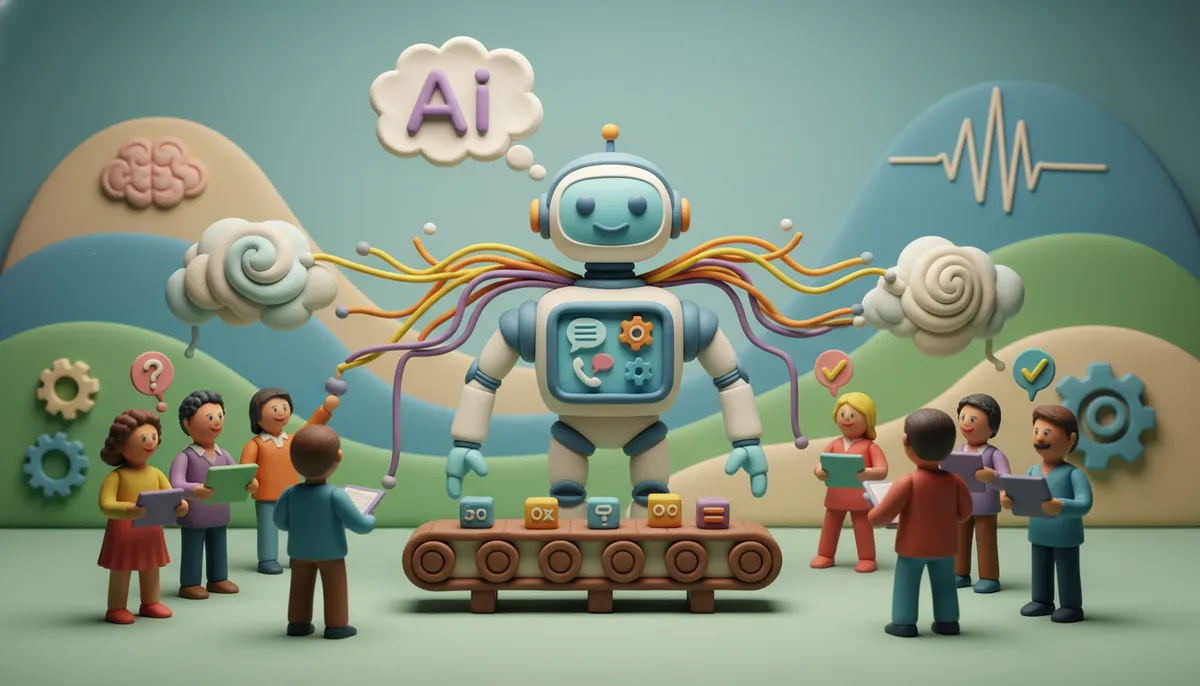
AI customer service refers to the use of artificial intelligence technologies to automate and enhance customer support interactions. At its core, this technology leverages machine learning algorithms that continuously improve through exposure to customer queries, natural language processing that helps computers understand human communication, and automated response systems that provide instant solutions. Unlike traditional automated systems that follow rigid scripts, modern AI customer service platforms can understand context, detect sentiment, and adapt their responses based on the specific situation.
The magic happens through several integrated components working together seamlessly. Digital marketing experts at Brain Buzz Marketing recognize that chatbots serve as the front-line interface, engaging customers through text or voice on websites, apps, or messaging platforms. Behind these chatbots, sophisticated AI engines analyze the conversation in real-time, searching vast knowledge bases for relevant information. Machine learning models predict customer intent, while sentiment analysis gauges emotional tone to escalate issues when necessary. The result is a support system that feels remarkably intuitive and responsive.
The Game-Changing Benefits of AI-Powered Customer Support
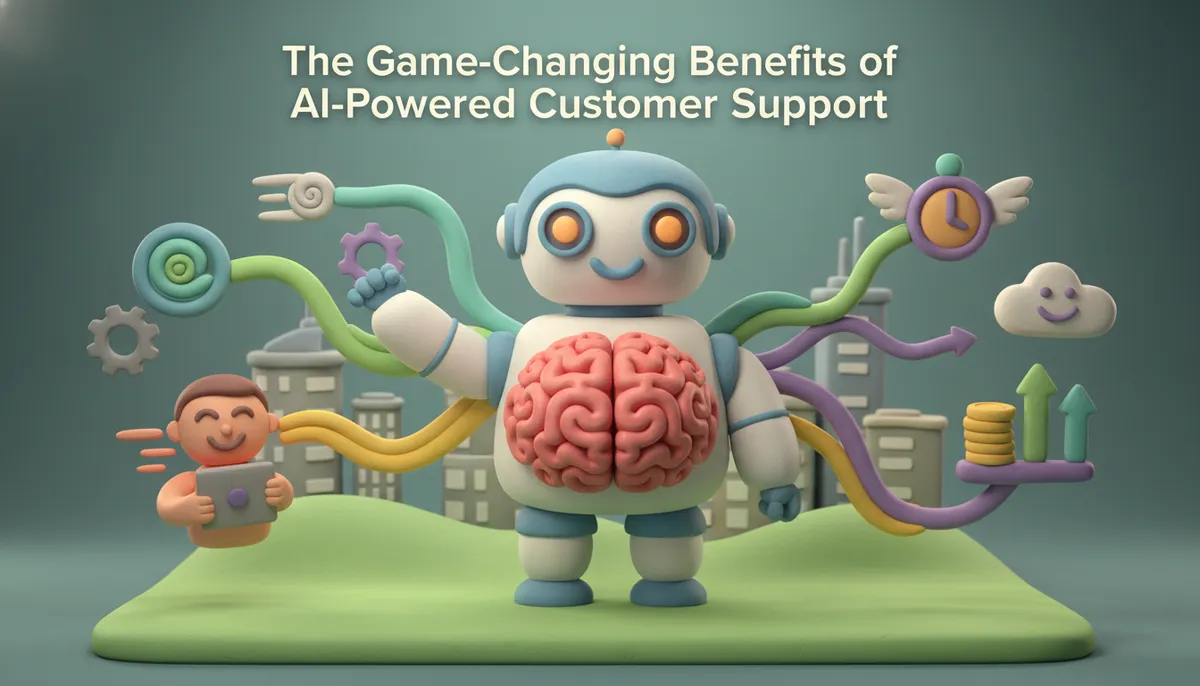
The transformation that AI brings to customer service isn’t just incremental—it’s revolutionary. Businesses implementing AI customer service solutions report dramatic improvements across multiple metrics that directly impact their bottom line. Let’s explore why companies are racing to adopt this technology and how it creates value for both businesses and customers.
24/7 Availability Without the Overhead
Traditional customer service requires human agents, shift schedules, and significant payroll expenses to maintain round-the-clock support. AI customer service eliminates these constraints entirely, providing instant assistance at any hour without adding staffing costs. Customers from different time zones receive the same quality support whether they reach out at noon or midnight. This continuous availability has become a baseline expectation in our always-on digital economy, and businesses without it risk losing customers to competitors who offer immediate help.
Lightning-Fast Response Times
Nobody enjoys waiting on hold for twenty minutes to ask a simple question. AI customer service delivers responses in seconds, not minutes or hours. This speed dramatically improves customer satisfaction scores and reduces frustration. For straightforward inquiries about order status, password resets, or product information, AI systems provide accurate answers instantly. According to research from IBM, customers prioritize speed nearly as much as problem resolution, making rapid response times a critical competitive differentiator.
Consistent Quality Across Every Interaction
Human agents have bad days, experience fatigue, and require extensive training to maintain quality standards. AI customer service delivers the same high-quality experience every single time. Each customer receives accurate information based on the most current data, presented in a consistent manner that aligns with your brand voice. This reliability builds trust and ensures that no customer receives subpar service because they happened to contact support during a busy period or caught an agent at the wrong moment.
Scalability That Grows With Your Business
Imagine your business goes viral, and suddenly you’re receiving ten times your normal customer inquiries. Traditional support teams would buckle under this pressure, leading to long wait times and frustrated customers. AI customer service scales effortlessly to handle volume spikes without degradation in service quality. Whether you’re managing ten conversations or ten thousand, the system maintains the same response speed and accuracy, allowing your business to grow without proportional increases in support infrastructure.
Real-World Applications Transforming Industries
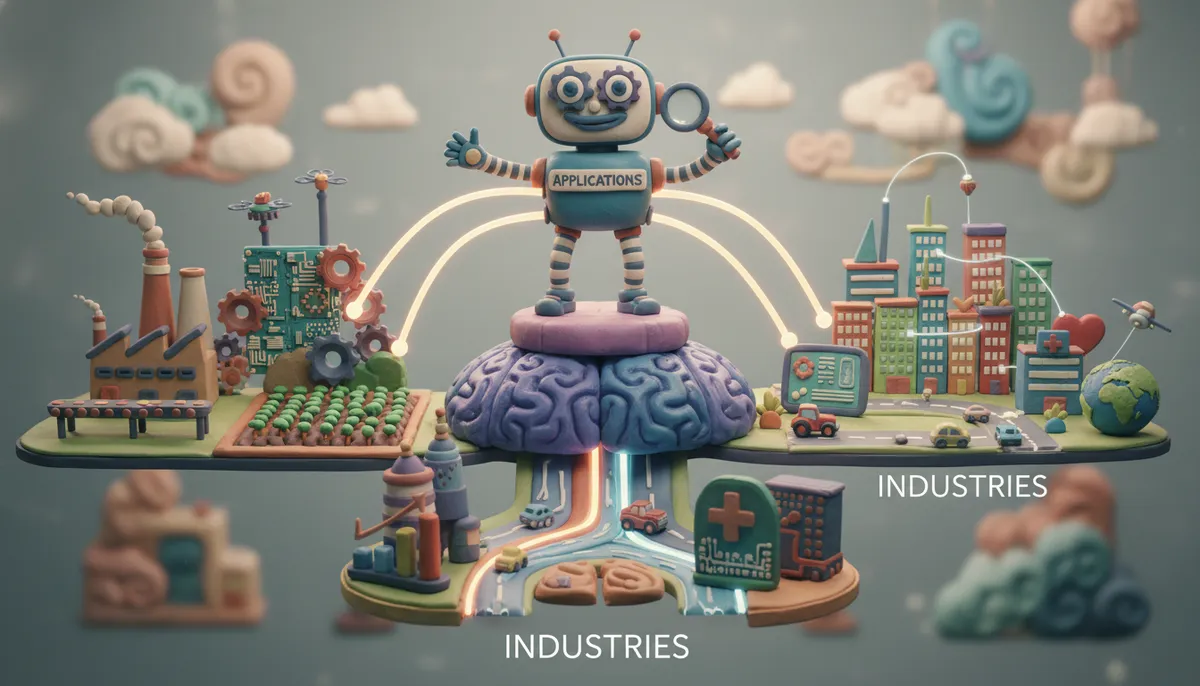
AI customer service isn’t a one-size-fits-all solution—it adapts to industry-specific needs with remarkable flexibility. Across sectors, businesses are discovering innovative ways to deploy AI that enhance customer experiences while streamlining operations. Companies like Brain Buzz Marketing help businesses implement these technologies strategically to maximize ROI and customer satisfaction.
E-commerce: Personalized Shopping Assistants
Online retailers deploy AI customer service to guide shoppers through product selection, answer questions about specifications, track orders, and process returns. These virtual shopping assistants analyze browsing behavior and purchase history to offer personalized recommendations that feel genuinely helpful rather than pushy. The technology handles the routine inquiries that would overwhelm human agents, while seamlessly transferring complex issues to specialists.
Banking and Finance: Secure, Instant Support
Financial institutions use AI customer service to provide account information, detect fraudulent transactions, assist with loan applications, and answer regulatory questions. The technology’s ability to verify identity through multiple data points makes it particularly valuable in security-sensitive environments. Customers appreciate getting immediate answers about their accounts without navigating phone trees or waiting for email responses.
Healthcare: Symptom Checking and Appointment Scheduling
Healthcare providers implement AI customer service for preliminary symptom assessment, appointment scheduling, prescription refill reminders, and answering common medical questions. While these systems explicitly avoid replacing medical professionals for diagnoses, they reduce administrative burden and help patients access appropriate care more quickly. The technology’s 24/7 availability proves particularly valuable for anxious patients seeking information outside business hours.
Overcoming Implementation Challenges

Despite the compelling benefits, implementing AI customer service comes with challenges that businesses must address thoughtfully. Understanding these obstacles helps organizations prepare effective strategies for successful deployment. The goal isn’t perfection from day one, but rather continuous improvement that delivers increasing value over time.
Training AI systems requires substantial datasets of customer interactions to achieve accuracy. New businesses or those in niche industries may struggle to generate enough training data initially. The solution involves starting with general-purpose models and gradually customizing them as you collect interaction data. Some companies use human agents to handle initial inquiries while simultaneously training AI systems, creating a hybrid approach that improves over time.
Customer acceptance presents another hurdle, as some people prefer human interaction and distrust automated systems. Transparency helps overcome this resistance—clearly identifying AI assistants and offering easy escalation to human agents reassures customers. Research from Forrester shows that customers embrace AI customer service when it demonstrably solves their problems faster than alternatives, making performance the ultimate trust-builder.
Best Practices for Successful AI Customer Service
Implementing AI customer service effectively requires more than just purchasing software and flipping a switch. Strategic planning and ongoing optimization separate implementations that delight customers from those that frustrate them. Follow these proven practices to maximize your investment and deliver exceptional experiences.
- Start with clearly defined use cases: Identify high-volume, routine inquiries that AI can handle effectively before expanding to complex scenarios
- Maintain the human touch: Design seamless handoffs to human agents for complex, emotional, or sensitive issues that require empathy
- Continuously train your AI: Regularly update your system with new product information, common questions, and feedback from unsuccessful interactions
- Monitor performance metrics: Track resolution rates, customer satisfaction scores, and escalation patterns to identify improvement opportunities
- Personalize the experience: Leverage customer data to provide contextual, relevant responses that acknowledge purchase history and preferences
The Future of AI Customer Service
The evolution of AI customer service continues accelerating, with emerging technologies promising even more sophisticated capabilities. Voice-based AI assistants are becoming remarkably natural-sounding, making phone interactions indistinguishable from human conversations. Emotion AI detects subtle cues in text and voice to gauge customer frustration and adjust responses accordingly. Predictive support anticipates problems before customers report them, proactively reaching out with solutions.
Integration with augmented reality will enable AI customer service to provide visual guidance for product assembly, troubleshooting, and feature demonstrations. Multilingual capabilities will break down language barriers, allowing businesses to serve global customers without maintaining specialized support teams for each language. According to Gartner’s predictions, by 2025, AI will power 95% of customer interactions, fundamentally reshaping expectations for what constitutes acceptable support.
Making the Investment Decision
Should your business invest in AI customer service? The answer depends on your specific circumstances, but several indicators suggest strong ROI potential. If you’re receiving repetitive questions that consume agent time, experiencing difficulty scaling support during growth periods, or facing customer complaints about slow response times, AI customer service addresses these pain points directly. The technology pays for itself through reduced staffing requirements, improved customer retention, and increased sales from better support experiences.
Start by auditing your current customer service operations to identify bottlenecks and opportunities. Calculate the cost of handling different inquiry types and estimate how many AI could resolve. Most businesses discover that even automating 30-40% of routine inquiries delivers significant cost savings while freeing human agents to focus on complex, high-value interactions that truly require human expertise and empathy.
Conclusion: Embracing the AI Revolution in Customer Service
AI customer service represents more than technological advancement—it’s a fundamental shift in how businesses build relationships with customers. The companies thriving in today’s competitive landscape recognize that exceptional customer support isn’t a cost center but a strategic differentiator. By implementing AI customer service thoughtfully, you can deliver the instant, personalized, and effective support that modern customers demand while optimizing operational efficiency.
The future belongs to businesses that blend artificial intelligence with human expertise, creating support experiences that leverage the best of both worlds. Whether you’re just beginning to explore AI customer service or ready to implement a comprehensive solution, the time to act is now. Your customers expect better, faster support, and the technology to deliver it is readily available.
Ready to transform your customer service operations? Visit Brain Buzz Marketing to discover how strategic digital marketing and technology implementation can elevate your customer experience and drive business growth.
FAQs
Q: What is AI customer service and how is it different from traditional chatbots?
A: AI customer service uses advanced machine learning and natural language processing to understand context, detect emotions, and provide personalized responses that improve over time. Unlike traditional chatbots that follow rigid scripts, AI systems learn from every interaction, understand nuanced questions, and can handle complex inquiries that would stump older automated systems. Think of it as the difference between talking to a robot reading from a manual versus an intelligent assistant that actually understands your problem.
Q: Will AI customer service replace human support agents entirely?
A: Not at all—the future is about collaboration, not replacement. AI customer service excels at handling routine, high-volume inquiries instantly, freeing human agents to focus on complex, emotional, or nuanced situations that require empathy and creative problem-solving. The most effective approach combines AI for speed and efficiency with human expertise for situations requiring judgment, negotiation, or genuine emotional connection. This hybrid model delivers better experiences than either approach alone.
Q: How much does it cost to implement AI customer service?
A: Implementation costs vary dramatically based on your business size, complexity, and chosen solution, ranging from affordable monthly subscriptions for small businesses ($50-500/month) to enterprise-level custom implementations ($10,000-100,000+). However, most businesses see ROI within 6-12 months through reduced staffing costs, improved efficiency, and increased customer satisfaction. Starting with a pilot program addressing your highest-volume inquiries helps prove value before making larger investments.
Q: Can AI customer service handle multiple languages?
A: Absolutely! Modern AI customer service platforms offer impressive multilingual capabilities, supporting dozens of languages with natural translation that goes beyond word-for-word conversion to understand cultural context and idioms. This eliminates the need to hire specialized support teams for each language you serve, making global expansion far more accessible. The technology continuously improves as it processes more conversations in each language, becoming increasingly fluent over time.
Q: How do I know if my business is ready for AI customer service?
A: You’re ready if you’re experiencing any of these signals: receiving repetitive questions that consume agent time, struggling to provide 24/7 support, facing long wait times during peak periods, or wanting to scale support without proportionally increasing costs. Start by analyzing your support tickets to identify high-volume, straightforward inquiries—if 30% or more fall into this category, AI customer service will deliver measurable value. Most businesses discover they were ready sooner than they thought!
Our Service Area