Key Takeaways
-
Custom website design provides full SEO control with optimized site speed, URL structure, and meta data, while DIY builders restrict these critical elements needed to rank in Google search results.
-
Over 3-5 years, DIY website monthly fees, add-ons, and lost revenue from poor SEO accumulate to exceed custom design costs, making professional sites more cost-effective long-term.
-
Custom websites built for conversion use intentional layout, calls-to-action, and content flow to guide visitors toward taking action, unlike generic templates that weaken brand differentiation.
-
A custom website scales with your business growth, allowing seamless addition of new services, landing pages, and e-commerce functionality that DIY builders cannot support.
-
DIY builders are only reasonable for brand-new startups testing concepts or extremely limited budgets; plan to transition to custom design as soon as feasible for sustainable growth.
-
Local SEO and website design are deeply connected; custom sites enable location-specific landing pages and Google Business Profile integration that poorly designed sites cannot achieve.
Your website is often the first impression a potential customer has of your business. For small business owners, the decision between a DIY website builder and a custom professional design is one of the most important digital choices you will make in 2026. Get it right, and your website becomes a powerful sales tool. Get it wrong, and you risk losing customers to competitors who invested more wisely.
Both options have real strengths and genuine weaknesses. A DIY builder might feel appealing because of its low upfront cost and speed. A custom-designed website, on the other hand, offers precision, scalability, and a professional edge that can meaningfully impact your brand. This article breaks down both options clearly so you can make an informed decision for your small business. We will examine performance, SEO capability, design flexibility, cost over time, and long-term business value — giving you everything you need to choose the right path forward.
What Is a DIY Website Builder?
A DIY website builder is a drag-and-drop platform that allows anyone to create a basic website without coding knowledge. These platforms offer pre-made templates and simple tools to add text, images, and pages. They are designed for speed and accessibility. However, the simplicity that makes them easy to use also introduces significant limitations for growing businesses.
Common limitations include restricted design flexibility, limited SEO control, slower page speeds, and generic templates used by thousands of other businesses. For a brand trying to stand out in a competitive local market, these drawbacks can be costly. If you are curious about how professional website design compares in real-world performance, the differences are significant.
What Is Custom Website Design for Small Business?
Custom website design for small business means a professional agency or developer builds your site from the ground up — or uses a robust platform like WordPress — tailored specifically to your brand, goals, and target audience. Every element is intentional. The layout, colors, calls-to-action, and page structure all work together to convert visitors into customers.
A quality website agency does far more than make your site look attractive. They optimize it for search engines, ensure fast load times, build it to be mobile-friendly, and structure the content to support your overall digital marketing strategy. This is where website design becomes a true business investment rather than just a digital brochure.
Side-by-Side Comparison: DIY vs. Custom Design
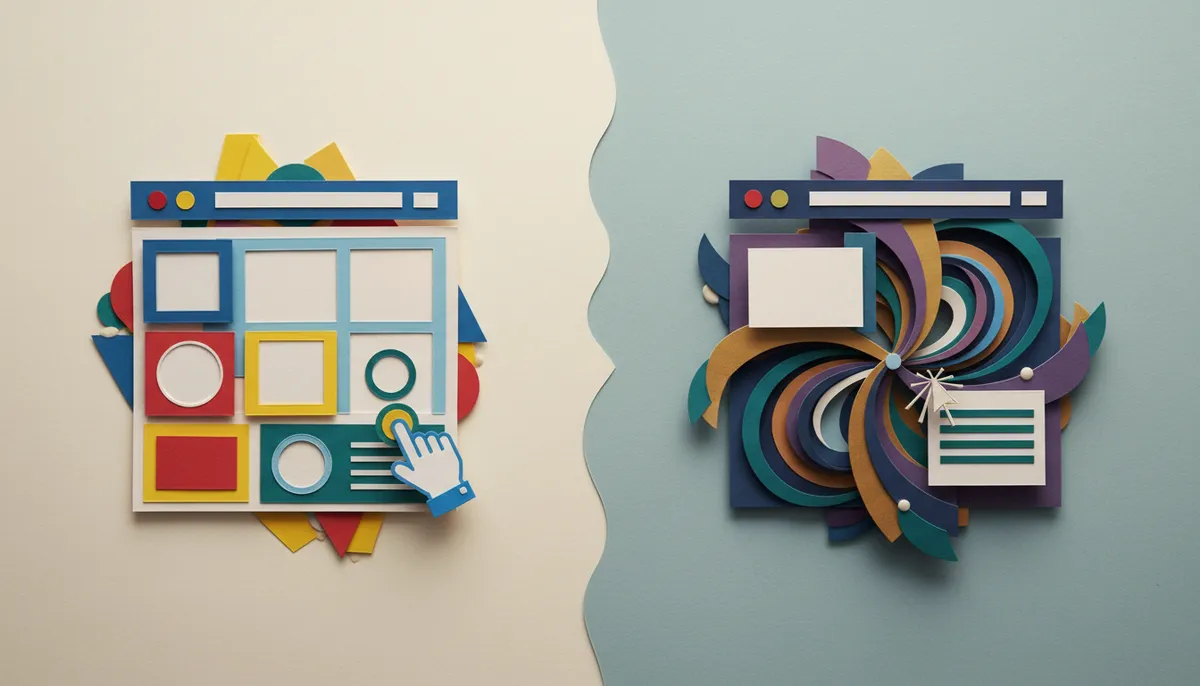
The table below summarizes the key differences between DIY website builders and custom professional design for small businesses in 2026.
| Feature | DIY Website Builder | Custom Website Design |
|---|---|---|
| Setup Speed | Fast (hours to days) | Moderate (weeks, done right) |
| Design Flexibility | Limited to templates | Fully custom to your brand |
| SEO Capabilities | Basic, often restricted | Advanced, fully optimized |
| Page Speed | Often slow due to bloat | Optimized for performance |
| Mobile Responsiveness | Template-dependent | Built to be fully responsive |
| Scalability | Limited growth potential | Scales with your business |
| Support | Community forums, chat | Dedicated professional team |
| Long-Term Cost | Monthly fees add up | Higher upfront, lower long-term |
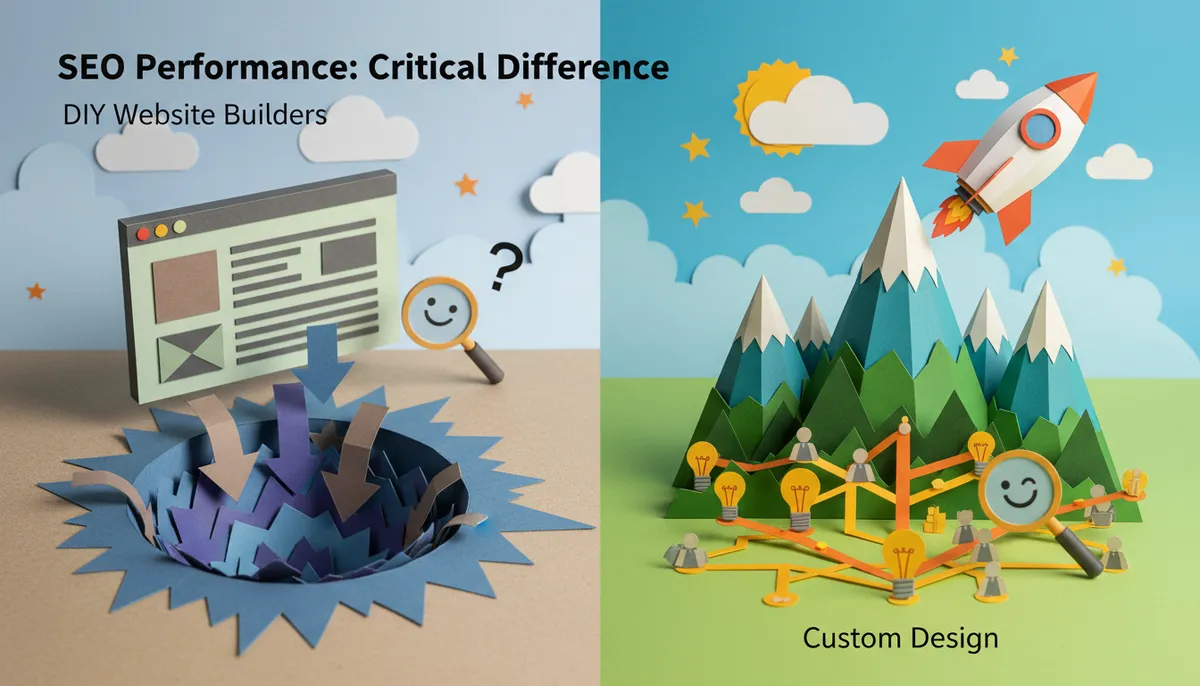
SEO Performance: A Critical Difference
Search engine optimization is one of the most important factors in whether your website attracts new customers organically. DIY builders often restrict your ability to customize title tags, meta descriptions, page speed, structured data, and site architecture — all of which are critical for ranking in Google search results.
Custom websites built on platforms like WordPress offer full SEO control. A professional SEO strategy can be built directly into the site structure from day one. This includes proper URL formatting, schema markup, internal linking strategies, and content architecture that supports long-term organic growth. If ranking in local search results matters to your business — and it should — you need to understand what local search engine optimization is and why your business needs it.
Building a website that follows Google E-E-A-T principles — Experience, Expertise, Authoritativeness, and Trustworthiness — is much easier with a custom-built site. These signals influence how Google ranks your content and how much trust users place in your brand.
5 Key Reasons Custom Website Design Wins for Small Business
Here are the five most compelling reasons small businesses should invest in custom professional website design in 2026:
- Brand differentiation: A custom site reflects your unique identity. Template sites often look identical to hundreds of other businesses, which weakens brand trust.
- Superior SEO foundation: Custom-built sites allow full technical SEO optimization, giving you a significant advantage in organic search rankings.
- Faster page load speeds: Professional developers build lean, fast-loading sites. Speed directly affects both user experience and Google rankings.
- Conversion-focused design: Every element — from button placement to content flow — is designed to guide visitors toward taking action, whether that is calling, filling out a form, or making a purchase.
- Scalability and flexibility: As your business grows, your website can grow with it. Adding new services, landing pages, or e-commerce functionality is seamless with a custom build.
When a DIY Builder Might Make Sense
Fairness demands that we acknowledge the scenarios where a DIY builder is a reasonable starting point. There are situations where a simple, low-cost website is better than no website at all.
- You are a brand-new startup testing a business concept and need a temporary web presence
- Your budget is extremely limited and a professional custom site is not yet feasible
- Your website serves as a simple digital business card with minimal functionality needs
- You need something live quickly while a custom site is being developed
Even in these cases, it is important to plan for a transition to a custom-designed site as soon as your budget allows. A DIY site is a starting point, not a long-term growth strategy. If you are a startup, reviewing digital marketing services early in your journey can help you build a roadmap that includes a professional website from the start.
The True Cost of a DIY Website Over Time
Many small business owners choose DIY builders because of the low initial cost. However, when you calculate the total cost over three to five years, the value proposition often reverses. Here is a typical cost breakdown to consider:
- Monthly subscription fees: DIY platforms charge monthly fees ranging from basic to premium tiers. Over three years, these costs accumulate significantly.
- Add-on costs: SEO tools, e-commerce functionality, additional storage, and premium templates all cost extra on DIY platforms.
- Lost revenue from poor SEO: A website that does not rank in search results costs your business potential customers every single day. This invisible cost is often the largest of all.
- Redesign costs: Many small businesses end up rebuilding their DIY site within two to three years as they outgrow its limitations — paying twice for what they could have done right the first time.
A custom-designed website through a professional agency like Brain Buzz Marketing represents a stronger long-term investment. Their approach to WordPress hosting and ongoing site management ensures your site remains fast, secure, and optimized for years to come.
What to Look for in a Custom Website Design Partner
Choosing the right agency for your custom website design for small business project is just as important as the decision to invest in one. Not all web design agencies deliver the same quality or strategic value.
- Proven portfolio of work with real results for small businesses
- Clear process from discovery and strategy through design, development, and launch
- SEO integration built into the design process — not added as an afterthought
- Transparent communication and responsive support
- Experience with mobile-first design and Core Web Vitals optimization
- Knowledge of content strategy, including content writing services that support long-term organic growth
It is also worth reviewing an agency’s credentials and client satisfaction before making a decision. You can explore client testimonials and agency certifications to validate their expertise. Checking their social presence on platforms like Facebook can also give you a sense of their professionalism and community engagement.
How Local SEO and Website Design Work Together
For small businesses that serve a specific geographic area, local SEO and website design are deeply connected. A custom website allows you to build location-specific landing pages, optimize your Google Business Profile integration, and create content that targets local search intent.
A poorly designed website can undermine even the best local SEO strategy. Slow load times, poor mobile experience, and weak on-page signals all reduce your ability to rank in local search. If you want to understand how to maximize local visibility, explore 7 ways local SEO near you drives more customers in 2026. For businesses in Florida, a Tampa website designer with local market knowledge can provide a distinct competitive advantage.
If your business operates in or near Tampa, visit us on Google to see reviews from local businesses we have helped grow their online presence.
Integrating Design with a Full Digital Marketing Strategy
The most effective small business websites do not exist in isolation. They are part of a broader digital marketing ecosystem that includes SEO, paid advertising, and content strategy. A custom website built with this in mind becomes the hub of all your digital marketing efforts.
- Landing pages designed specifically for Google Ads campaigns improve Quality Scores and conversion rates
- SEO-optimized blog content drives consistent organic traffic over time
- Clear calls-to-action throughout the site turn visitors into leads
- Integration with analytics tools provides data to continuously improve performance
If you are evaluating whether your current digital strategy is working, reading about how to choose SEO services that actually grow your business is a strong next step. You can also explore local SEO services that complement your website to maximize visibility in your target market. For inspiration on how integrated digital marketing looks in practice, Brain Buzz Marketing regularly shares insights on Instagram.
Conclusion: Invest Wisely in Your Small Business Website
The verdict is clear. While DIY website builders offer a quick and affordable entry point, custom website design for small business consistently delivers superior results in SEO performance, brand credibility, conversion rates, and long-term value. For small businesses serious about growth, a custom-designed website is not a luxury — it is a strategic necessity.
Your website should be working for you around the clock, attracting new customers, building trust, and supporting every other element of your digital marketing strategy. A template cannot do that at the level your business deserves. If you are ready to make a genuine investment in your online presence, get in touch with our team at Brain Buzz Marketing to discuss a custom website strategy built around your specific goals.
FAQs
Q: How much does custom website design for small business typically cost?
A: The cost of custom website design for small business varies based on complexity, number of pages, and the features required. While upfront investment is higher than DIY platforms, the long-term return — through better SEO, higher conversions, and reduced recurring fees — typically makes it the more cost-effective choice over time.
Q: How long does it take to build a custom website for a small business?
A: A professionally designed custom website for a small business typically takes two to six weeks from discovery to launch, depending on the scope of the project. This timeline includes strategy, design, development, content integration, and SEO setup — ensuring the site is built correctly from the start.
Q: Can a custom website help my small business rank higher in Google?
A: Yes. A custom website provides full control over technical SEO elements, including site speed, URL structure, meta data, schema markup, and mobile responsiveness — all of which directly influence Google rankings. DIY builders frequently limit access to these critical optimization features.
Q: Do I need a custom website if I already have a DIY builder site?
A: If your current site is not generating consistent leads, ranking in search results, or reflecting your brand professionally, transitioning to a custom-designed website is a worthwhile investment. Many small businesses find that upgrading their website significantly improves both organic traffic and customer conversion rates.
Q: What platform is best for custom website design for small business?
A: WordPress is widely regarded as the most powerful and flexible platform for custom small business website design in 2026. It offers full SEO control, thousands of integrations, scalability, and a large support ecosystem — making it the preferred choice for professional digital marketing agencies building sites designed to grow with your business.