Google just dropped one of the biggest updates to Maps in over a decade. The Google Maps Immersive Navigation update, announced on March 12, 2026, is not just a design refresh. It is a fundamental shift in how consumers discover, evaluate, and navigate to local businesses. Powered by Google’s Gemini AI, this update introduces two game-changing features: Ask Maps and Immersive Navigation. For small business owners, local service providers, and marketing managers, ignoring this shift is a costly mistake. If your local SEO strategy is not aligned with how Google Maps now operates, you are likely losing customers to competitors who are better optimized. This guide breaks down the most common mistakes businesses are making right now and exactly how to fix them before they damage your visibility.
What Is the Google Maps Immersive Navigation Update?
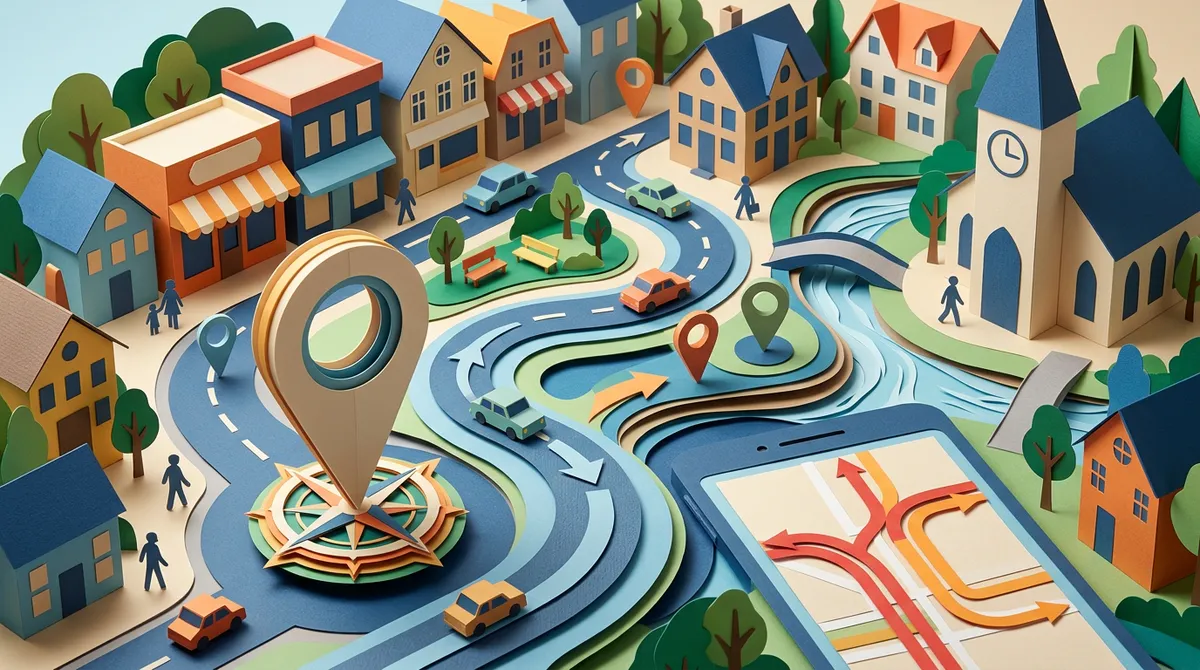
The Google Maps Immersive Navigation update is Google’s most significant overhaul of its mapping platform in more than ten years. It is built on Gemini AI models and transforms navigation into a 3D, real-world visual experience. More importantly for marketers, it also introduces Ask Maps, a conversational AI feature that answers complex, location-based questions with personalized results.
Instead of simply typing a business category into the search bar, users can now ask nuanced questions like, “Where can I find a cozy vegan restaurant with a table for four at 7 p.m. tonight?” Maps then analyzes over 300 million places and draws from a community of more than 500 million contributors to generate tailored recommendations. Your SEO strategy must now account for how AI reads and ranks your Google Business Profile and online content.
Why This Update Changes Everything for Digital Marketing
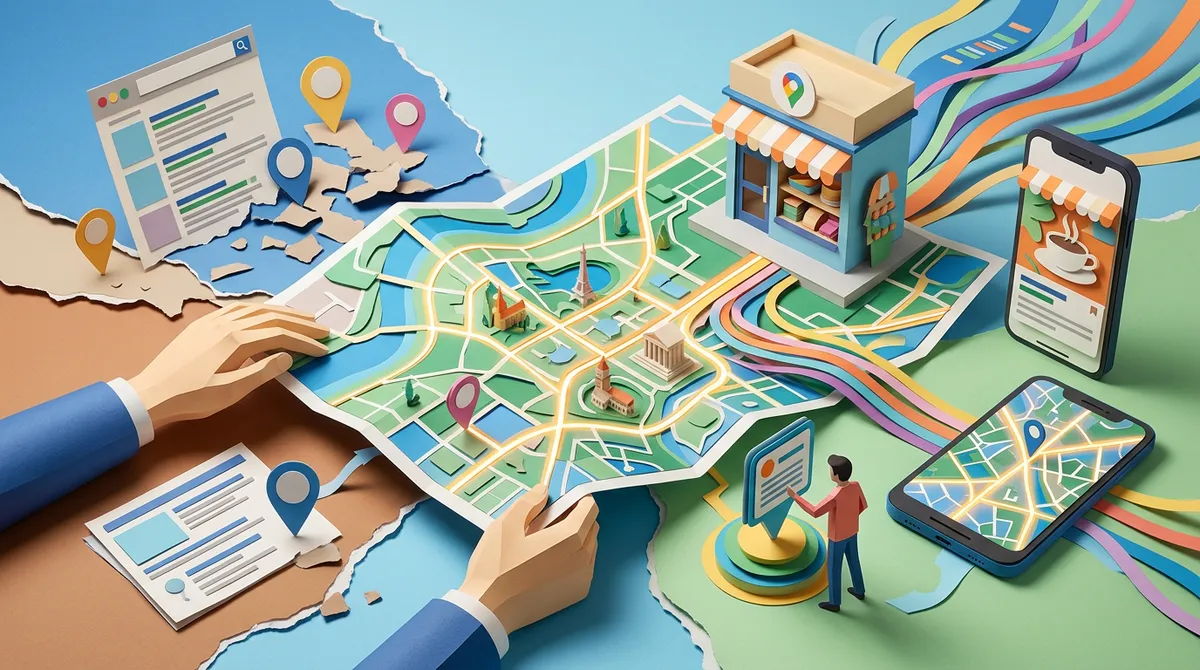
This update signals a major evolution in local search behavior. Consumers are no longer just searching — they are having conversations with Google. That means your business needs to speak Google’s language clearly and completely. Here is why this matters for every aspect of your digital marketing strategy:
- AI-powered recommendations prioritize well-optimized, information-rich business profiles
- Personalized results depend on consistent, accurate data across all online platforms
- Immersive 3D navigation highlights businesses that appear in prominent map locations
- Voice-style queries demand natural language content on your website and profile
- Insider tips and community reviews are now surfaced directly in navigation results
If your profile is incomplete or your website lacks conversational content, the Ask Maps feature will simply pass over your business. Understanding what local SEO means for your business has never been more critical.
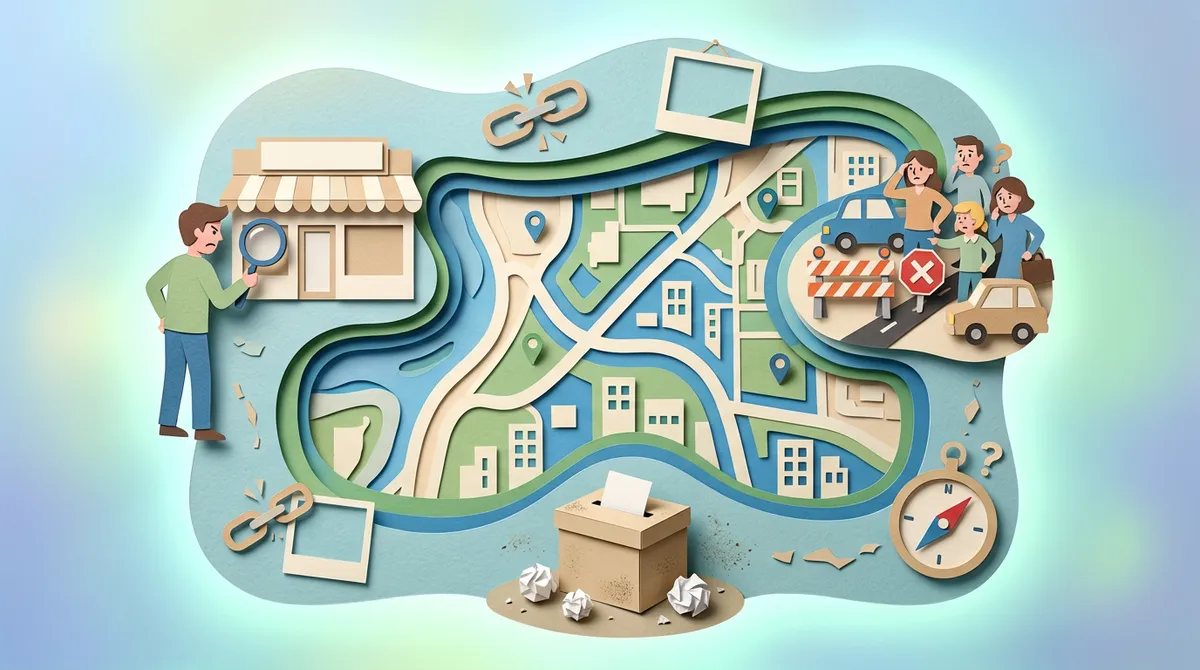
Common Mistakes Businesses Are Making Right Now
Mistake 1: Leaving Your Google Business Profile Incomplete
The Ask Maps feature pulls data directly from your Google Business Profile. If your profile is missing hours, services, photos, or descriptions, AI simply cannot recommend you with confidence. This is the single most damaging mistake local businesses are making in 2026.
Ask Maps surfaces answers based on specific user needs — like finding a tennis court with lights or a coffee shop without long lines. If your profile does not describe your unique attributes in detail, you will never appear in those personalized results. Pair this with strong SEO services to maximize your visibility.
Mistake 2: Ignoring Conversational and Long-Tail Keywords
Traditional keyword targeting focused on short, direct phrases. That approach is no longer sufficient. With Ask Maps, users are now searching with full sentences and natural questions. Your website content and profile descriptions must reflect this shift.
Instead of optimizing only for “Italian restaurant Tampa,” you should also target phrases like “romantic Italian restaurant with outdoor seating near downtown Tampa.” This is where professional content writing services become essential. Well-crafted, conversational content signals to Google’s AI that your business directly answers the user’s intent.
Mistake 3: Neglecting Review Management
The Immersive Navigation update actively surfaces “insider tips from real people” drawn from the Maps contributor community. Businesses with robust, recent, and detailed reviews will be highlighted. Businesses without them will be invisible.
Do not just collect star ratings. Encourage customers to leave descriptive reviews that mention specific services, ambiance, and standout features. These narrative reviews feed directly into the AI’s ability to recommend your business for nuanced, conversational queries through the Ask Maps feature.
Mistake 4: Overlooking Mobile and Visual Optimization
Immersive Navigation renders a vivid 3D environment around your business. It draws on Street View imagery and aerial photos to build context around your location. A business with poor signage, an unclear storefront, or outdated Street View photos will appear less prominently in this new visual landscape.
Your website design must also be fully mobile-optimized. The Ask Maps feature is rolling out first on Android and iOS. If a user taps through to your website from a Maps recommendation and encounters a slow or cluttered mobile experience, you lose that conversion immediately.
Mistake 5: Not Aligning Your Website Content with AI-Driven Search
The Ask Maps and Immersive Navigation features are powered by Gemini AI, which also influences how Google evaluates your website for traditional search rankings. This means the principles of Google E-E-A-T (Experience, Expertise, Authoritativeness, and Trustworthiness) are more important than ever. Your website content must demonstrate genuine expertise and answer real customer questions in a clear, direct manner.
AI models reward content that is specific, trustworthy, and aligned with user intent. Generic service pages and thin content will not make the cut. Invest in detailed, well-structured content that speaks to your customers’ actual questions and needs.
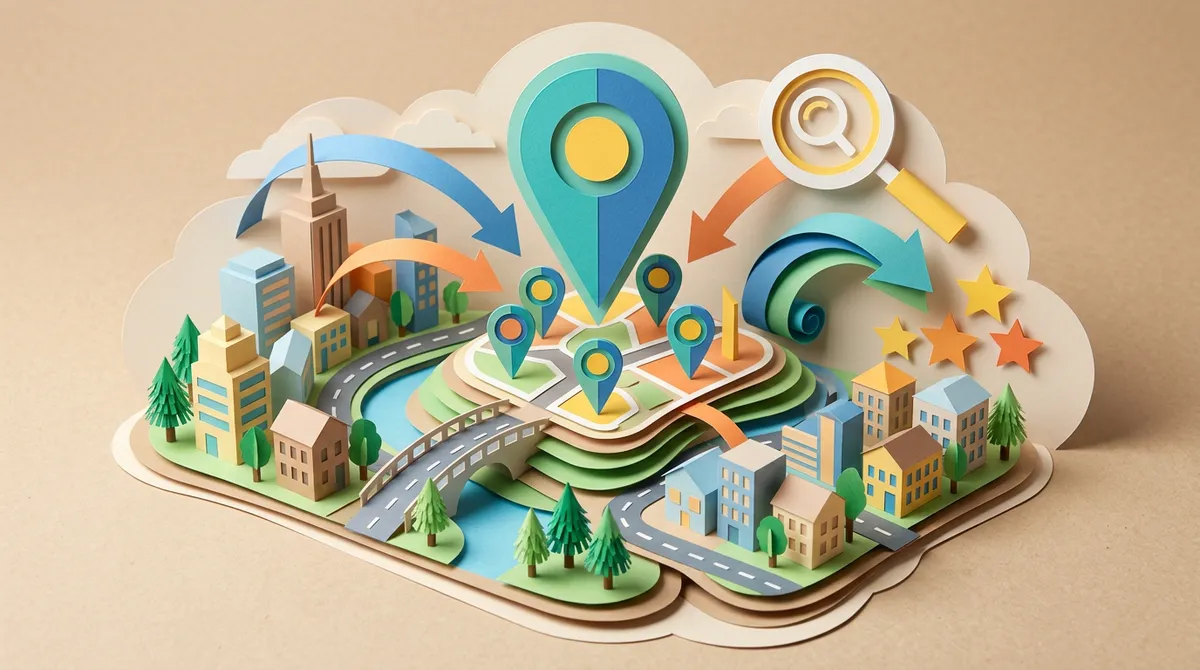
How to Optimize for the Google Maps Immersive Navigation Update
Now that you know the mistakes, here is a clear action plan to align your digital marketing strategy with this new reality. Follow these steps in order for maximum impact:
- Audit your Google Business Profile completely. Ensure every field is filled out, including business category, attributes, services, hours, photos, and a detailed business description that uses natural language.
- Update your website content for conversational queries. Rewrite service pages and blog posts to answer specific customer questions in plain language. Think about how someone would verbally ask for your service.
- Build a proactive review strategy. Set up a system to request reviews after every customer interaction. Guide customers to include specific details about what made their experience great.
- Optimize your site for mobile performance. Run a mobile speed test and fix any issues. Your site should load in under three seconds on a mobile connection.
- Add photos and visual content regularly. Upload fresh, high-quality images to your Google Business Profile at least twice per month to keep your listing active and visually engaging.
- Align your local SEO with AI-driven content strategy. Incorporate GEO (Generative Engine Optimization) and AEO (Answer Engine Optimization) principles to ensure your brand appears in AI-generated results, not just traditional search pages.
The Role of Local SEO in the New Maps Era
The Google Maps Immersive Navigation update makes local SEO more powerful than ever. Every element of your local presence — from your Google Business Profile to your website content to your online reviews — now feeds into an AI-driven recommendation engine that can either surface your business prominently or bury it completely.
For businesses in Tampa and across Florida, the stakes are especially high. Local service providers compete in dense markets where being the top recommendation in a conversational Maps query can make or break a day’s revenue. Working with a specialized SEO agency in the Brandon, Florida area gives you a local edge that generic national providers simply cannot match.
What the Immersive Navigation Features Mean for Your Ad Strategy
Beyond organic SEO, the Immersive Navigation update has direct implications for your paid advertising strategy. As Maps becomes a more immersive, AI-powered discovery platform, Google Ads placements within Maps will become more competitive and more valuable. Here is what to keep in mind:
- Local search ads will appear within the new Ask Maps conversational results interface
- Businesses running Google Ads with well-optimized location extensions will gain visibility advantages
- Ad relevance scores will increasingly factor in the quality of your Google Business Profile
- Promoted pins and local inventory ads will become more prominent in 3D navigation views
If you are not already running a coordinated local digital marketing strategy that connects your SEO, content, and paid ads, now is the time to build one. The Ask Maps and Immersive Navigation features reward businesses that present a consistent, complete, and compelling presence across all of Google’s ecosystem.
Comparing Old and New Google Maps Visibility Factors
| Visibility Factor | Before the Update | After the Immersive Navigation Update |
|---|---|---|
| Business Discovery | Category keyword search | Conversational AI queries via Ask Maps |
| Profile Completeness | Helpful but optional | Critical for AI recommendation eligibility |
| Customer Reviews | Star ratings and volume | Narrative reviews surfaced as insider tips |
| Visual Content | Supporting element | Core element of 3D navigation rendering |
| Website Content | Standard keyword optimization | Conversational and AI-readable content required |
| Mobile Experience | Recommended best practice | Mandatory for Ask Maps mobile rollout |
Steps to Audit Your Current Local SEO Health
Before you can fix the mistakes above, you need a clear picture of where you stand today. Use this quick audit checklist to assess your current local SEO readiness for the new Maps environment:
- Check your Google Business Profile for completeness — every field should be filled in with accurate, detailed information.
- Search for your own business using conversational queries that your customers might use and see where and how you appear.
- Review your most recent ten Google reviews and evaluate whether they contain enough descriptive detail to feed an AI recommendation engine.
- Test your website on a mobile device and measure load time using Google’s PageSpeed Insights tool.
- Scan your website content for pages that could be rewritten to better match conversational, question-based queries.
If you find gaps in three or more of these areas, your business is at significant risk of losing visibility as the Google Maps Immersive Navigation update continues to roll out in 2026. The team at Brain Buzz Marketing specializes in helping small and medium-sized businesses navigate exactly these kinds of platform changes with precision and speed.
How to Choose the Right Digital Marketing Partner
Navigating a major platform update like this requires expertise across SEO, content strategy, and paid advertising. Not every agency is equipped to handle the intersection of AI-driven local search and traditional digital marketing. When evaluating your options, look for an agency that understands how to choose SEO services that actually grow your business — not just ones that track vanity metrics.
The right partner will help you align your Google Business Profile, website content, and advertising strategy into a unified system that is built to perform in the new AI-driven Maps environment. You can also visit Brain Buzz Marketing on Google to see our own local presence in action and read what our clients have to say about the results we deliver. Follow us on Instagram and Facebook for ongoing updates as the Maps ecosystem continues to evolve in 2026.
Conclusion: Act Now Before the Update Passes You By
The Google Maps Immersive Navigation update is not a future concern — it is a present reality. Ask Maps is rolling out now across the U.S. and India on Android and iOS. Every day you delay optimizing your local presence is a day your competitors gain ground. The businesses that will win in this new environment are the ones that take action immediately: completing their profiles, refreshing their content, managing their reviews, and aligning their entire digital strategy with the way AI now discovers and recommends local businesses.
Do not let outdated practices cost you customers. Whether you need a full local SEO overhaul or a targeted content strategy to match the new AI-driven Maps queries, the time to act is now. Reach out to our team today and let us build a strategy that puts your business in front of the right customers at exactly the right moment.
FAQs
Q: What is the Google Maps Immersive Navigation update and when did it launch?
A: The Google Maps Immersive Navigation update launched on March 12, 2026. It is powered by Google’s Gemini AI and introduces two major features: Ask Maps, a conversational AI discovery tool, and Immersive Navigation, a 3D visual driving experience. Both features significantly change how consumers find and navigate to local businesses.
Q: How does the Ask Maps feature affect my business’s local SEO?
A: Ask Maps uses AI to answer complex, conversational queries and recommend businesses based on personalized criteria. Businesses with complete Google Business Profiles, detailed descriptions, fresh photos, and strong narrative reviews are far more likely to appear in Ask Maps results. Incomplete or generic profiles are effectively invisible to this AI-driven recommendation engine.
Q: Do I need to change my website content because of this Google Maps update?
A: Yes. The Ask Maps feature rewards content that matches conversational, question-based queries rather than traditional short-tail keywords. Your website service pages and blog content should be updated to reflect natural language patterns and answer specific customer questions clearly and directly.
Q: How does the Immersive Navigation update impact Google Ads for local businesses?
A: Immersive Navigation enhances the visual prominence of local businesses within the Maps interface, making well-targeted Google Ads placements more valuable. Businesses running local search ads with optimized location extensions and strong Google Business Profiles will benefit most from increased visibility within the new 3D navigation experience.
Q: What is the fastest way to optimize my business for the new Google Maps features?
A: Start by completing every field in your Google Business Profile with accurate, detailed information and natural language descriptions. Then update your website content for conversational search queries, build a proactive review strategy, and ensure your site is fully mobile-optimized. Working with an experienced local SEO agency can accelerate this process significantly.