Key Takeaways
-
Prospects from AI sources convert 3-5x more often than cold search traffic because they arrive pre-qualified after researching options through conversational AI interactions.
-
Listicles, how-to guides, FAQ pages, and YouTube transcripts are the most-cited content formats in AI answers—prioritize these over traditional keyword-optimized pages.
-
AI uses Query Fan-Out to break single questions into 10+ simultaneous sub-queries, pulling from beyond Google’s top 10 results, giving smaller brands genuine chances to appear.
-
Run immediate AI audits across ChatGPT, Gemini, and Perplexity to document how your brand is currently described, then address gaps in your content and review presence.
-
Build presence across third-party review platforms, YouTube, Reddit, LinkedIn groups, and industry forums—these are primary sources AI tools cite when generating recommendations.
-
Adopt B2B2C framing: every piece of content, review, and community post shapes how AI perceives your brand, with the goal being to become the trusted answer delivered to ready-to-buy customers.
Consumer search behavior has fundamentally shifted. In 2026, millions of people no longer open Google to find a product or service. Instead, they ask an AI. They type questions into ChatGPT, Gemini, or Perplexity and expect a direct, conversational answer. If your brand is mentioned in that answer, you win. If it is not, your competitor does. That is the core challenge — and the core opportunity — of AEO in 2026.
Answer Engine Optimization (AEO) is the practice of influencing how AI-powered tools describe, recommend, and cite your brand. It is different from traditional SEO, which focused on ranking in search results. AEO is about becoming the answer — the trusted response that an AI delivers to a potential customer. For small businesses, e-commerce retailers, local service providers, and startups, this shift represents one of the biggest visibility opportunities in a decade. Here are 13 proven strategies to make it work for you.
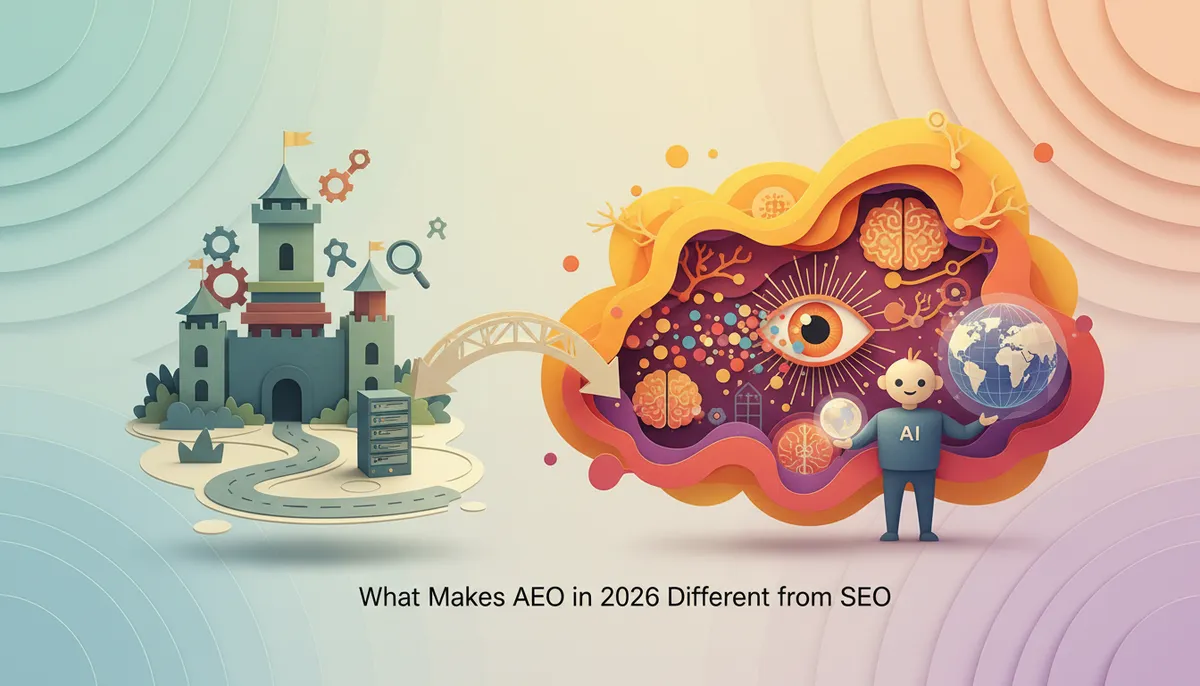
What Makes AEO in 2026 Different from SEO
Before diving into tactics, it helps to understand what has changed. With traditional SEO, the goal was simple: rank high on Google and earn the click. With AEO, the journey looks very different. A user might ask an AI, “What is the best marketing agency for small businesses?” Then follow up with, “Which one specializes in local SEO?” Then, “What do their customers say?”
By the time they visit your website, they have already compared options, ruled out competitors, and built trust in the AI’s recommendation. That is why prospects arriving from AI sources convert three to five times more often than cold search traffic. To understand the full scope of this shift, explore our detailed guide on what AEO means in digital marketing.
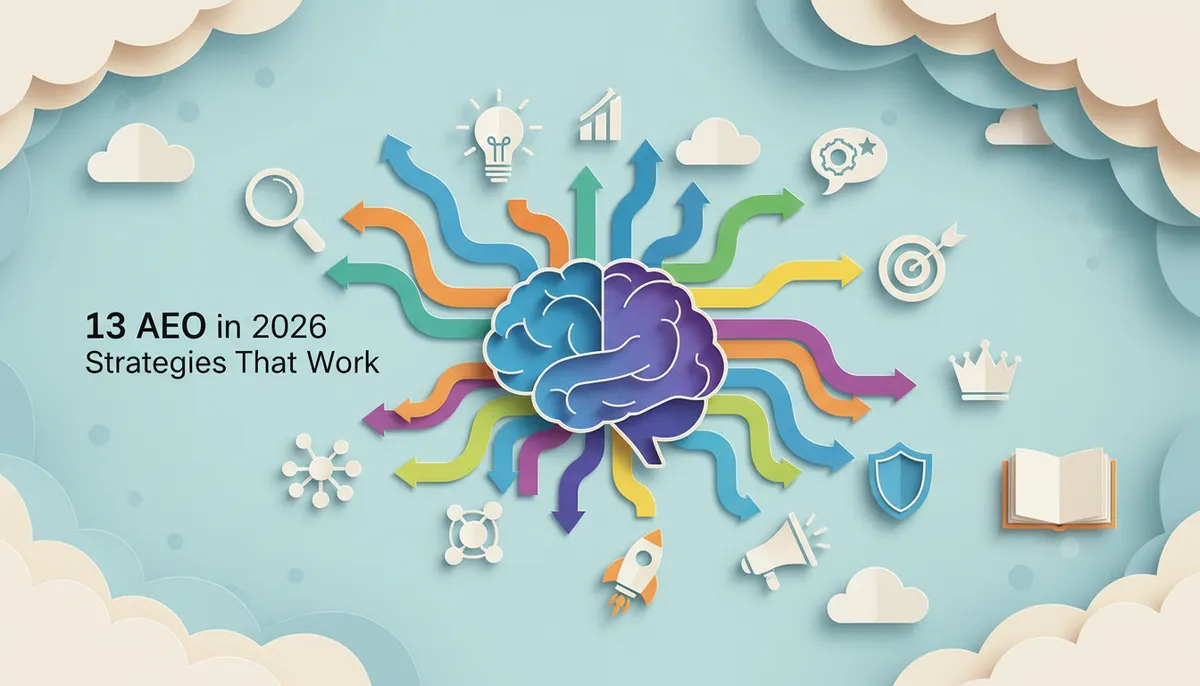
13 AEO Strategies That Work in 2026
1. Audit How AI Currently Describes Your Brand
Start by testing what AI tools say about you right now. Open ChatGPT, Gemini, and Perplexity in a fresh session. Ask questions a customer would ask, such as “What are the best digital marketing agencies in Tampa?” or “Which SEO companies are best for small businesses?” Document whether your brand is mentioned, how it is described, and what sources are cited. This audit is your baseline. You cannot improve what you have not measured.
2. Understand Query Fan-Out and Use It to Your Advantage
AI search engines do not run a single query. They use a mechanism called Query Fan-Out, which breaks one question into ten or more sub-queries run simultaneously across diverse sources. This is a massive opportunity. It means AI is pulling content far beyond Google’s top ten results — often from blogs, listicles, review pages, and community forums. Smaller brands have a real chance to appear in AI answers where they might struggle in traditional search. Learn more about how AI search algorithms actually work to position your content strategically.
3. Create Targeted Listicle Content
Data consistently shows that listicles are among the most cited content types in AI-generated answers. Articles like “Top 10 SEO Agencies for Small Businesses” or “Best Digital Marketing Tools for Local Retailers” are exactly what AI tools pull from when building responses. Create listicles that directly answer common customer questions in your niche. Make sure your own brand is featured prominently in the content you publish.
If you need help building this type of keyword-targeted content, our content writing services are designed specifically to produce content that ranks in both traditional search and AI answers.
4. Build Robust FAQ Pages on Your Website
FAQ pages are powerful AEO assets. When an AI tool looks for a direct answer to a user’s question, well-structured FAQ content on your site gives it exactly what it needs. Write questions the way real customers ask them. Use natural language. Provide concise, accurate answers. This directly influences how AI engines describe your business and services.
5. Optimize Your YouTube Content for AI Citation
YouTube is consistently one of the top cited sources in AI-generated answers. This is because video transcripts are automatically generated and indexed, turning a ten-minute video into the equivalent of a 2,000-word article. Videos with high view counts and positive comments also carry strong trust signals. If you have video content explaining your services, make sure titles and descriptions use natural language questions that customers actually ask.
6. Target Third-Party Review Sites and Directories
AI tools pull heavily from peer sites, review platforms, and industry directories. Getting your business listed, reviewed, and recommended on these platforms directly improves your AEO presence. Actively request reviews from satisfied customers. Respond to reviews professionally. A strong review profile signals trustworthiness to both AI engines and the humans they are advising. You can see what our clients say on Visit us on Google — Brain Buzz Marketing.
7. Engage With Online Communities and Forums
Reddit, LinkedIn groups, Quora, and industry forums are frequently cited in AI answers. Contributing genuinely helpful content to these communities builds brand authority and citation potential. Answer questions in your area of expertise. Share original insights. The goal is to become a recognized voice in spaces where AI tools go to gather information. Follow Brain Buzz Marketing on Instagram to see how we engage our community consistently.
8. Write How-To Guides That Directly Answer Customer Questions
How-to guides are another content format that AI tools cite regularly. These articles answer specific, intent-driven questions like “How do I improve my local SEO?” or “How do I choose a digital marketing agency?” The key is to write guides that are detailed, accurate, and easy to follow. Pair this with solid on-page SEO to ensure the content is crawlable and properly structured.
9. Track Competitor Mentions in AI Answers
Part of a strong AEO strategy is understanding how AI describes the broader competitive landscape in your industry. When you run AI queries, pay close attention to which brands appear alongside yours — or in your place. This intelligence reveals gaps in your content strategy and highlights opportunities to create better, more relevant material that earns citations instead of your competitors. For deeper context, read our comparison of local AEO vs. traditional SEO.
10. Ensure Your Website Is Fast, Clean, and Crawlable
Technical website health still matters in AEO. If your site is slow, poorly structured, or hard to crawl, AI engines will struggle to retrieve information from it. Ensure your pages load quickly, use clear navigation, and are structured with proper HTML. A technically sound website amplifies every other AEO tactic you implement. Our custom website design service builds sites engineered to perform in both traditional and AI search environments.
11. Use Structured Data and Schema Markup
Schema markup helps AI engines understand exactly what your content is about. Adding structured data for your business type, services, FAQs, and reviews gives AI tools clear signals to pull from. This is one of the more technical AEO improvements, but it delivers measurable results. It also improves your chances of appearing in Google’s featured snippets, which overlap significantly with AI-cited sources. Following Google E-E-A-T principles alongside schema markup reinforces authority signals across all AI platforms.
12. Monitor Brand Sentiment Across AI Platforms
Visibility alone is not enough. You need to know whether AI tools are describing your brand accurately and positively. Run regular sentiment audits by prompting AI tools with direct questions about your business. Look for inaccurate descriptions, missing context, or negative associations. Then address those gaps through updated web copy, press mentions, or new content that shifts the narrative. Tools like HubSpot AEO can automate this monitoring process at scale.
13. Think B2B2C — Business to Bot to Consumer
This framing captures the entire AEO approach in a single idea. You are a business trying to influence how the bot describes you to the consumer making the decision. Every piece of content you create, every review you earn, every community post you publish — all of it shapes how AI tools perceive and present your brand. The goal is not to get traffic. The goal is to become the trusted answer that an AI confidently delivers to a ready-to-buy customer. For businesses ready to embrace this model, our digital marketing services are built around exactly this kind of forward-thinking strategy.
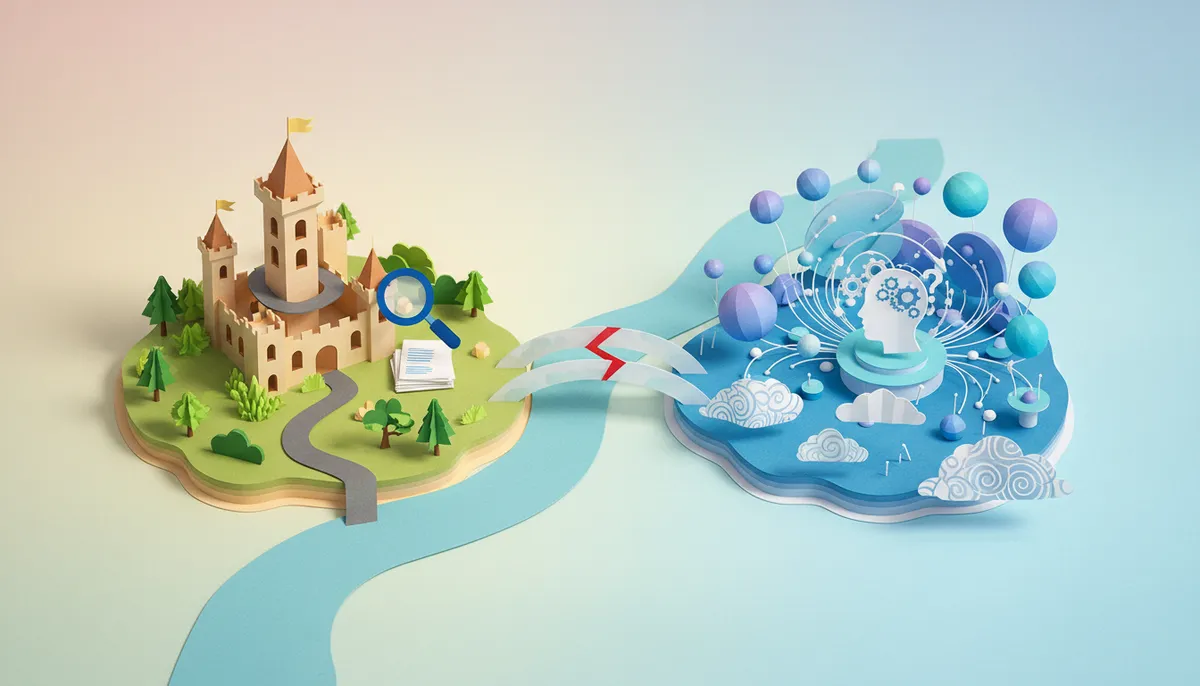
AEO vs. SEO: Understanding the Core Differences
It helps to see how AEO and traditional SEO compare side by side. While both aim to increase visibility, the mechanics and outcomes are distinct.
|
Factor |
Traditional SEO |
AEO in 2026 |
|---|---|---|
|
Primary Goal |
Rank in search results |
Appear in AI-generated answers |
|
Content Format |
Keyword-optimized pages |
Conversational, question-based content |
|
Citation Sources |
Top 10 Google results |
Blogs, listicles, reviews, YouTube, forums |
|
User Intent |
Click-through traffic |
Direct, contextual answers |
|
Lead Quality |
Variable conversion rates |
3–5x higher conversion potential |
|
Opportunity for Small Brands |
Harder to compete with big sites |
Strong — AI pulls beyond top 10 results |
The two strategies are not mutually exclusive. The strongest digital marketing plans in 2026 integrate both. Explore how to balance them in our guide on SEO vs. AEO: which strategy wins for your business.

Content Types That Drive AEO Citations
Not all content performs equally in AEO. Based on current data, certain formats dominate AI citation patterns. Here is a breakdown of the most impactful content types to prioritize:
-
Listicles: Ranked lists comparing tools, services, or businesses. These account for the largest share of AI citations.
-
How-to guides: Step-by-step articles that answer specific process questions directly.
-
Video transcripts: YouTube content that is indexed and treated as long-form written content by AI engines.
-
Review platform profiles: Third-party endorsements that AI tools use as trust signals.
-
Community posts: Forum answers, LinkedIn articles, and Reddit contributions that demonstrate expertise in public spaces.
-
FAQ pages: Structured question-and-answer content that is easy for AI to parse and cite.
Key Channels AI Uses to Source Answers
Understanding where AI tools look for information helps you prioritize where to invest your content efforts. The primary channels include:
-
Peer and non-competitor business sites — The largest citation source. Other companies in adjacent fields often link to or mention brands in contextually relevant ways.
-
Review and rating platforms — Sites where verified customers leave feedback carry enormous weight.
-
Owned content — Your own website’s blog, service pages, and FAQ sections.
-
Earned media — Press mentions, guest posts, and third-party articles featuring your brand.
-
YouTube — Consistently one of the top-cited sources across all major AI engines.
-
User-generated content — Reddit threads, community forums, and social discussions that mention your brand organically.
Distributing content across all of these channels gives your brand the broadest possible footprint for AI citation. Connect with us on Facebook to see how we help businesses build that kind of multi-channel presence.
Common AEO Mistakes to Avoid
Many businesses jump into AEO without a clear plan and make avoidable errors. Here are the most damaging mistakes:
-
Only optimizing homepage and product pages while ignoring listicles and guides
-
Ignoring third-party review platforms and community channels
-
Failing to monitor brand sentiment across multiple AI engines
-
Writing content for keywords rather than natural conversational questions
-
Neglecting YouTube as a major AI citation source
-
Not running regular AI audits to track visibility changes over time
Avoiding these mistakes puts you ahead of the majority of businesses that are still ignoring AEO entirely. Read our full breakdown of AEO mistakes hurting your search visibility to stay ahead.
How Brain Buzz Marketing Approaches AEO
At Brain Buzz Marketing, we have built AEO directly into our content strategy framework. We write for the future of search — producing content that ranks in traditional SEO, surfaces in AI-generated answers, and earns citations across the channels that influence buyer decisions. Our approach combines keyword-targeted content writing, technical SEO, and AI visibility audits to ensure our clients are not just visible today, but positioned for how search continues to evolve.
Whether you are a small business owner, a local service provider, or a growing e-commerce brand, the shift to AI-driven search is already happening. The brands investing in AEO in 2026 will capture leads that their competitors never even knew they were losing.
Conclusion
The shift from traditional search to AI-driven answers is not a future trend — it is the present reality. AEO in 2026 requires a deliberate, multi-channel content strategy focused on becoming the answer that AI confidently delivers to your ideal customer. From listicles and how-to guides to YouTube optimization and review platform engagement, every tactic in this list contributes to a stronger AI presence.
The opportunity is significant, and the competitive window is still open. Most businesses have not yet adapted. That means early movers have a genuine advantage. If you are ready to build an AEO strategy that gets your brand recommended by AI, get in touch with our team and let us show you what is possible.
FAQs
Q: What is AEO in 2026 and how is it different from SEO?
A: AEO, or Answer Engine Optimization, is the practice of influencing how AI tools like ChatGPT, Gemini, and Perplexity describe and recommend your brand. Unlike traditional SEO, which focuses on ranking in search results, AEO is about becoming the trusted answer that AI delivers directly to a potential customer during a conversational query.
Q: Why do leads from AI sources convert better than traditional search traffic?
A: AI conversations allow users to thoroughly research options before making a decision. By the time someone clicks through to your website after an AI interaction, they have already compared alternatives, understood tradeoffs, and built trust in the recommendation. This pre-qualification process makes AI-sourced leads three to five times more likely to convert into customers.
Q: What types of content are most effective for AEO in 2026?
A: Listicles, how-to guides, FAQ pages, and YouTube video transcripts are among the most frequently cited content types in AI-generated answers. Third-party review profiles and community forum contributions also carry significant weight as AI tools pull from a diverse range of sources beyond traditional search results.
Q: How do small businesses compete in AEO when they struggle with traditional SEO?
A: AEO actually levels the playing field for smaller brands. AI engines use a mechanism called Query Fan-Out, which sources information from far beyond Google’s top ten results — including blogs, review sites, directories, and community forums. This creates genuine visibility opportunities for businesses that invest in multi-channel content strategies, even if they lack the domain authority to compete in traditional search.
Q: How often should businesses audit their AI brand presence?
A: Regular audits are essential, ideally on a monthly basis at minimum. AI tools update their knowledge sources continuously, and your brand visibility and sentiment can shift based on new citations, competitor activity, or changes in your website content. Automated tools can run daily prompt checks across multiple AI engines to keep your monitoring consistent and actionable.