Key Takeaways
-
Communicate your exact software value in seconds with specific, jargon-free headlines—vague messaging causes immediate visitor loss and kills conversions.
-
Integrate SEO into website design from day one through proper heading hierarchy, keyword-targeted content, and schema markup; retrofitting optimization later significantly underperforms.
-
Use fast load times and mobile optimization as non-negotiable conversion factors—a one-second delay drops conversions by 7%, and over half of traffic comes from mobile devices.
-
Guide visitors through a logical conversion funnel with clean navigation and strategic CTAs, treating your site as a conversation rather than an information catalog.
-
Display social proof prominently through video testimonials, case studies, and recognizable client logos to reduce buyer skepticism and build trust before any sales conversation.
-
Align website design with digital marketing strategy from the start through integrated SEO, content marketing, and CRO efforts rather than treating them as separate initiatives.
Your website is your most powerful sales tool. For SaaS companies, that statement carries even more weight. A poorly designed SaaS website can quietly kill conversions, erode trust, and push potential customers straight to the back button. In 2026, the bar for effective SaaS website design has never been higher, and the companies that get it right are seeing dramatic gains in sign-ups, demos, and revenue. Whether you are a startup launching your first product or an established software brand looking to scale, understanding what makes a great SaaS website is critical. This article breaks down the key design principles, must-have features, and strategic decisions that separate high-performing SaaS sites from the rest — and how a focused digital marketing approach amplifies the results.
Why SaaS Website Design Is Different From Regular Web Design
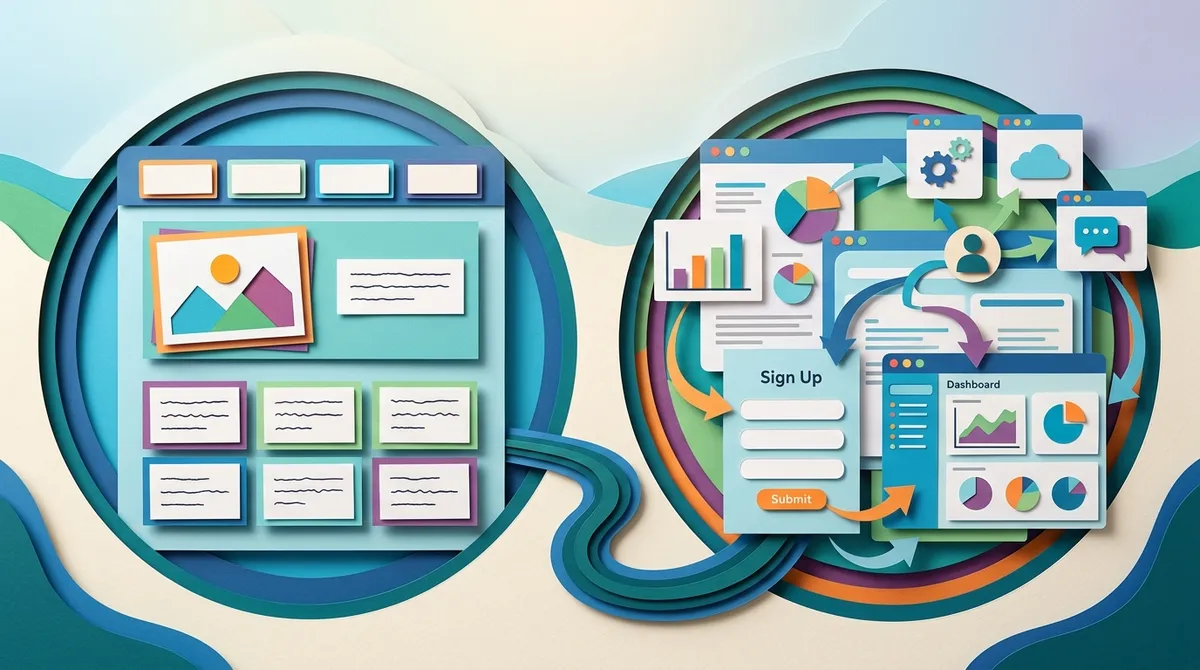
A traditional business website tells visitors who you are. A SaaS website has to do much more. It must communicate complex software value in simple terms, guide visitors through a structured journey, and persuade them to take action — often before they have spoken to a single human. That is a tall order. Professional website design for SaaS products requires a deep understanding of buyer psychology, technical performance, and conversion-focused structure.
SaaS buyers are also more skeptical than average consumers. They are making decisions that will affect their teams, workflows, and budgets. Your website must earn their trust quickly. This is why every design element — from the headline on your homepage to the color of your CTA button — must be deliberate and data-informed. Understanding web design principles that drive real business results is the foundation of any effective SaaS build.
Core Elements of High-Converting SaaS Website Design
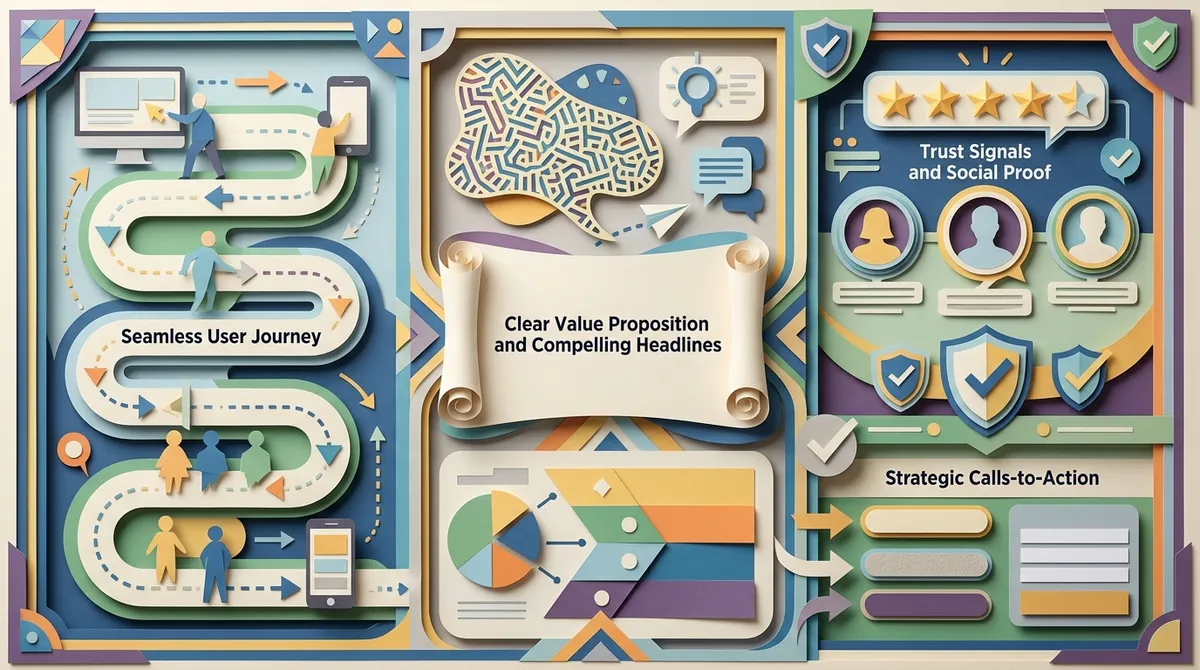
Great SaaS sites share common design DNA. These are not optional features — they are the structural pillars that hold your entire online presence together.
1. A Clear and Compelling Value Proposition
Visitors decide within seconds whether your product is worth their time. Your headline must answer one question immediately: what does your software do, and why should I care? Vague or jargon-heavy headlines lose people fast. Specificity wins. If your SaaS product saves accounting teams five hours per week, say exactly that. Clarity converts.
2. Intuitive Navigation and User Flow
SaaS websites often have a lot to say — features, pricing, integrations, case studies. But overwhelming visitors with too many options creates decision paralysis. The best SaaS website designs use clean navigation structures that guide users along a logical path. Think of your site as a conversation, not a catalog. Each page should lead naturally to the next. Strong website design factors always prioritize user experience above aesthetics.
3. Social Proof and Trust Signals
Customer testimonials, case studies, review counts, and logos of well-known clients are powerful trust builders. SaaS buyers research extensively before committing. Your site needs to show, not just tell, that your product delivers results. Video testimonials perform especially well in 2026. If you want to see how real results build credibility, read through client testimonials from businesses that have made meaningful gains with professional digital marketing support.
4. Fast Load Times and Mobile Optimization
Speed is not a luxury — it is a ranking factor and a conversion factor. A one-second delay in page load can drop conversions by up to 7%. Mobile optimization is equally non-negotiable. More than half of web traffic comes from mobile devices. Your SaaS site must look and function flawlessly on every screen size. Reliable WordPress hosting plays a major role in ensuring consistent site speed and uptime.
5. SEO-Optimized Structure from the Ground Up
Design and on-page SEO must work together from day one. A beautifully designed SaaS site that nobody can find on Google is a missed opportunity. Proper heading hierarchy, keyword-targeted page content, schema markup, and optimized meta descriptions are all part of building a site that ranks and converts. For deeper insight, explore how SEO in website design versus a design-first approach affects long-term performance.
Key Pages Every SaaS Website Needs
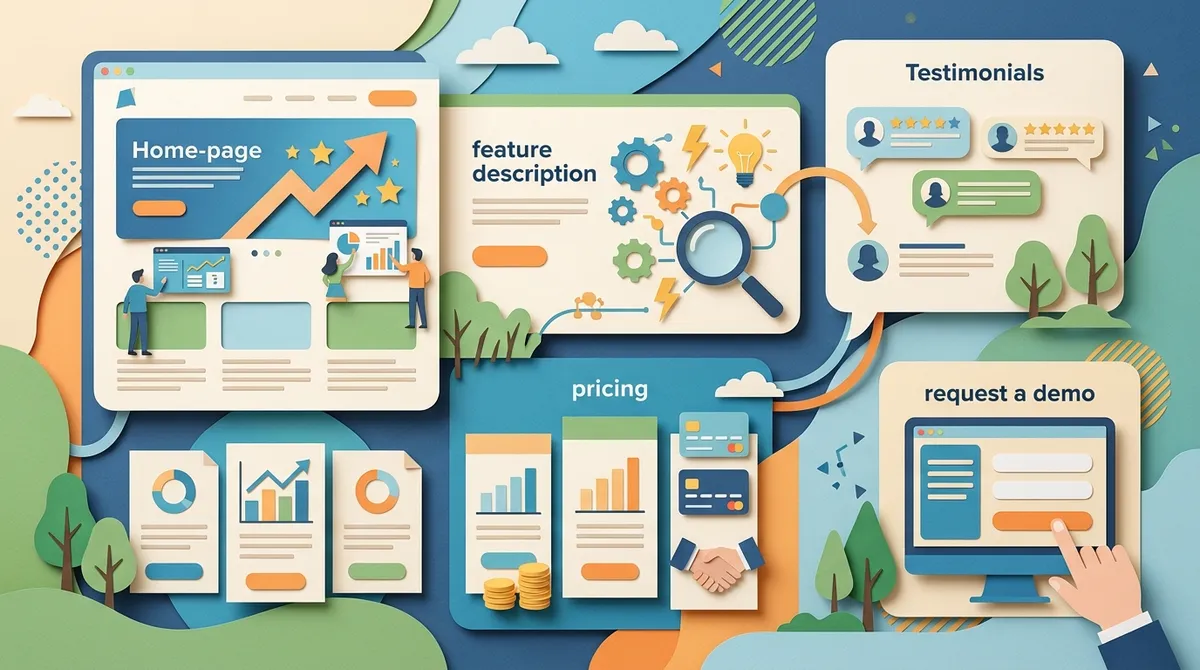
Not all pages are created equal. These are the critical pages that every SaaS website must get right.
- Homepage: Your front door. It must communicate your value proposition, present social proof, and direct visitors toward a primary CTA — whether that is a free trial, a demo request, or a sign-up form.
- Features Page: Break down what your software does in plain language. Use visuals, icons, and short descriptions. Avoid feature dumping — focus on benefits, not specifications.
- Pricing Page: Transparency builds trust. SaaS buyers expect to see pricing. Even if your pricing is custom, provide a starting point or a clear breakdown of what each tier includes.
- Case Studies / Testimonials: Real results from real customers. These pages reduce buyer anxiety and serve as powerful conversion tools at the bottom of the funnel.
- Blog / Resource Center: This is where strategic content writing drives organic traffic, builds topical authority, and supports your SEO goals. A well-maintained blog is one of the highest-ROI assets on a SaaS website.
- Contact / Demo Request Page: Make it easy for qualified prospects to reach you. Reduce friction on your forms. Ask only for what you need.

SaaS Website Design: Platform and Technology Decisions
Choosing the right platform for your SaaS website is a strategic decision. WordPress remains one of the most flexible and SEO-friendly options available, especially when paired with custom development and quality hosting. It gives you full control over design, content, and technical SEO without locking you into expensive proprietary systems.
| Platform Feature | Why It Matters for SaaS | Impact Level |
|---|---|---|
| Custom Design Flexibility | Allows brand-aligned, unique layouts that stand out | High |
| SEO Control | Enables full on-page optimization and schema markup | High |
| Page Speed Optimization | Reduces bounce rate and improves Google rankings | High |
| CMS Capability | Lets your team update content without developer help | Medium |
| Integration Support | Connects with CRMs, analytics, and marketing tools | Medium |
| Security and Hosting | Protects sensitive user data and ensures uptime | High |
For SaaS businesses evaluating their options, understanding the difference between template and custom web design can help clarify which path aligns best with long-term growth goals. Template sites move fast but hit ceilings quickly. Custom-built sites require more investment upfront but deliver far greater flexibility and performance over time.
How Digital Marketing Amplifies Your SaaS Website
A well-designed SaaS website is the foundation. Digital marketing is the engine that drives traffic to it. Without a coordinated strategy, even the most polished site will sit in silence. Here is how the pieces fit together:
- SEO: Drives consistent, compounding organic traffic through keyword-targeted content and technical optimization
- Google Ads / PPC: Delivers immediate visibility for high-intent search queries — ideal for new product launches and competitive markets
- Content Marketing: Builds topical authority, educates potential buyers, and supports SEO rankings through blog posts, guides, and landing pages
- Answer Engine Optimization (AEO): Positions your brand to appear in AI-driven search results and voice queries — a fast-growing channel in 2026
- Conversion Rate Optimization (CRO): Continuously tests and improves site elements to increase the percentage of visitors who take action
Digital marketing services and website design work best when they are built together — not bolted on as afterthoughts. Businesses that integrate both from the start consistently outperform those that treat them as separate initiatives. To learn how to align these strategies effectively, explore how to align web design and SEO for maximum online success.
Common SaaS Website Design Mistakes to Avoid
Knowing what works is important. Knowing what to avoid is equally valuable. These are the most common design mistakes that hurt SaaS websites.
- Overloading the homepage with too much information
- Using vague CTAs like “Learn More” instead of action-driven phrases like “Start Your Free Trial”
- Neglecting mobile responsiveness and page speed
- Burying pricing information or making it hard to find
- Skipping A/B testing on key conversion elements
- Failing to update content regularly, which signals stagnation to both users and search engines
For SaaS businesses that recognize their current site is falling short, a structured redesign may be the right move. Discover website redesign services that transform your online presence and understand when it is time to rebuild rather than patch. You can also review the clear signs it is time for a website redesign in 2026.
SaaS Design and E-E-A-T: Building Authority That Google Rewards
Google’s E-E-A-T framework (Experience, Expertise, Authoritativeness, Trustworthiness) is a core ranking signal that directly affects how your SaaS website performs in search. Design choices that reinforce E-E-A-T include author bios on blog content, secure HTTPS connections, clear privacy policies, detailed about pages, and links to credible external sources. These signals tell both users and search engines that your brand is legitimate and worth trusting.
Brain Buzz Marketing applies E-E-A-T principles to every website it builds and every content strategy it executes. Their professional certifications and track record of delivering measurable results for small and mid-sized businesses make them a strong partner for SaaS brands that need both design excellence and digital marketing depth.
Steps to Launch a High-Performing SaaS Website in 2026
If you are building or rebuilding your SaaS website, follow this structured process to maximize results from launch day forward.
- Define your target audience and buyer personas — Know exactly who you are designing for before you write a single word or choose a single color.
- Map your conversion funnel — Identify the key actions you want visitors to take at each stage of the buyer journey.
- Conduct keyword research — Build your site architecture around the terms your ideal customers are actually searching for.
- Design for clarity and speed — Prioritize simple, fast, and mobile-friendly layouts over visual complexity.
- Write conversion-focused copy — Every headline, subheading, and CTA should serve a specific strategic purpose.
- Integrate analytics from day one — Set up tracking before launch so you have baseline data to measure performance against.
- Build a content calendar for ongoing SEO — Consistent, keyword-targeted blog content compounds over time and drives sustainable organic traffic.
For SaaS brands serving local or regional markets, local SEO services can add another powerful layer of visibility. And for businesses ready to accelerate growth with paid traffic, Google Ads services can deliver immediate, measurable results alongside organic efforts. Businesses like West Florida Therapy and service providers such as Panther Pools have leveraged professional digital marketing to build credible, high-converting web presences in their respective industries — a testament to how any business type can benefit from the right design and marketing strategy.
Conclusion: Your SaaS Website Is a Revenue Engine
SaaS website design is not just about looking good online. It is about building a strategic asset that attracts the right visitors, communicates your value with clarity, and converts browsers into paying customers. Every design decision — from your navigation structure to your CTA placement — has a measurable impact on your bottom line. In 2026, the most successful SaaS brands are those that treat their website as a living, evolving revenue engine rather than a static brochure.
If your current site is not delivering the results your product deserves, it may be time for a professional evaluation. Visit us on Google — Brain Buzz Marketing to see what Tampa-area businesses are saying about working with a dedicated, experienced digital marketing team. Follow Brain Buzz Marketing on Instagram and Facebook for ongoing tips and updates on web design and digital strategy. When you are ready to take the next step, get in touch with our team and let us build a SaaS website that works as hard as your product does.
FAQs
Q: What is SaaS website design and why does it matter for digital marketing?
A: SaaS website design refers to the strategic design and development of websites specifically built for software-as-a-service products. It matters for digital marketing because the website is the primary conversion tool — it must communicate product value clearly, build trust quickly, and guide visitors toward sign-ups or demos through a well-structured user journey.
Q: How is SaaS website design different from a standard business website?
A: Unlike a standard business website, a SaaS website must explain complex software functionality in simple terms, support a longer buyer decision cycle, and drive specific conversion actions like free trial sign-ups or demo requests. It also requires tighter integration with SEO, content marketing, and analytics from the ground up.
Q: What are the most important pages on a SaaS website?
A: The most critical pages include the homepage, features page, pricing page, case studies or testimonials page, a blog or resource center for SEO-driven content, and a clear contact or demo request page. Each page serves a distinct role in moving visitors through the conversion funnel.
Q: How does SEO factor into SaaS website design?
A: SEO must be integrated into the design process from the very beginning — not added as an afterthought. This includes proper heading structure, keyword-targeted page content, fast load speeds, mobile responsiveness, and clean URL architecture. Sites built with SEO in mind from day one consistently outperform those that try to retrofit optimization later.
Q: Should a SaaS company use a template or custom website design?
A: For early-stage startups with tight budgets, a well-built template can provide a functional starting point. However, custom website design delivers superior flexibility, brand differentiation, and long-term SEO performance. As a SaaS business scales, the limitations of template designs become increasingly costly in terms of missed conversions and design constraints.
Our Service Area