Key Takeaways
-
AI-referred traffic converts at 30-40%, significantly higher than traditional organic search, making GEO critical for businesses targeting high-intent users through ChatGPT, Perplexity, and Google AI Mode.
-
Build topical authority by creating 20-30 interconnected, well-structured articles on core subjects rather than isolated posts—AI systems reward depth and recognize established expertise in specific domains.
-
Structure content around direct questions users ask conversationally (e.g., 'What does an SEO agency do?') with clear headings and direct answers, mirroring how AI engines generate responses.
-
Implement schema markup (FAQPage, HowTo, Article, LocalBusiness) to help AI systems understand your content structure—this significantly increases citation likelihood without guaranteeing results.
-
Demonstrate E-E-A-T (Experience, Expertise, Authoritativeness, Trustworthiness) through specific examples, data, case studies, and author credentials rather than generic information.
-
Earn citations and mentions from credible sources including industry directories, local business profiles, review platforms, and partner websites—unlinked brand mentions also signal authority to AI systems.
The way people search online is changing fast. In 2026, millions of users are turning to AI-powered tools like ChatGPT, Google’s AI Mode, and Perplexity to find answers — not just blue links. If your business isn’t showing up in those AI-generated responses, you’re missing a growing share of your audience. That’s where generative engine optimization comes in.
Generative engine optimization, or GEO, is the practice of structuring and writing your content so that AI search engines are more likely to surface, cite, and recommend your business. It goes beyond traditional SEO. It requires a fresh approach to how you create, organize, and present information online. This guide breaks it all down in plain terms, so you can take action today.

What Is Generative Engine Optimization?
Generative engine optimization is the process of optimizing your content for AI-driven search engines that generate responses rather than list links. These tools — such as Google’s AI Overviews, ChatGPT search, and Perplexity AI — pull from trusted sources on the web to build their answers. Your goal is to become one of those trusted sources.
Unlike traditional SEO, which focuses on ranking in a list of results, GEO focuses on being cited inside an AI-generated response. The difference matters. Users who receive AI-generated answers often don’t scroll through additional results. If your content isn’t cited, it may be invisible to that user entirely.
You can learn more about the foundational concept in this related read: What Is Generative Engine Optimization and Why Does Your Business Need It?

Why GEO Matters for Small and Medium-Sized Businesses
If you run a local service business, an e-commerce store, or a startup, AI search is not a future trend — it’s happening right now. Research shows that LLM-referred traffic converts at 30–40%, which is significantly higher than typical organic traffic. That means users who find you through AI recommendations are more likely to become paying customers.
Small businesses in competitive markets like Tampa, Florida, have the most to gain. When a potential customer asks an AI tool “Who is the best digital marketing agency near me?” you want your brand to appear in that response. Generative engine optimization is how you earn that spot.
For businesses wondering whether AI search changes everything, this article is worth reading: Is Google AI Mode About to Kill Traditional SEO?

How GEO Differs from Traditional SEO and AEO
It helps to understand how these three strategies relate to each other before diving into tactics.
| Strategy | Goal | Target Platform | Content Focus |
|---|---|---|---|
| SEO | Rank in search results | Google, Bing | Keywords, backlinks, technical optimization |
| AEO | Appear in featured snippets and voice answers | Google, Siri, Alexa | Direct answers to specific questions |
| GEO | Get cited by AI-generated responses | ChatGPT, Perplexity, Google AI Mode | Authority, depth, structured knowledge |
All three strategies work best together. You can explore how they interact in this guide: How to Use GEO vs AEO vs AI to Dominate Search. A strong digital marketing strategy in 2026 should include all three layers.
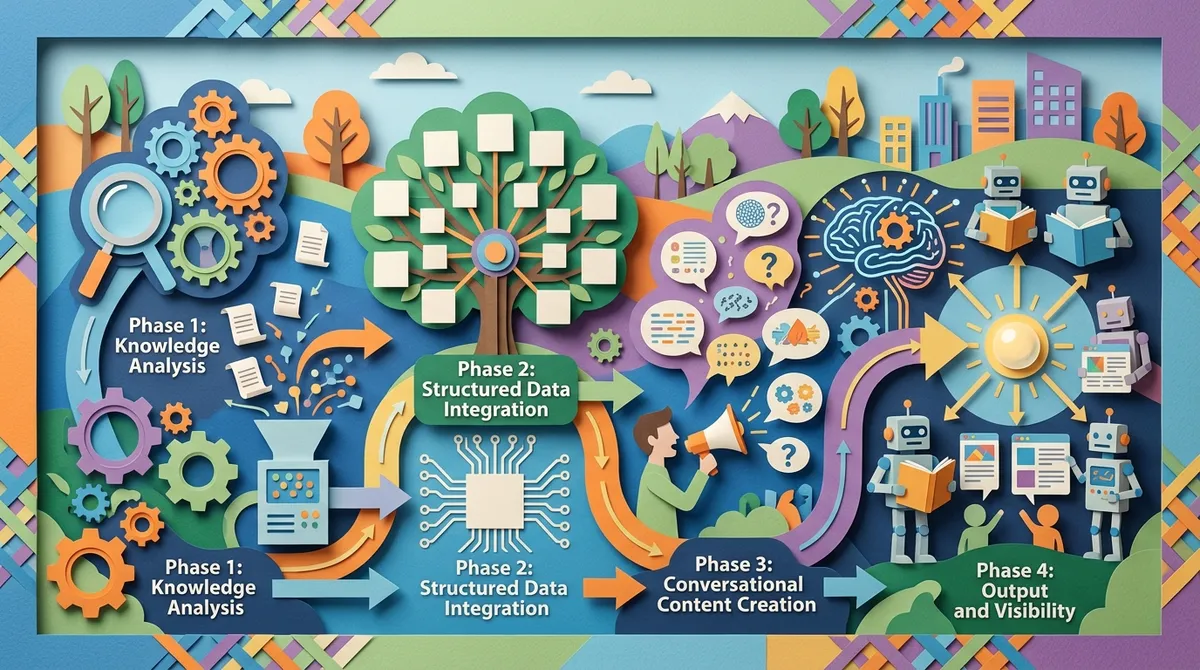
How to Implement Generative Engine Optimization Step by Step
Applying GEO to your content doesn’t require a complete overhaul of your website. It requires a shift in how you write, structure, and publish information. Follow these steps to get started.
Step 1: Build Topical Authority on Your Core Subjects
AI engines trust sources that cover a topic deeply and consistently. If your website has one blog post about SEO, you’re unlikely to be cited. If it has 30 well-structured, accurate, and interlinked articles about SEO, local SEO, content strategy, and Google Ads — you become a recognized authority.
Start by mapping out the key topics your business should own. Then create content clusters around each one. Internal linking between related articles signals depth to both AI systems and traditional search engines. Learn more about this concept at Topical Authority.
Step 2: Write Content That Directly Answers Questions
AI engines are built to answer questions. Your content should be too. Structure articles so they address specific, real-world questions your audience is asking. Use clear headings, short paragraphs, and direct language.
For example, instead of a vague article titled “About Our SEO Services,” write one titled “What Does an SEO Agency Do to Grow Your Business?” The second version is far more likely to be picked up by an AI response engine because it mirrors the way people phrase their queries.
This strategy overlaps with Answer Engine Optimization, which focuses on winning featured snippets and AI direct answers.
Step 3: Demonstrate E-E-A-T in Every Piece of Content
Google and AI systems alike prioritize content that demonstrates Experience, Expertise, Authoritativeness, and Trustworthiness — known as Google E-E-A-T. This means your content should reflect real knowledge, not just general information anyone could write.
Include specific examples, data points, case studies, and first-hand insights. Cite credible sources. Make it clear that the content comes from a knowledgeable source. At Brain Buzz Marketing, we apply E-E-A-T principles to every piece of content writing we produce for clients, because AI systems reward depth and accuracy over volume.
Step 4: Use Structured Data and Schema Markup
Schema markup is a type of code you add to your website that helps AI systems understand what your content is about. It labels your content so machines can read it more easily. Common schema types include FAQPage, HowTo, Article, LocalBusiness, and Product.
Adding schema markup doesn’t guarantee AI citations, but it significantly increases your chances. It helps AI tools understand the structure and intent of your content. If your website runs on WordPress, many plugins can help implement schema without writing code. Explore custom website design options that include proper schema implementation from the start.
Step 5: Earn Citations and Mentions from Credible Sources
AI engines learn from the web. When authoritative websites, directories, and publications mention your business, AI tools take note. This is similar to the concept of backlinks in traditional SEO, but broader. Even unlinked brand mentions can signal authority to AI systems.
Focus on getting your business listed and mentioned in:
- Industry directories and publications
- Local business profiles and news sites
- Review platforms and social proof channels
- Partner websites and collaborative articles
- Professional networks such as LinkedIn
Step 6: Optimize for AI-Specific Search Behaviors
AI search users phrase their queries differently than traditional search users. They ask full questions. They use natural conversational language. Your content needs to reflect this. Here’s how:
- Use question-based headings (e.g., “What does generative engine optimization include?”)
- Provide clear, concise definitions near the top of each article
- Include summaries or key takeaways at the end of long-form content
- Write in a natural, conversational tone without sacrificing accuracy
- Avoid keyword stuffing — AI engines penalize content that reads unnaturally
For a deeper look at this approach, read 10 Ways to Optimize for AI Search Results in 2026.
Common GEO Mistakes to Avoid
Even well-intentioned content strategies can fall short if they ignore the specific demands of AI-driven search. Watch out for these common errors:
- Thin content: Short, shallow articles rarely earn AI citations. Depth matters.
- No clear expertise signal: Content without author credentials or first-hand insight looks generic to AI tools.
- Ignoring structured data: Skipping schema markup means AI tools have to guess what your content is about.
- Inconsistent publishing: AI systems favor websites with regular, reliable content output.
- Keyword stuffing: Overusing terms makes content harder for AI to parse and recommend.
- No internal linking strategy: Isolated articles don’t signal topical authority the way interconnected content clusters do.
You can also review 14 Mistakes That Kill Your Perplexity AI Rankings for a more detailed breakdown of what to avoid when targeting AI search platforms.
How to Measure GEO Success
Measuring the results of generative engine optimization requires a slightly different approach than traditional SEO tracking. Here are the key metrics to monitor:
- AI citation frequency: How often does your brand or content appear when you query AI tools about your industry?
- LLM-referred traffic: Use analytics tools to identify traffic coming from AI platforms. Track conversion rates from this traffic separately.
- Brand mention volume: Monitor how often your business name appears across the web, in both linked and unlinked contexts.
- Featured snippet appearances: AI-ready content often earns featured snippets in traditional search too, providing a useful proxy metric.
- Content depth score: Audit your articles regularly to ensure they cover topics thoroughly enough to be citation-worthy.
For a broader look at measuring digital performance, explore Analytics and Reporting: Your Roadmap to Data-Driven Marketing Success.
GEO and Your Overall Digital Strategy
Generative engine optimization is not a standalone tactic. It works best when integrated with a full digital marketing services plan that includes SEO, content strategy, website optimization, and paid advertising. AI search is one growing channel among many, and smart businesses treat it as a complement to their existing efforts — not a replacement.
For example, a well-optimized website design supports GEO by giving AI tools clean, structured, and fast-loading pages to crawl. Strong content writing services ensure that every page demonstrates the authority and depth AI systems reward. And a solid local SEO foundation helps AI tools identify your geographic relevance when users ask location-based questions. See how The New SEO Game: How to Get Cited on Google’s AI Mode fits into this picture.
You can follow Brain Buzz Marketing on Instagram and Facebook for ongoing tips on AI search, SEO, and content strategy tailored to small and medium-sized businesses.
Getting Started with Generative Engine Optimization
If you’re new to GEO, the best place to start is with a content audit. Review your existing pages and ask three questions:
- Does this page clearly answer a specific question?
- Does it demonstrate genuine expertise and authority?
- Is it structured in a way that AI tools can easily parse and cite?
If the answer to any of those is “no,” you have an opportunity to improve. Prioritize your highest-traffic pages first, then work through your content library systematically. Consider also reading Generative Engine Optimization: Optimizing Content for AI-Driven Search Engines for a technical deep dive into the topic.
Local businesses in Tampa and surrounding areas can visit Brain Buzz Marketing on Google to read client reviews and learn how our team has helped businesses grow their visibility in both traditional and AI-driven search environments.
Conclusion
Generative engine optimization is one of the most important shifts in digital marketing in 2026. AI search tools are no longer a novelty — they are a primary channel for discovery, research, and purchasing decisions. Businesses that invest in GEO now will have a meaningful advantage over those who wait.
The steps are clear: build topical authority, answer real questions, demonstrate expertise, use structured data, earn credible citations, and optimize for conversational search behavior. Each step compounds over time, creating a content strategy that earns trust from both human readers and AI systems alike.
Ready to build a GEO strategy that gets your business cited, recommended, and found? Get in touch with our team at Brain Buzz Marketing and let’s create a content plan built for the future of search.
FAQs
Q: What is generative engine optimization in simple terms?
A: Generative engine optimization (GEO) is the practice of structuring your website content so that AI-powered search tools — like ChatGPT, Perplexity, and Google’s AI Mode — are more likely to cite and recommend your business in their generated responses. It focuses on authority, depth, and clarity rather than just keyword rankings.
Q: How is GEO different from traditional SEO?
A: Traditional SEO aims to rank your website in a list of search results, while GEO focuses on getting your content cited within AI-generated answers. GEO requires deeper topical authority, structured data, and content that directly answers specific questions — going beyond keyword optimization alone.
Q: How long does it take to see results from generative engine optimization?
A: GEO results typically develop over three to six months, similar to traditional SEO. Building topical authority and earning AI citations requires consistent, high-quality content published over time. Businesses that invest early tend to accumulate a significant advantage as AI search usage continues to grow.
Q: Do small businesses need to invest in GEO in 2026?
A: Yes. AI-driven search tools are now a primary way many consumers discover local businesses, services, and products. Small businesses that optimize for AI citations gain visibility with high-intent users who convert at significantly higher rates than typical organic search visitors.
Q: Can I do generative engine optimization myself, or do I need an agency?
A: Some foundational GEO practices — like writing question-based content and improving page structure — can be done independently. However, a full GEO strategy that includes technical schema markup, topical content clusters, and authority-building typically benefits from professional guidance to achieve measurable results efficiently.